(I found the script for a first-year university presentation in my Introduction to Mao Zedong Thought course on my computer. I am taking it easy today and publishing it directly.)
I. Introduction
In its content, modern socialism is primarily the result of examining two things: the class antagonisms prevailing in modern society between the propertied and propertyless, between the bourgeoisie and wage workers, and the anarchy prevailing in production. In its theoretical form, however, it initially appeared as a further and supposedly more thorough development of the principles advanced by the great French thinkers of the eighteenth-century Enlightenment. Like every new doctrine, it had first to begin with the intellectual material already available, even though its roots lay deep in economic facts.
—Collected Works of Marx and Engels, Vol. 9, p. 19
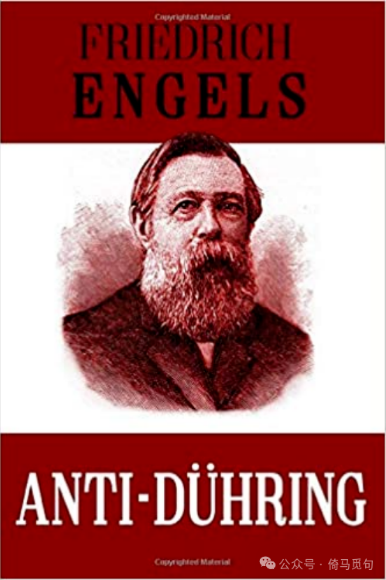
At the beginning of his great work Anti-Dühring, when discussing the theory he shared with Marx, Engels wrote: “Like every new doctrine, it had first to begin with the intellectual material already available, even though its roots lay deep in economic facts.”
Similarly, Mao Zedong Thought profoundly changed China and the world. Although deeply rooted in China’s realities, it could not have developed without inspiration from other intellectual materials. Today, then, I would like to discuss the theoretical sources of Mao Zedong Thought—or, put another way, some stories about Mao’s reading.
II. History: Childhood
Let us begin with the history of Mao’s reading.
Mao was born into a farming family in Hunan in the late Qing dynasty. At the time, Hunan was one of China’s most intellectually progressive provinces, relatively ahead of its era.
From the ages of two to eight, Mao lived at his maternal grandmother’s home in Tangjiatuo. From eight to thirteen, he attended nearby traditional private schools. His father then made him leave school for two years.
During this period, Mao mainly read two kinds of books. One consisted of ancient classics and histories, such as the Three Character Classic, the Analects, Mencius, and the Book of Songs, which were compulsory texts in traditional schools. The other was extracurricular reading, particularly Chinese classical fiction such as The Story of Yue Fei, Water Margin, Anecdotes of the Sui and Tang, Romance of the Three Kingdoms, and Journey to the West. During his time out of school, he had already read Zheng Guanying’s Words of Warning in a Prosperous Age.
During this period, Mao received a systematic traditional Chinese education. The following material offers a glimpse:
After the founding of New China, Mao Zedong’s grandmother’s family in Tangjiatuo transferred a collection of valuable old books to the Comrade Mao Zedong Memorial Museum in Shaoshan. Many had been read by Mao in his youth. They included 58 fascicles of the Imperially Annotated Comprehensive Mirror Compendium, printed in the dinghai year of Qianlong, 1767; one fascicle each of Essential Meanings of the Book of Rites and Essential Meanings of the Book of Changes, printed in the thirteenth year of Jiaqing, 1808; four fascicles of the Book of Documents, ten of the Book of Rites, and four of the Book of Songs, printed in the third year of Tongzhi, 1864; 60 fascicles of the Continuation of the Comprehensive Mirror for Aid in Government, printed in the eighth year of Tongzhi, 1869; 104 fascicles of the Comprehensive Mirror for Aid in Government, printed in the first year of Guangxu, 1875; 41 fascicles of the Collected Writings from the Ice-Drinker’s Studio, printed in 1926; and three fascicles of Commentaries and Subcommentaries on the Thirteen Classics and two of the Analects.
II. History: School Years 1
In 1910, sixteen-year-old Mao left Shaoshan to study at a Western-style school in Xiangxiang.
There he read many books on current Chinese affairs, Liang Qichao’s New Citizen Journal, and Biographies of the World’s Great Figures, and published many commentaries on current events.
Your son resolves to leave his native home;
Until learning brings achievement, he vows not to return.
Why must one’s bones be buried in ancestral soil?
Wherever life takes us, there are green mountains!
III. History: School Years 2
In spring 1911, after half a year in Xiangxiang, Mao went to Changsha. His interest in current affairs led him to love newspapers. He read the Xiangbao and Minli Daily every day. It was there that he cut off his queue.
Mao then served as a soldier for half a year. After the success of the 1911 Revolution, he left the army and resumed his studies.
IV. History: School Years 3
Mao next studied for six months at the Provincial First Middle School. After finishing the Imperially Annotated Comprehensive Mirror Compendium recommended by his teacher, he decided he would be better off studying on his own. He therefore began six months of self-study.
During this time, he read many books on world history and geography, along with Western works such as Darwin’s On the Origin of Species, Adam Smith’s The Wealth of Nations, and many books by Enlightenment thinkers.
V. History: School Years 4
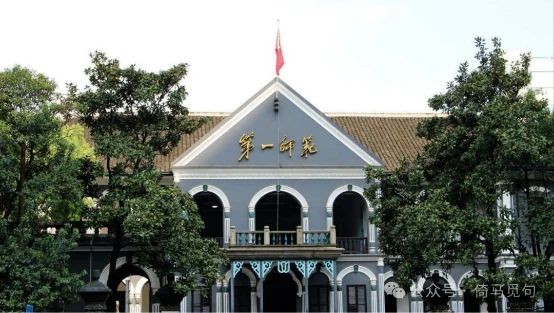
In spring 1913, Mao entered the preparatory course at Hunan Provincial Fourth Normal School. A year later, the school merged into the First Normal School.
There Mao met two teachers who deeply influenced him: Yuan Zhongqian and Yang Changji. The former taught Chinese; the latter taught ethics and self-cultivation.
It is worth noting that Mao wrote nearly 12,000 Chinese characters of annotations in Paulsen’s 100,000-character A System of Ethics. These reveal his state of thought at the time.
At the First Normal School, Mao had already begun participating in social movements.
His reading during his school years shows that the young Mao read widely, had a very solid foundation of knowledge, and was influenced by many great thinkers from China and abroad, ancient and modern. This meant he would not casually adopt a doctrine as his lifelong belief. It also meant that he would understand Marxism more deeply—if Marxism was indeed true.
VI. Mao Zedong and Marxism
Some public intellectuals claim that Mao was concerned only with power politics and did not understand Marxism-Leninism. This view is truly laughable. Mao was an outstanding Marxist theorist and practitioner, and throughout his life a fighter and leader of the world proletariat.
The October Revolution broke out on November 7, 1917. In August 1918, Mao came to Beijing and worked as a librarian at Peking University, where Li Dazhao was the library’s director. There Mao first encountered Marxism-Leninism and read Li’s “The Victory of the Common People,” “The Victory of Bolshevism,” and other articles promoting the October Revolution and Marxism.
In spring 1920, Mao visited Beijing a second time. On this visit, he read more Marxist works, including The Communist Manifesto, The Class Struggle, and A History of Socialism.
He later told Snow: “By the summer of 1920, I had become a Marxist in theory and, to some extent, in action.”
Let us now follow individual Marxist works to explore the most important sources of Mao Zedong Thought.
VII. Anti-Dühring
Anti-Dühring entered my life when I felt deeply lost. It was the book that truly strengthened my convictions, so I feel a very special attachment to it and its author, Engels.
In April 1932, the Red Army captured Zhangzhou, Fujian’s second-largest city. Mao spent a morning browsing the library of Longxi Middle School in Zhangzhou and had a truckload of books transported to the Central Soviet Area. They included many Marxist-Leninist works, among them Anti-Dühring.
In November 1932, Wu Liangping, the translator of Anti-Dühring, met Mao for the first time in the Central Soviet Area. Mao spoke highly of Wu’s work and praised his translation.
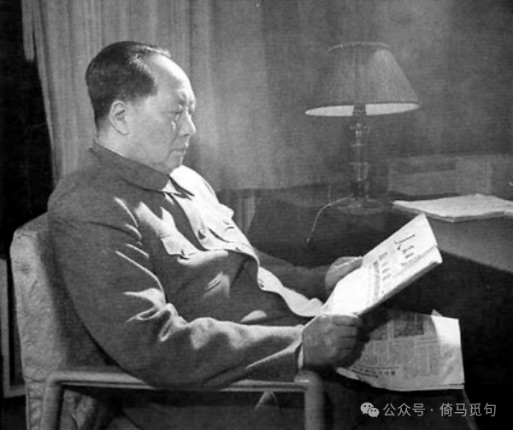
Later, Mao was sidelined by the Party Central Committee. They accused him of “narrow empiricism” and said that “Marxism-Leninism cannot emerge from mountain gullies.” They mocked him for having read few Marxist-Leninist books and merely knowing how to fight. Even his victories, they said, came only from The Art of War and Romance of the Three Kingdoms, and were nothing to be proud of. Angered, Mao took two books with him on the Long March: The State and Revolution and Anti-Dühring. Eyewitnesses saw him reading these books while lying on a stretcher.
In January 1938, while speaking with Liang Shuming, Mao said: “Let me tell you something important—let me offer you an important piece of advice. Engels wrote a book called Anti-Dühring. You should read Anti-Dühring.” This shows how highly Mao regarded it.
After the founding of New China, Mao repeatedly read Anti-Dühring. It appeared many times on the reading lists he gave cadres, and he often took it on inspection tours. It was included in both the 1964 and 1970 instructions to print large-type editions of Marxist-Leninist classics. He frequently quoted its words and arguments in his writings and speeches. “On Contradiction,” for example, contains lengthy quotations from “Dialectics: Quantity and Quality,” the twelfth section of the book’s Philosophy part.
The two questions in Anti-Dühring that Mao discussed most often were materialist dialectics and the relationship between freedom and necessity. Time is limited.
VIII. The Communist Manifesto
Mao first read The Communist Manifesto in 1920. It was the first Marxist work he read.
He later recalled that it was this Marxist work that established his belief in Marxism: once he accepted Marxism as the correct interpretation of history, he never wavered.
He said: “Only after reading The Communist Manifesto did I learn that class struggle had existed from the beginning of human history and that it was the driving force of social development. I gained an initial method for understanding problems. But those books contained neither China’s Hunan and Hubei nor China’s Chiang Kai-shek and Chen Duxiu. I took only its four Chinese characters: ‘class struggle.’” He then began earnestly studying actual class struggle.
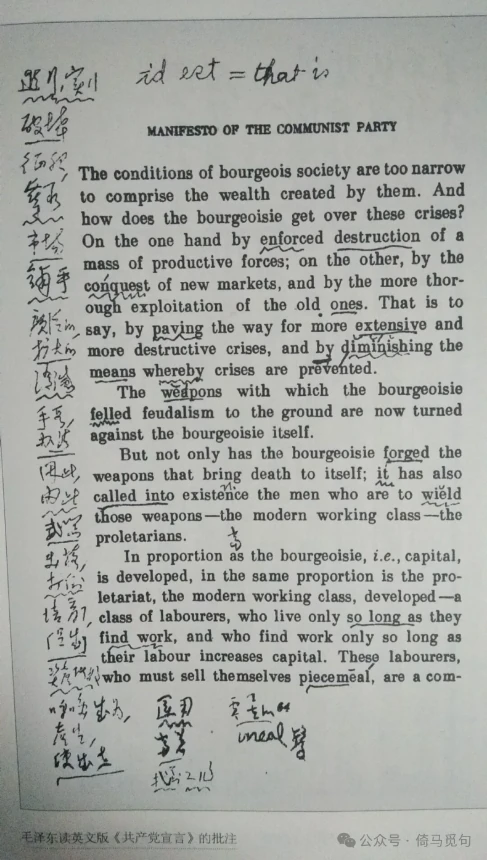
In 1939, Mao said: “I have read this book no fewer than a hundred times, and every reading gives me new insights.” He also said: “When I encounter a problem, I turn to Marx’s Communist Manifesto. Sometimes I read just one or two passages, sometimes the entire work. Every reading gives me new insights. When I was writing ‘On New Democracy,’ I turned to The Communist Manifesto so many times.”
Late in life, Mao also worked hard on the English edition of The Communist Manifesto, as this image shows:
IX. Capital
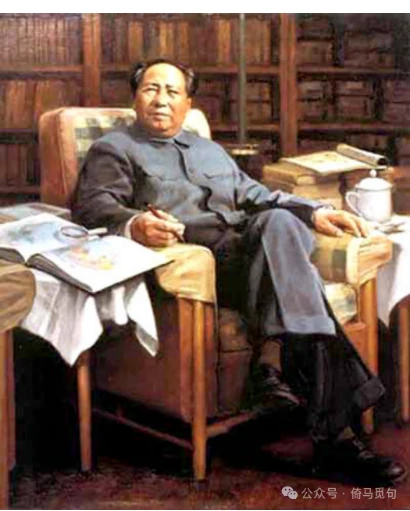
Many people think Mao understood only military affairs and politics, not economics. Some have even told me with great certainty that he never read Capital. Such assertions are truly sad.
In 1929, while running the Changsha Cultural Book Society, Mao repeatedly recommended Li Hanjun’s translation of An Introduction to Marx’s Capital to readers. He must already have read this introductory book by then. This was probably his first encounter with Capital.
After reaching Yan’an, Mao quoted many arguments from Capital in works written in 1941, such as “Reform Our Study,” “On Rural Surveys,” and “Refuting the Third ‘Left’ Line.” Examples include “the ideal is nothing other than the material transferred into the human head and transformed within it,” and “the bee’s skill in building its cells puts many a human architect to shame.” Mao also said that the unity of the theory and history of capitalism “is exemplified in Capital, from which we can learn something of the way dialectics, logic, and epistemology are united.”
After the founding of the People’s Republic, Mao also read Capital many times. Since I have not finished it myself, I have little standing to comment. I found a researched article on Mao and Capital by Professor Liu Zhaofeng of Zhejiang University’s School of Marxism, which may be useful as a reference.
https://mp.weixin.qq.com/s/BnkHS3-CAtJHqwQ9eGCzmQ
X. Economic Problems of Socialism in the USSR
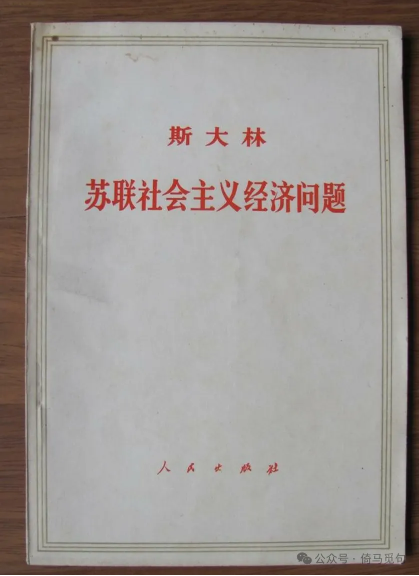
Economic Problems of Socialism in the USSR was published by Stalin in 1951, summing up more than thirty years of Soviet economic construction. Mao attached great importance to it, reading it eagerly as soon as it appeared and again when the second edition came out in 1957. According to records compiled by his staff, he owned four editions, all annotated and marked. He repeatedly recommended the book to leading comrades in the central leadership.
As we know, Capital was the work into which Marx poured his life’s effort and which he valued most. But it discusses the capitalist mode of production. Socialist countries such as the Soviet Union and China had the mission of establishing and extending a new mode of production—the communist mode of production. Marx and Engels offered very little discussion of this mode, at most mentioning principles such as the absence of commodities in the new society. We therefore had to explore it in practice.
As the first socialist country, the Soviet Union offered extremely valuable experience. In fact, Comrade Stalin really did very well.
XI. Conclusion
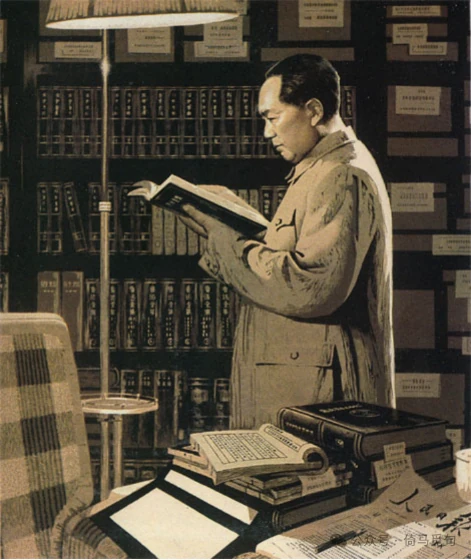
Mao said more than once: “One may go a day without food or sleep, but not a day without reading.” Throughout more than eighty years of life, he never put down his books. Without doubt, they allowed him to absorb the ideas of great thinkers from every age and country and were a necessary condition for the formation of his own great thought.
Necessity finds its path through contingency. We uphold the view of history centered on the masses, but we cannot deny that Mao played a decisive role in the Chinese revolution. With his extraordinary talent and firm proletarian standpoint, he left a vivid mark on history. Although he ultimately failed, the glory still belongs to the great Comrade Mao Zedong.
Let us end this presentation with Mao’s “Reading History,” to the tune of He Xin Lang. This poem fully expresses his view of history.
Man and ape bowed farewell. Only a few stones were polished in that childhood age. Flames leapt in bronze and iron furnaces—when was that first discovered? Only a few thousand winters and summers ago. Rarely could people open their mouths in laughter; on the battlefield, they bent their bows like crescents at one another. Blood flowed across the fields.
After reading one account, my hair has turned to snow; I remember only scattered traces, a few lines of the past. The sacred deeds of the Three Sovereigns and Five Emperors deceived countless travelers through time. How many truly outstanding figures were there? After Robber Zhi and Zhuang Qiao won lasting fame, King Chen rose and waved his yellow battle-axe. Before the song was finished, the east grew light.
Comments
No account needed. A nickname is required; email is optional. Successful submissions appear publicly without manual pre-moderation.
Comments and nicknames are public. Optional email addresses are not displayed. The selected Waline backend and its hosting provider process comments, nicknames, optional email, IP and browser information. Comments show IP region, without the full IP address or browser and operating system labels. Hosting: Vercel; database: Neon.