(During the summer vacation of 2021, I went to Shanxi with my senior fellow student uu. It was my first visit, and I was full of curiosity about this new place. I wrote this article after returning, probably in early September 2021. The original was rather rough; after uu's revisions, it became just about readable. It was later published on the WeChat public account “Development Research Report,” but that account was deregistered two months ago, so I am republishing it here without changing a single word.)
(I) The Shanxi of Popular Imagination
What comes to mind when people mention Shanxi?
Perhaps its location: the Taihang Mountains on the left, the Lüliang Mountains on the right, this land connecting the grasslands beyond the northern frontier with the farmland of North China.
Perhaps its history: from the adoption of nomadic dress and mounted archery during the Warring States period to the victory at Pingxingguan during the War of Resistance against Japan, it has never lacked stirring stories.
Perhaps some famous symbols, such as Shanxi merchants, aged vinegar, knife-cut noodles, and coal bosses.
For me, though, that was only Shanxi on paper. This summer we had the good fortune to visit, to set foot on this land and encounter some of its people and affairs firsthand. This article records that journey. Looking at Shanxi through an outsider's eyes may offer readers some food for thought.
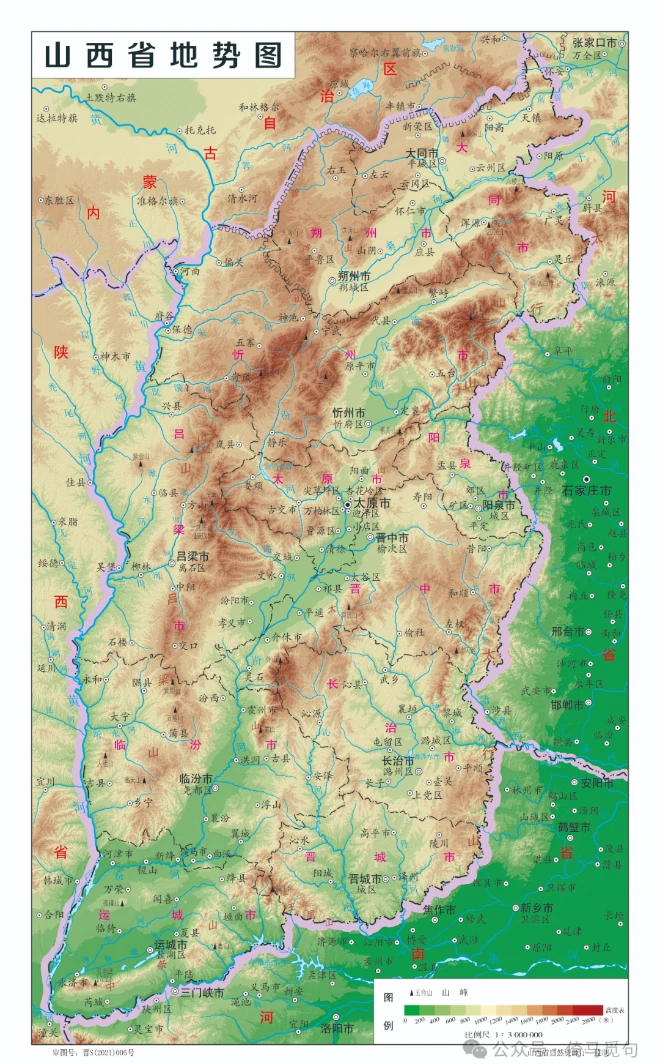
(II) Shanxi in a Mine Blasting Crew
Coal mining is the main driver of Shanxi's industrial development. The stages directly connected to it can broadly be divided into blasting, extraction, storage, transport, and processing.
Blasting is an industry I had never paid attention to. Perhaps a blasting crew at a mine near the Hongchi Valley can show us something of its reality.
The blasting company to which this crew belongs has two types of business. One involves negotiating and dealing with mining companies and higher-level authorities whose stamps are required; the other involves blasting on site. Blasting is contracted out: the mining company pays a sum and hands the entire job over to the blasting company. That sum covers explosives, workers' wages, dormitory rent, machinery depreciation, transport costs, and so forth. Whatever remains is the blasting company's profit.
Put simply, the crew blows open the mineral deposits to facilitate subsequent extraction. Each worker has a relatively fixed job and stage of the process to handle, though some understand the entire production process. According to them, the working environment there is hardly good.
Few mines can extract minerals directly without blasting, so blasting is clearly a necessary part of mining. We learned that large mines have their own blasting crews, while independent companies like this generally serve smaller mines. Their emergence presumably relates to the privatization of coal mining: no small coal boss can support a separate blasting department.
The blasting workers there earn a little over 3,000 yuan a month, need work only half a day in the morning, and finish before eleven. They actually work no more than about fifteen days a month. Blasting is a specialized occupation requiring fairly complex training, and demand for workers fluctuates considerably, so employers train a larger number to meet peak-season demand. In the off-season, employers “kindly” allow some workers to “take leave.” Naturally, this leave is unpaid.
North of the junction of the Daxin and Guowu roads, on the east side of the Daxin road, stand three two-story concrete houses. The employer rented and renovated one as a dormitory housing about thirty workers. The other two provide lodging and meals. There seems to be communal cooking in the dormitory, but meals are not included. Workers travel to the mine in vans, a journey of about twenty minutes.
Most of these blasting workers are from Shanxi, many from rural areas. They also include dismissed police officers and civil servants who changed careers. Some finished high school, some junior high, and some did not even finish junior high. Only one graduate of a local university has a university degree. Most are satisfied with this work: it pays better than farming at home and is relatively easy and leisurely. Some enjoy reading and know quite a bit about cattle raising, the Four Books and Five Classics, and Western postmodern philosophy.
Their leisure activities cannot be called especially monotonous. Some dormitories have computers for games and videos. The balcony has good air—at least a comfortable temperature—and is a good place to chat. With plenty of free time, they sometimes travel farther afield, often visiting a nearby hot-spring attraction, for instance.
The skills blasting workers possess make them a destructive force, while their abundant free time gives them greater potential for well-rounded development than workers in other industries. Taken as a whole, this group lacks neither knowledge nor patience, and certainly not the aspiration to transform the world. Experiments with new forms of social organization among blasting workers may therefore hold considerable promise.
(III) Shanxi in a Mining Community
The blasting workers of Hongchi Village at least gave me a sense of ease. The circumstances of coal miners elsewhere, however, were oppressive.
In a city in northern Shanxi is a mining district established in the 1950s. It has been mined for over seventy years and remains in operation, producing more than two million tons annually. It has primary and secondary schools, large residential areas, and busy little markets, making it a relatively self-contained unit of production and everyday life.
The mine has many kinds of work, such as “zhou mining, mechanical tunneling, auxiliary work, inspection, and blast mining,” with conditions varying somewhat between them. Workers generally rotate between two shifts and earn an average of six to seven thousand yuan, though women generally earn only a little over three thousand. Fully mechanized mining crews have one day off a week; administrative units have two.
Coal miners' work is both exhausting and dangerous, yet their equipment is extremely outdated. One worker said that during more than ten years underground he had always used equipment from the 1950s, never the new equipment or tracking devices. Those, he said, were for publicity and disappeared once reporters had finished filming.
Temporary workers have it even worse. They go wherever there is work and have almost no chance to slack off. One internal policy requires them to answer questions before entering the mine; only correct answers permit them underground. A wrong answer means not only no earnings that day but also a 200-yuan deduction. Temporary and permanent workers do the same work, but temporary workers earn 240–260 yuan a day, with no insurance and none of the five social insurances or housing fund. “If you die, you die,” with no compensation.
Yes, workplace injuries and mining disasters are commonplace. It is said that across the province, people used to die every day, with dozens or hundreds killed in each major disaster. Within a single mining district, even in the “new era,” conditions may have improved, but mining disasters remain anything but unfamiliar.
Here are two examples. A few years ago, a worker died in a mining disaster. Management handed his body and 50,000 yuan to a small private mine, so that his death would not have to appear in the “mining disaster” statistics. In another case three years ago, a worker died, but because he died at home after his shift, management gave his family 50,000 yuan and did nothing more. Many workers lamented: “Coal miners' lives are cheap!” “Human life is worth nothing—not even as much as a car.”
Prolonged work without adequate protection damages coal miners' health every day. Overwork and lung disease are ordinary here. Miners used to die in their sixties; things are a little better now, and you can see some in their seventies…
Corruption is nothing new either. There is supposedly an anticorruption campaign, but people still take money, just differently. Previously they used bank transfers; now they use cash, which is more discreet and leaves less evidence. I learned of three methods. One is to open an account in your name and pretend you are an employee, pay wages into your account each month and pension contributions on your behalf, leave you a little over a thousand yuan to live on, and take the rest for the manager. Another is to take you shopping, point at a phone, and say, “This one's quite nice.” Nothing is stated explicitly, but if you do not buy it for them, you can forget about keeping your job. The final method is simply to demand money directly.
Get up at six every morning, eat breakfast—frontline workers do not even have time for that—go underground, finish at six or seven in the evening, have some grilled skewers and a drink, and go home to sleep. The next day repeats the previous one. In their free time, they sing karaoke or visit a bathhouse. There is little other entertainment. This is a typical coal miner's life. Children growing up here, too, become accustomed early to these social relations: to working without complaint, to oppression, to endlessly repetitive lives,
Yet we still believe that sunshine will reach the dark mine shafts, sooner or later.
(IV) Shanxi Along the Coal Transport Routes
Shanxi's coal is said to be easy to mine, but it still has to be transported and sold to create so many lovable coal bosses.
In a sense, Shanxi's railways and roads were born for coal. On the Daxin and Guowu roads alone, coal trucks fill the roads. The air smells of coal, and when trucks pass in dense streams, it resembles a battlefield shrouded in smoke. Along the roadside stand “iron trees and iron grass” coated in coal particles, with cinders and lumps of coal everywhere. Walk along such roads for half a day, and both your mask and your nostrils turn black.
On the more distant Shuohuang railway, long freight trains pass every few minutes, in both directions. Their open-topped wagons are filled with coal. We counted one train: it had two sets of locomotives, each consisting of two units, one set at the front and one in the middle, and more than 110 wagons—and that was not even the longest!
This gives some sense of the volume of coal transported from Shanxi.
In Xuangang, we were fortunate to see the transport and loading equipment at Liu Jialiang Coal Mine. A conveyor belt stretches from the mine to above the railway tracks at the station. Beneath it is a cylindrical structure serving as a giant funnel, and beneath that are the freight tracks. When wagons move under the cylinder, coal pours straight into them, saving enormous amounts of labor. Only large capital—or society as a whole—could undertake such a vast project.
Road freight, by contrast, must be the least desirable means of transport. It consumes the most energy, occupies the most workers' time, causes the worst environmental pollution—not only air pollution but also noise, water, and solid-waste pollution—and poses the greatest safety risks. Might this too be a consequence of the privatization of coal mining? Of course, this is because state mines can use railways, while small mines can use only roads.
We can imagine a socialist era in which workers collectively control all mineral resources, along with all the means of production needed to develop them. Mining would then aim to meet the needs of the entire working class rather than generate profit, and the specific arrangements for extracting, transporting, and using coal would take account of society's interests rather than those of individual small private owners.
But that is a long way off. Or perhaps not so long.
(V) Shanxi Inside Foxconn
The coal industry's era of vigorous growth has passed, after all. Many young people from Shanxi who left the countryside later than their predecessors in mining have chosen Foxconn instead.
Foxconn is said to make high-tech products, but its main business remains spending money to buy people—or their labor power. Regardless of education, age, gender, or appearance, as long as you are not too severely disabled, your labor power can be put to use. All it needs is your time. After all, the job is merely repeating one action on an assembly line, something very simple to learn.
There is a large Foxconn plant in Xiaodian Town in southern Taiyuan. It recruits in three ways. First, permanent employees receive lower wages, around 3,000–5,000 yuan, but have the five social insurances and housing fund. Second, daily-paid workers are paid for each day's work at 26–29 yuan an hour, working ten hours a day. Of course, they still have to work at least a month, and several days' wages are withheld. Third, rebate workers receive an additional “rebate”—9,000 yuan after clocking in for 55 days, for example. The trouble at Shanghai's Changshuo plant back then arose because agencies withheld these rebates.
Incidentally, Foxconn is better than the great majority of Chinese companies: permanent employees have the five social insurances and housing fund, resignations face no obstacles, wages arrive on time, overtime is voluntary, and facilities inside the plant are comprehensive… Foxconn is an open and aboveboard capitalist sweatshop, disdaining petty theft as a means to those insignificant extra profits.
(VI) Shanxi in Nanheiyao Village
Foxconn settled in Taiyuan for its cheap labor, but its wages are still far higher than farming at home, so people are happy to come here for a livelihood. Because labor demand varies between peak and slack seasons, Foxconn itself prefers to hire more temporary workers, whose wages are also somewhat higher. Their numbers and proportion have therefore risen. As ever more workers arrived, agencies and shops of every kind gathered opposite Taiyuan Foxconn, attracting bosses from all trades and forming a casual labor market. Nanheiyao Village behind it consequently filled with workers.
Like the labor markets at Majuqiao in Beijing and Liu'anzhuang in Tianjin, it has cheap eateries offering all kinds of snacks, hotels and rental rooms with terrible living conditions, filthy streets and foul smells, small shops, Mixue stores, rubbish bins, brothels, small advertisements, and sex shops. And, of course, there are the beleaguered salespeople pestering you with offers of free computers and tablets while actually promoting apps.
There are differences too. The agencies here mainly arrange work elsewhere: Changshuo in Shanghai, Rikai in Yancheng, Shishuo in Kunshan, Lance in Taizhou… and in large volumes. A sign issued in the name of “Shanxi Zhisheng Human Resources,” for example, reads: “Departures year-round, assemble at nine every day… direct transport to partner factories in various locations.” Local jobs mainly include security guards, vegetable sorters, parcel sorters, construction laborers, cooks, and shop managers, along with rarer roles such as security protection officers, surveillance operators, and seafarers. Both daily-paid and long-term jobs are available, all paying less than Foxconn, at hourly rates ranging from 12 to 20 yuan.
There are also many pawnshops and shops offering to cash out Huabei credit. Their storefronts often resemble China Mobile or China Unicom outlets, though most are somewhat smaller.
Perhaps, compared with coal miners and Foxconn's permanent employees, Nanheiyao's workers are Shanxi's most “free” labor power.
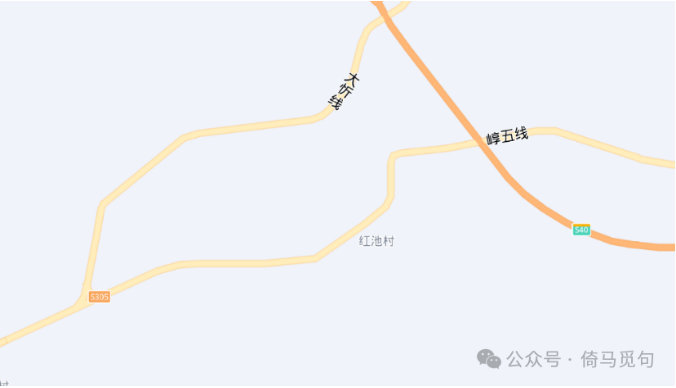
(VII) Shanxi in Hongchi Village
Shanxi is an important agricultural province as well as an industrial one. Whether mines, electronics factories, or casual labor markets, their basic raw materials for food and clothing, and most of their labor power, ultimately come from the countryside. What, then, are Shanxi's villages like? Hongchi Village in Yuanping may offer some clues.
Between Shuozhou and Xinzhou lies the Hongchi Valley, bordered by high mountains to the north and south. Some of these mountains produce coal, iron, and copper. The Daxin and Guowu roads and the Linghe Expressway all pass through the valley.
Hongchi Village lies on the southern side of this valley floor. It is a traditional agricultural village whose residents originally depended mainly on farming.
Broad fields are divided into small plots belonging to different households. The main crops are maize and sorghum. Maize yields 1,300–1,400 jin per mu and sells for 0.8–0.9 yuan per jin; sorghum yields 800–900 jin per mu and sells for around one yuan per jin. Grain does not grow well without chemical fertilizer, so costs come to about 800–900 yuan per mu. Even with agricultural subsidies, one cannot expect to make money farming. One elderly woman has 3.6 mu of land, but her subsidy covers only 2.2 mu. This seemingly trivial difference of a little over a hundred yuan weighs on her mind.
Besides farming, there is a local tree-planting industry. Villagers can help plant trees in forest areas for 80 yuan a day. Their days are recorded, and they are paid once a year. Mines in the mountains also pay some compensation for occupying villagers' mountain land.
These are practically all the villagers' sources of income. Life is passable compared with the past, but money is never enough. The elderly woman's husband recently died in his early seventies. He was reportedly sent to Taiyuan for treatment at the end. Although they knew he could not be cured, they spent more than 300,000 yuan, exhausting the family's savings. As she put it, “Treatment wouldn't cure him, but not treating him wouldn't have been right either.” Several elderly people in the village who died last year likewise “used up all the money without getting better, and died anyway.”
There is talk of demolishing the part of the village near the mountain to build warehouses—or perhaps a road. The project is said to be led by Yuanping's city government, but nothing has happened yet. Demolished houses would be converted into monetary compensation at fixed rates to exchange for housing in Yuanping. Specifically, beamless houses would be valued at 2,800 yuan per square meter, while the more expensive-to-build houses with beams would receive 2,500. That money could be used to buy apartments in Yuanping at the market price of 5,800 yuan per square meter, with residents paying the shortfall themselves. What about the relocation developments in Yuanping? Those seem murky too: as successive developers are “rectified,” most projects are “taken over” by the government before completion. Buyers always have to make another final payment to the government before they can possibly receive their homes. One villager paid 300,000 yuan for an apartment, then another 50,000 to the project team after the government takeover… and may need to make one more final payment before it is finished.
Not far up the mountain from Hongchi Village is a mining area producing coal, aluminum, and iron. A road runs through the village, and eighty heavy trucks from the mountain travel back and forth along it day and night. Noise and dust constantly accompany the villagers. This may be an area receiving little benefit from industrialization while suffering the most harm from it. Of course, villagers have considered making a living from the mountain beside them. They once approached the mine about money, but apparently failed to reach an agreement. They then reported that it was mining coal under the guise of transporting aluminum-ore waste, after which the mine obediently confined itself to aluminum. A man in the village described as mentally impaired sprays passing vehicles with a rubber hose and collects a five-yuan “water fee.” Village leaders supposedly taught him to do this. Perhaps that is the only benefit villagers receive.
(VIII) Shanxi in a Shopping Mall
We have seen mining communities and coal transport, Foxconn, casual labor markets, and agricultural villages. The agricultural and industrial workers laboring in these places sustain all the material and intellectual wealth of modern society. These workers can probably represent Shanxi.
But they are not quite all of Shanxi. Perhaps we must also consider the gap between that enormous production of wealth and their meager everyday consumption…
So we came to Taiyuan. The city concentrates military industry, machinery, and heavy chemical industries using coal as a raw material, supplying products across the country. Shanxi's situation thus occurs in Shanxi but concerns much more than Shanxi alone. Its circumstances connect, closely or distantly, to the whole country and even the world. There are also some immediately visible expressions of that gap.
Taiyuan is noticeably livelier than Hongchi Village. It is also where those elderly villagers finally sought treatment and exhausted their families' savings. Its bustle comes from the concentration of wealth. As the provincial capital, that is its task.
I entered an upscale shopping mall.
The mall has several floors, dazzling lights, and magnificent decoration. Inside are expensive restaurants, cafés, cosmetic clinics, cosmetics stores, jewelry shops, and more.
A wealthy woman accompanying me, dressed in bright, fashionable clothes, was choosing something at a counter. Rings, necklaces, and bracelets lay in the brightly lit display. Their gemstones reflected the lobby lights and looked especially beautiful. Beneath them were price tags ranging from tens to hundreds of thousands of yuan. Surely scenes like this are also an integral part of Shanxi today?
(IX) What Is the Real Shanxi Like?
So what comes to mind when people mention Shanxi?
Shanxi probably looks different to everyone. But I think that if we remain within our small circles, we may forever see only one aspect of it. Only through greater communication and cooperation among people in different industries can we piece together a complete picture and see the real, whole Shanxi. Putting that picture together will surely deepen our understanding of the people on this land and help us build a better Shanxi together.
This is true of Shanxi, true of China, and probably true of the world as well.
Comments
No account needed. A nickname is required; email is optional. Successful submissions appear publicly without manual pre-moderation.
Comments and nicknames are public. Optional email addresses are not displayed. The selected Waline backend and its hosting provider process comments, nicknames, optional email, IP and browser information. Comments show IP region, without the full IP address or browser and operating system labels. Hosting: Vercel; database: Neon.