More than 95% of Chinese people are lactose intolerant and experience diarrhea, bloating, and other symptoms after consuming too much dairy. Recently, however, I discovered some unexpected benefits of drinking milk for people with lactose intolerance. Here is my argument.
1 The Normal Digestion and Absorption of Lactose
Lactose is a disaccharide. The human body cannot directly absorb and use disaccharides, so they must first undergo a chemical reaction that breaks them into monosaccharides. Lactose can break down naturally, but extremely slowly. Lactase in the small intestine accelerates this process, instantly breaking it into glucose and galactose, which enter the bloodstream and circulate throughout the body. The chemical reaction is as follows:

Human infants have abundant lactase in their small intestines and can efficiently digest lactose without worrying about indigestion. In adulthood, however, lactase production drops sharply, causing lactose intolerance. Several thousand or tens of thousands of years ago, a mutation at a particular site in the MCM6 gene on chromosome 2 enabled some people to continue producing large quantities of lactase as adults. This mutation occurred mainly in Europe. Adult lactose intolerance is therefore the human norm; tolerance is the exception.

2 Lactose Metabolism in People with Lactose Intolerance
People with lactose intolerance can still drink milk. Besides the remaining lactase in their small intestines, which can accelerate lactose breakdown, the most important route is through the microbiota in the large intestine. There are many types of gut microbes, and lactose metabolism is complex, but it broadly involves four stages:
Stage one: some beneficial bacteria, such as bifidobacteria and lactobacilli, break lactose into glucose and galactose for their own energy supply.
Stage two: the bacteria take the separated glucose and galactose into their cells and metabolize them to produce lactic acid, acetic acid, and other substances.
Stage three: butyrate-producing bacteria, such as Faecalibacterium prausnitzii, use the lactic and acetic acids from the previous stage to produce butyric and propionic acids, releasing gases such as carbon dioxide and hydrogen.
Stage four: some hydrogen-consuming bacteria use the hydrogen and produce gases such as methane and hydrogen sulfide.
The products of lactose metabolism thus fall into two main categories: organic acids such as lactic, acetic, and butyric acid, and colorless, odorless gases such as carbon dioxide, hydrogen, and methane. If sulfides are present in the large intestine, certain microbes can also combine them with hydrogen to produce hydrogen sulfide, which has an unpleasant smell.
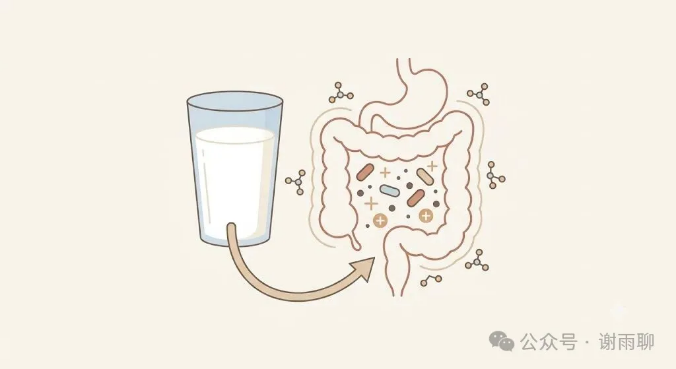
When people with lactose intolerance drink milk, lactose enters the large intestine. It increases osmotic pressure and draws in large amounts of water, while gut microbes metabolize it and produce substantial gas. These rapid increases in water and gas are the main causes of bloating and diarrhea.
On this principle, continuously improving the gut microbiota and drinking small amounts frequently, with food, and increasing gradually can allow people with lactose intolerance to drink substantial quantities of milk. Take me: I am a typical lactose-intolerant person, confirmed by genetic testing. Milk used to give me diarrhea quite often. Using the methods above, I can now drink one liter a day without any side effects and enjoy milk freely.
3 The Benefits of Milk for People with Lactose Intolerance
Milk contains protein, calcium, vitamins, and various other macro- and micronutrients. It is an inexpensive, high-quality food strongly recommended by authoritative doctors and nutritionists. But those nutrients benefit foreigners and us alike, so they are not additional advantages. Studying lactose metabolism as described above, I believe people with lactose intolerance gain two extra benefits from drinking milk:
1 Reduced Calorie Intake
For people who tolerate lactose, all lactose is broken down in the small intestine, fully absorbed, and converted into energy. For those with lactose intolerance, microbes in the large intestine break it down and use a large proportion of its energy themselves. The human body absorbs only what they leave behind, such as acetic acid. Drinking the same quantity of milk therefore provides fewer calories to a lactose-intolerant person, which helps with weight loss.
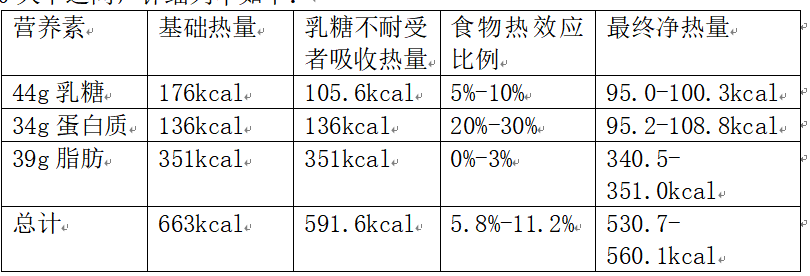
Take the milk I currently drink. One liter contains 44 g of lactose, providing 176 kcal; 34 g of protein, providing 136 kcal; and 39 g of fat, providing 351 kcal: 663 kcal in total. People with lactose intolerance absorb roughly 60% of the lactose's calories, about 105.6 kcal, absorbing 70.4 kcal less and bringing the total to 592.6 kcal. Diarrhea or drinking skimmed milk reduces absorption further. Milk is high in protein; if we also account for the thermic effect of food, net calorie intake is about 530–560 kcal. The detailed calculation follows:
Furthermore, people with lactose intolerance can drink milk only in small, repeated servings. The short-chain fatty acids produced by gut microbes, including acetic, propionic, and butyric acids, do not directly raise blood glucose, so there are no sharp blood sugar fluctuations or sudden increases in appetite. In practice, one liter of milk is therefore quite filling and nutritious, reducing consumption of other foods. At an equal quantity of milk, people with lactose intolerance passively receive a calorie discount. With skimmed milk, the calorie advantage and high satiety become more pronounced.

2 Improved Gut Microbiota and Intestinal Health
Dietary fiber cannot be absorbed directly by the human body. It is indispensable because it supports the growth of beneficial bacteria. Lactose entering the large intestine effectively does the same, providing food for beneficial microbes. In particular, lactose helps increase bifidobacteria and lactobacilli. These two prized beneficial groups can improve the microbiota in various ways, promoting gut and overall health.
First, bifidobacteria and lactobacilli effectively suppress pathogens. When abundant, they attach firmly to the intestinal surface and form a biological barrier, occupying space and consuming nutrients so that invading pathogens such as Escherichia coli, Salmonella, and Staphylococcus aureus have nowhere to settle. Their metabolic products, including lactic and acetic acids, also maintain an acidic intestinal environment, suppressing most harmful bacteria that prefer alkaline or neutral conditions. Fewer harmful bacteria and cross-feeding among beneficial ones help form a complex, beneficial gut community.
Second, the butyric acid produced by bacterial lactose metabolism is the main source for large-intestinal epithelial cells. It can repair and strengthen the intestinal lining and prevent leaky gut. The propionic acid produced is transported to the liver to participate in gluconeogenesis, helping maintain stable blood glucose and metabolic health and increasing satiety. Acetic acid supplies energy throughout the body without raising blood glucose.
The workings of the microbiota and gut hormones are highly complex. Beyond the benefits above, healthy gut microbiota help with nutrient absorption, synthesis of essential vitamins, lowering cholesterol, reducing toxin absorption, combating inflammation, and other functions.
For people with lactose intolerance, then, lactose breakdown and metabolism must rely on the gut microbiota. This changes how calories are absorbed and reduces total intake, while also feeding beneficial gut bacteria, improving the microbiota and promoting overall health.
Comments
No account needed. A nickname is required; email is optional. Successful submissions appear publicly without manual pre-moderation.
Comments and nicknames are public. Optional email addresses are not displayed. The selected Waline backend and its hosting provider process comments, nicknames, optional email, IP and browser information. Comments show IP region, without the full IP address or browser and operating system labels. Hosting: Vercel; database: Neon.