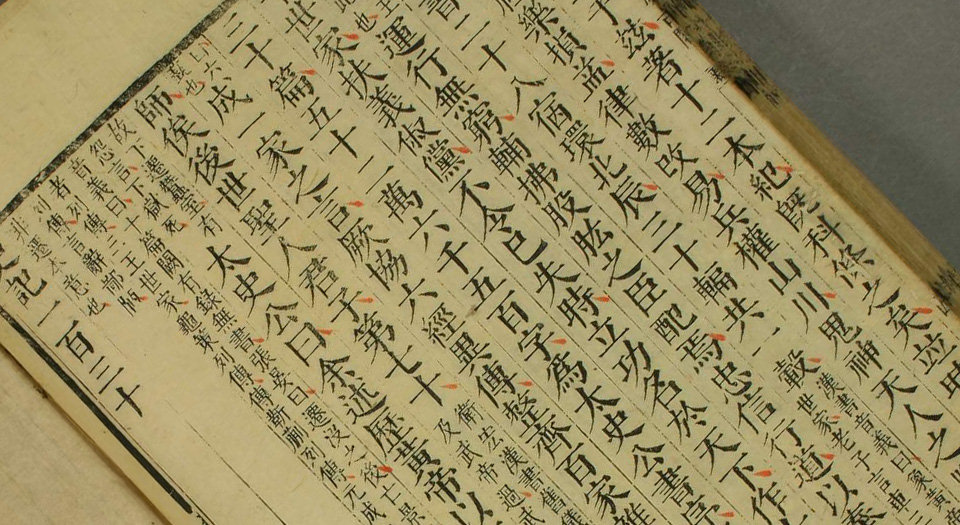
In the first year of Taichu (104 BCE), Sima Qian began writing his book. It was finally completed in the second year of Zhenghe (91 BCE). Fourteen years in the making, the Records of the Grand Historian comprises 130 chapters and 526,500 Chinese characters. Together with the Book of Han, it is both the source of later “official histories” and one of the most refined classics of ancient Chinese literature, fully deserving Lu Xun's description: “the historian's unsurpassed masterpiece, a Li Sao without rhyme.”
How, then, did Sima Qian write this work? Or, to put it another way, what conditions made it possible? This article examines five aspects that will give you a deeper understanding of the book.
I. A Family Tradition
Sima Qian's father, Sima Tan, was Grand Astrologer under the Western Han. This office primarily oversaw the state's books and records, astronomy, and calendrical calculations, while also handling documents and recording major events. In antiquity, when information was scarce and circulated slowly, the post gave Sima Tan access to the most comprehensive documentary collection of his time.
According to Sima Qian, his ancestors had long kept historical records. Zhuanxu appointed Chong to oversee astronomy and Li to oversee geography. These offices remained hereditary through the Xia and Shang periods. Under King Xuan of Zhou, Chong and Li's descendants lost their posts and became the Sima clan, which oversaw Zhou history generation after generation.
The clan later had many other notable descendants. Among the better known were Sima Cuo, who debated Zhang Yi and conquered Shu, and Sima Ang, who became king in Yin before surrendering to the King of Han. Members of the clan also held office across generations under the Han. But only when Sima Tan became Grand Astrologer did they resume their ancestors' work from several centuries earlier.
Sima Tan had two important achievements. One was his Essay on the Essential Points of the Six Schools, outlining the main ideas, strengths, and weaknesses of the Warring States schools of Yin-Yang, Confucianism, Mohism, Names, Legalism, and Daoism. It is included in full in Sima Qian's “The Grand Historian's Self-Preface.” The other was his plan to write a comprehensive history, his life's undertaking.
Unfortunately, before he could formally begin writing, Sima Tan approached death. Holding Sima Qian's hand, he tearfully entrusted him with his last wish.
Our forebears were grand historians of the Zhou royal house. In ancient times they earned distinction under Yu and Xia, overseeing celestial affairs. Later the family declined: must its tradition end with me? If you become Grand Historian again, you will continue our ancestors' work. Today the emperor carries on a lineage of a thousand years and performs the Feng sacrifice at Mount Tai, yet I cannot accompany him. Such is fate, such is fate! After I die, you will surely become Grand Historian. When you do, do not forget the work I wished to write. Filial piety begins with serving one's parents, proceeds through serving one's ruler, and culminates in establishing oneself. To make one's name known to posterity and thereby bring glory to one's parents is the highest filial piety. —Records of the Grand Historian, “The Grand Historian's Self-Preface”
“After I die, you will surely become Grand Astrologer. Once you do, never forget the work I wanted to write!”
II. A Broad Enough Outlook
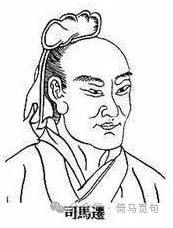
Sima Qian was thirty-six when his father died. By then, he already possessed a sufficiently broad outlook.
Qian was born at Longmen and farmed and tended animals on the sunny side of the river and mountains. At ten he recited ancient writings. At twenty he traveled south to the Yangtze and Huai, climbed Kuaiji, explored Yu's cave, visited Jiuyi, and sailed the Yuan and Xiang. Northward he crossed the Wen and Si, studied in the capitals of Qi and Lu, observed the legacy of Confucius, and practiced village archery in Zou and Yi. He suffered hardship in Po, Xue, and Pengcheng, returning through Liang and Chu. Qian then entered service as a Gentleman of the Palace and was sent west on a mission south of Ba and Shu, extending south into Qiong, Zuo, and Kunming, before returning to report. —Records of the Grand Historian, “The Grand Historian's Self-Preface”
Born at Longmen, Sima Qian farmed and herded cattle in his hometown as a child. By ten he was already studying and reciting ancient texts. After twenty, he began traveling across the realm to learn. To the east, he visited present-day Hebei, Shandong, and the Jiangsu and Zhejiang coasts; to the south, Hunan, Jiangxi, Yunnan, and Guizhou; to the west, Shaanxi, Gansu, and western Sichuan; and to the north, the vicinity of the Great Wall. Apart from a few newly established commanderies and counties, he can be said to have visited nearly all the territory then governed by the Han Empire.
During these journeys, he conducted very detailed investigations. Many accounts of his travels appear in the Records themselves.
For instance, he describes what he saw and heard in the former capital of Wei, where local people told him how the state fell:
The Grand Historian says: I visited the ruins of old Daliang. People there told me, “When Qin attacked Liang, it diverted the river's channels to flood Daliang. After three months the city collapsed, the king asked to surrender, and Wei was destroyed.” —Records of the Grand Historian, “The Hereditary House of Wei”
For instance, he made a special trip to Linzi in Shandong to visit Confucius's former home. Watching Confucian scholars practice ritual there made him reluctant to leave:
The Grand Historian says: The Odes say, “I look up to the lofty mountain; I travel the great road.” Though I cannot reach it, my heart yearns toward it. Reading the books of Confucius, I imagined the man. In Lu, I saw Zhongni's temple, carriage, robes, and ritual vessels. Scholars practiced ritual at his home at the proper times, and I lingered there, unable to depart. —Records of the Grand Historian, “The Hereditary House of Confucius”
For instance, he climbed Mount Ji, southeast of present-day Dengfeng in Henan, and saw what was thought to be Xu You's tomb. Legend says Yao offered to abdicate in Xu You's favor, but Xu You refused:
The Grand Historian says: I climbed Mount Ji, where there is said to be a tomb of Xu You. —Records of the Grand Historian, “Biographies of Bo Yi”
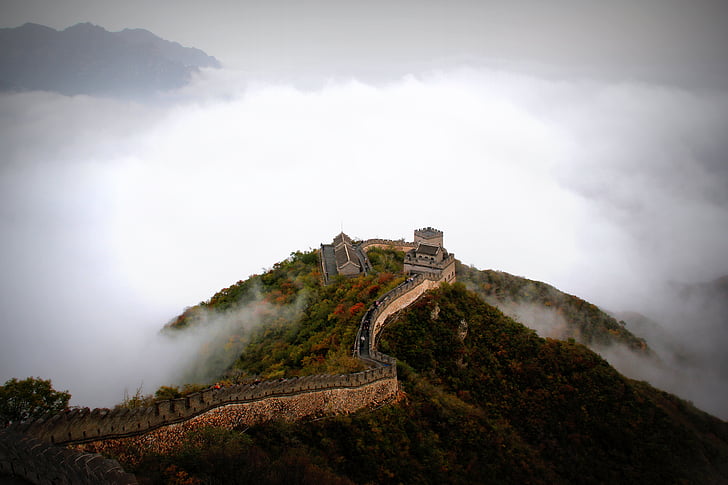
For instance, he visited the northern frontier and returned along the Straight Road. Along the way, he examined the Great Wall and fortifications built by Meng Tian, lamenting the burden such enormous works imposed on ordinary people:
The Grand Historian says: I visited the northern frontier and returned by the Straight Road. Along the way I observed the Great Wall, watchtowers, and fortifications Meng Tian built for Qin, cutting through mountains, filling valleys, and opening the Straight Road. He certainly treated the people's labor lightly. —Records of the Grand Historian, “Biography of Meng Tian”
Read ten thousand books and travel ten thousand li: without personally visiting, investigating, and truly encountering the country from north to south, Sima Qian would have struggled to produce a work of such immense scope.
III. Rich Collections of Books
Anyone studying history knows how precious primary sources are. Before the Han in particular, most texts were copied onto bamboo slips. A set of books might be the only one in the world; once lost, it was truly gone, never to be found again. Popular books might exist in several copies, but many became incomplete through copying and transmission. To this day, the study of editions, textual criticism, and bibliography remain pillars of research into ancient Chinese history.
Many learned people in antiquity actually possessed large book collections. Laozi, for example, once served as an official managing the Zhou royal library. An important reason Lu You has more surviving poems than any other poet is that he came from a book-collecting family in Jiangnan. Gu Yanwu also owned many books. Traveling the realm, he had several donkeys carry boxes of them, opening them to check whenever he encountered something inconsistent with what he had previously heard.
For people then, lacking money and influence meant lacking access to books. Sima Qian, however, happened to have access to the world's most comprehensive collection.
In the third year after Sima Tan's death, Sima Qian indeed inherited the office of Grand Astrologer, just as his father had predicted. The post gave him access to many historical works and collected books, as well as central-government documents and local administrative reports from the Han.
Before papermaking and printing, only the central government could collect and preserve so much material, much of it unique. Its library was therefore culturally even more important than today's National Library and National Archives Administration.
It was this office, we can say, that gave Sima Qian access to the richest, most comprehensive documentary resources of his age. That was a necessary condition for writing its greatest history.
IV. An Unwavering Ideal
As mentioned, Sima Tan's last wish was: “Do not forget the work I wished to write.” His father's wish was also Sima Qian's own ideal.
Sima Qian deeply revered Confucius, particularly admiring his authorship of the Spring and Autumn Annals. Both father and son firmly believed Confucius wrote that work. Sima Qian wanted his own history to achieve the same effect.
What effect did the Spring and Autumn Annals achieve?
The Spring and Autumn Annals illuminates above the way of the Three Kings, and below distinguishes the principles of human affairs. It resolves doubts, clarifies right and wrong, settles uncertainty, praises goodness and condemns evil, honors the worthy and disparages the unworthy, preserves fallen states, continues broken lineages, remedies abuses, and restores what has decayed: these are the great principles of the kingly way. …Nothing surpasses the Annals in turning an age of disorder back toward rectitude. Its text contains tens of thousands of characters, its implications thousands of points. The dispersal and gathering of all things are found within it. In the Annals, thirty-six rulers are murdered and fifty-two states destroyed; feudal lords driven into exile and unable to preserve their states are beyond counting. Examining the reasons, all had lost their foundations. Thus the Changes says, “An error of a hair's breadth leads a thousand li astray.” Thus it is said, “A minister murdering his ruler or a son murdering his father is not a matter of one day or night; its development has been long.” …The Annals is therefore the great source of ritual and righteousness. Ritual restrains wrongdoing before it occurs; law applies after it has occurred. The effects of law are easy to see, while what ritual prevents is hard to know. —Records of the Grand Historian, “The Grand Historian's Self-Preface”
The Spring and Autumn Annals selects the good and condemns the bad, promotes the virtue of the Three Dynasties, and praises the Zhou royal house; it does more than criticize. …Since the Han arose, down to our enlightened emperor, auspicious signs have appeared, the Feng and Shan sacrifices been instituted, the calendar changed and ceremonial colors altered. Receiving Heaven's mandate in solemn purity, his blessings flow without limit. Peoples with strange customs from beyond the seas, passing through successive interpreters, come to our borders and request to offer tribute and appear at court in numbers beyond description. His ministers and officials strive to extol his sacred virtue, yet cannot fully express it. When worthy and capable scholars go unused, it shames the ruler of a state; when an enlightened sovereign's virtue goes unheard, it is the fault of the responsible officials. Having held this office, if I failed to record our enlightened sovereign's abundant virtue, failed to recount the achievements of meritorious ministers, hereditary houses, and worthy officials, and abandoned my father's instructions, no offense could be greater. What I call recounting old events and ordering their transmitted histories is not what is called original creation. Your comparison with the Spring and Autumn Annals is mistaken. —Records of the Grand Historian, “The Grand Historian's Self-Preface”
To summarize all that: I hope my history, like the Spring and Autumn Annals, will record past events, including rulers' successes and failures, states' rises and falls, the present emperor's wisdom, and meritorious ministers' deeds. Future generations can learn from these records, thereby advancing “ritual and righteousness.”
Let us set aside any judgment of Sima Qian's views as a member of the ruling group. What matters is that he firmly believed in this system of values. It gave him the spiritual drive to spend more than a decade writing and sacrifice his entire life to it.
V. The Utmost Humiliation
Humiliation can destroy someone or spur them on. Fortunately, Sima Qian did not succumb.
He had worked with Li Ling and considered him upright, devoted to the state, and possessed of an outstanding statesman's character. Although they were not particularly close, Sima Qian therefore spoke a few words in Li Ling's favor after Li surrendered to the Xiongnu.
Unexpectedly, Emperor Wu of Han was furious and imprisoned him. The following year, the emperor executed Li Ling's entire family and sentenced Sima Qian to castration—a deeply shameful punishment and an immense blow to him.
Eunuchs were despised at the time, and of all punishments, castration was the most humiliating. Sima Qian believed there was nothing wrong with his abilities or moral character, yet a single ill-judged remark had brought this punishment upon him. Overwhelmed by shame, he longed to kill himself:
Highest is not to disgrace one's ancestors; next, not to disgrace oneself; next, not to suffer humiliation in one's bearing; next, not in one's speech. Below these come the humiliation of bending the body, of changing into prison clothes, of stocks, ropes, and beatings, of shaved hair and iron shackles, and of mutilated flesh and severed limbs. Lowest of all is the ultimate degradation of castration! —“Letter in Reply to Ren An”
The brave do not necessarily die for principle, while even the timid, when they admire righteousness, can summon effort anywhere. Though I am cowardly and wish to cling to life, I understand the distinction between accepting and rejecting one's fate. Why would I willingly sink into the disgrace of imprisonment? Even male and female slaves can take their own lives; how much more could I, driven to such extremity? —“Letter in Reply to Ren An”
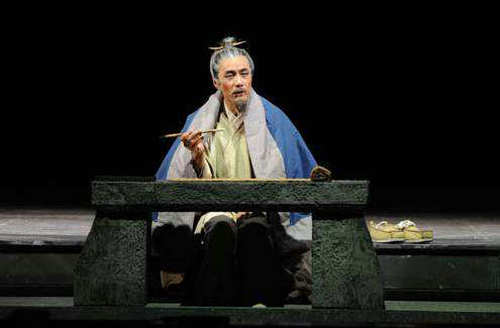
After an inner struggle, Sima Qian chose to cling to life, to live on with humiliation. He thought of earlier sages who had persevered through adversity and finally achieved something, and of his own unfinished mission. Only by completing this history could he die without regret:
Everyone must die. Some deaths weigh more than Mount Tai, others less than a goose feather; the difference lies in what one pursues. —“Letter in Reply to Ren An”
The reason I endure and cling to life, accepting confinement amid filth, is that I regret leaving my private aspirations unfulfilled, dying in obscurity without my writings becoming known to posterity. —“Letter in Reply to Ren An”
History contains countless people who enjoyed wealth and rank yet left nothing behind, and others who suffered but changed history and benefited generations. Everyone has the right to choose their own life. Confronted with a lofty ideal, the utmost humiliation can become the most powerful motivation. Sima Qian's following words were written not in ink, but in blood and tears:
The wealthy and noble of antiquity whose names have vanished are beyond counting; only extraordinary, outstanding people are remembered. King Wen, imprisoned, elaborated the Changes; Zhongni, in adversity, composed the Spring and Autumn Annals; Qu Yuan, exiled, wrote Li Sao; Zuo Qiu, blinded, produced the Discourses of the States; Master Sun, his kneecaps removed, set forth the Art of War; Lü Buwei, banished to Shu, left the Annals of Lü; Han Fei, imprisoned in Qin, wrote “The Difficulties of Persuasion” and “Solitary Indignation.” The three hundred Odes were largely written by sages and worthies giving expression to their frustration. These people all harbored pent-up feelings and could not put their way into practice, so they recounted past events and thought of those to come. Zuo Qiu without sight and Master Sun with severed feet could never again be employed, so they withdrew to write, giving vent to their indignation and hoping to make themselves known through their writings alone. —“Letter in Reply to Ren An”
Presumptuously, I too have recently entrusted myself to my inadequate words. I have gathered scattered accounts from across the realm, briefly examined deeds, traced beginnings and endings, and investigated the patterns of success, failure, rise, and decline, from the Yellow Emperor down to the present. I made ten chronological tables, twelve basic annals, eight treatises, thirty hereditary houses, and seventy biographies: 130 chapters in all. I also wished to investigate the relationship between Heaven and humanity, comprehend changes from antiquity to the present, and establish an interpretation of my own. Before the draft was complete, this disaster struck. Regretting that it remained unfinished, I accepted the most terrible punishment without yielding. If I can truly complete this book, hide it in a famous mountain, transmit it to those who understand, and circulate it in great cities, I will have repaid the debt of my former humiliation. Though executed ten thousand times, how could I regret it? Yet this can be explained to the wise and is hard to tell ordinary people. —“Letter in Reply to Ren An”
Comments
No account needed. A nickname is required; email is optional. Successful submissions appear publicly without manual pre-moderation.
Comments and nicknames are public. Optional email addresses are not displayed. The selected Waline backend and its hosting provider process comments, nicknames, optional email, IP and browser information. Comments show IP region, without the full IP address or browser and operating system labels. Hosting: Vercel; database: Neon.