1 Truthfulness in news is an aspiration and a slogan, rather than an intrinsic property of news. News is not necessarily true; even the most authoritative outlets make mistakes.
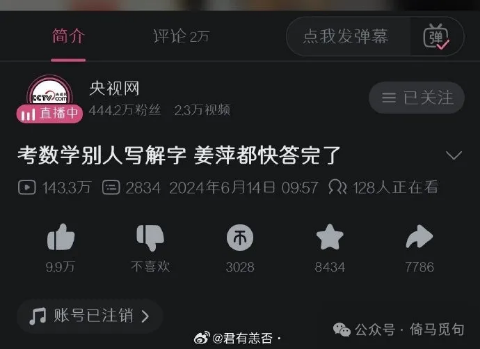
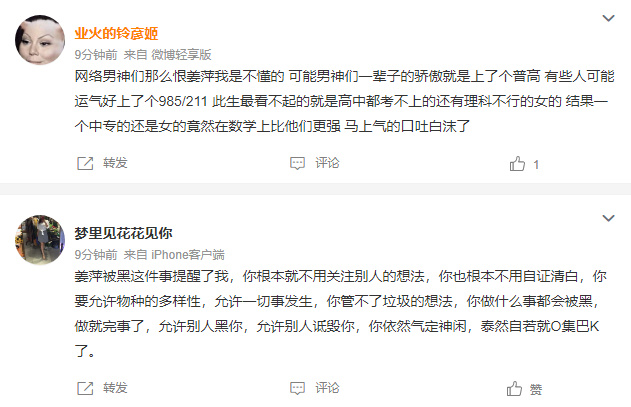
2 Public opinion can reflect people's needs, but it does not equal fact. Many internet users supported Jiang Ping and wanted to believe in her simply because that version of Jiang Ping fulfilled certain imaginings of theirs.
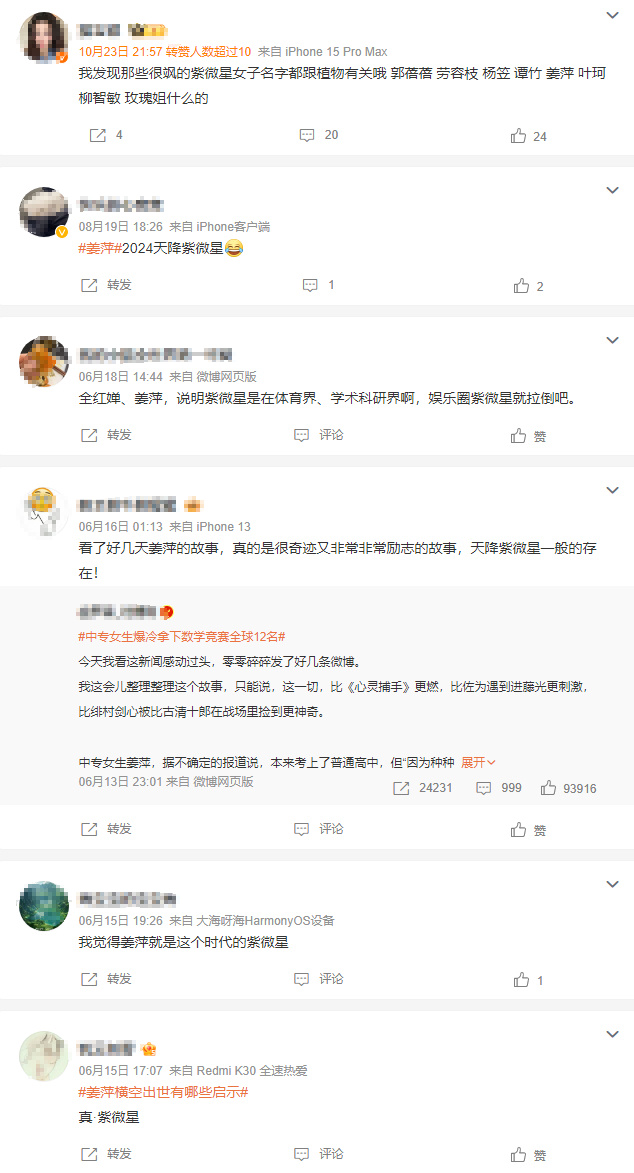
3 Sometimes the truth does not matter. When people follow a trending story, they are really focusing on themselves. An ardent Jiang Ping supporter simply wants to demonstrate that women can be brilliant, vocational school students can be brilliant, humanities students can be brilliant, rural people can be brilliant—and I can be brilliant too. Jiang Ping fills them with strength, so why spoil their fun?
4 Ultimately, news serves needs: ① the media's need to make money; ② rulers' need to educate and shape the public; ③ readers' need for truthful information; ④ readers' need for psychological comfort. Understanding this can effectively keep your blood pressure down in the internet age.
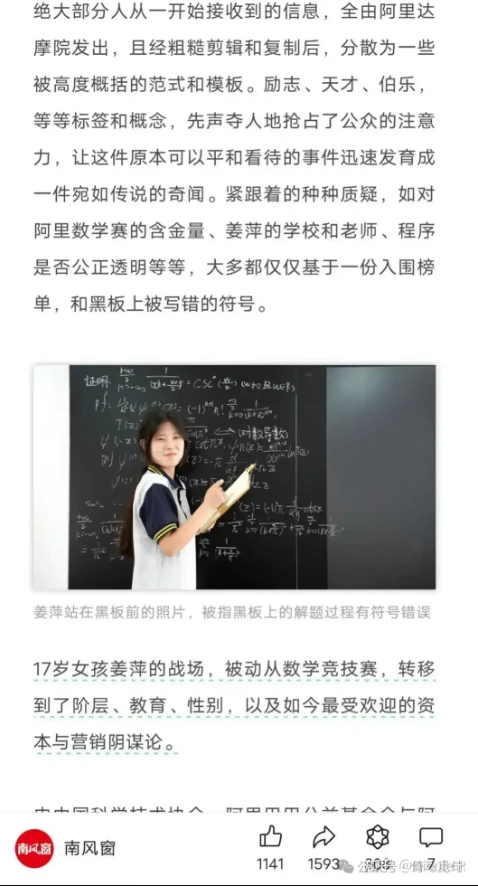
5 Information is generally overabundant in the internet age, just as overproduction and excess capacity are widespread in material production. Most of that surplus information is junk. Learning to filter information is an essential skill for internet users in this new era.
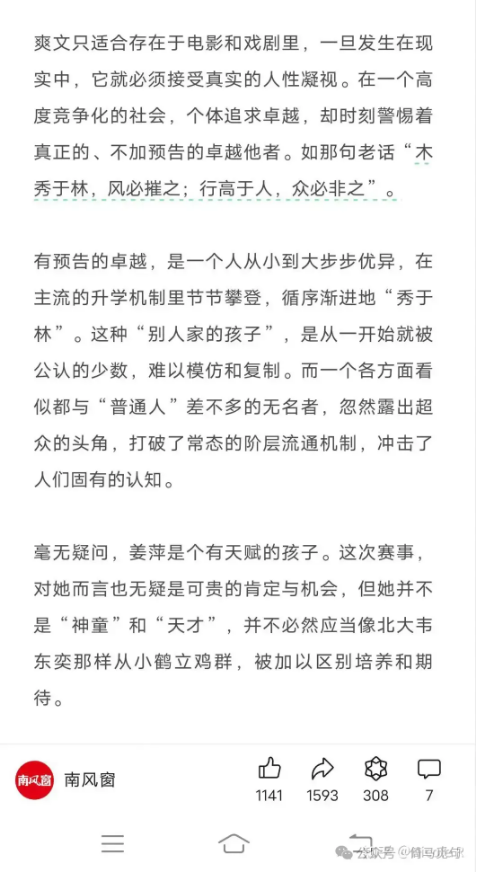
6 Among today's major internet platforms, Zhihu offers the most useful reference material. In the Jiang Ping incident, Zhihu raised doubts first and never backed down. Countless contributors followed one another in digging into the details despite the pressure of political correctness. Douyin offers the least useful material: practically everything is scripted or chasing traffic.
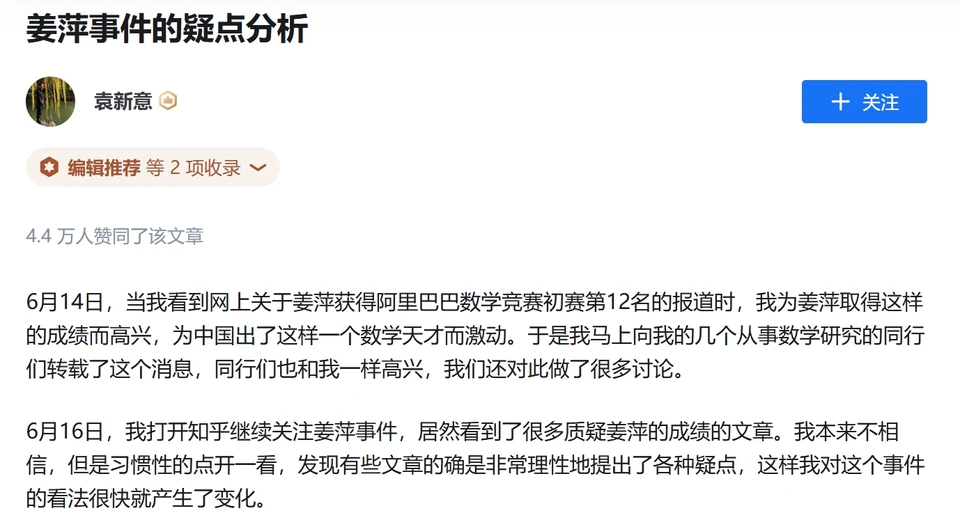
7 Now that the official announcement is out, some articles say: “Public opinion must not first praise her to destruction and then beat her down! Why not show Jiang Ping more tolerance?” Such articles are full of emotion but have zero value. Those who questioned Jiang Ping were questioning her all along and never believed the story, let alone turned on her afterward. They bear her no personal malice either; they are discussing the matter itself.

In truth, those who believed in Jiang Ping are rather pitiable because they are poor at assessing information. If they can be deceived by news about Jiang Ping, they can also be deceived by other news, led around in circles by major media outlets every day. I hope they learn something from this episode.
But the internet has a short memory. How many people now remember the influencer Maoyibei, who “found” primary school student “Qin Lang's” winter holiday homework in “Paris, France”? That happened this February, less than a year ago.

Everyone sees things from their own perspective and starts from their own needs. That is human nature. The government wants stability, the media want traffic, and audiences want comfort. A few fiascos every year give everyone what they want. The Jiang Ping incident will gradually subside, but people's needs will never be fully satisfied, so similar incidents will keep occurring.
Comments
No account needed. A nickname is required; email is optional. Successful submissions appear publicly without manual pre-moderation.
Comments and nicknames are public. Optional email addresses are not displayed. The selected Waline backend and its hosting provider process comments, nicknames, optional email, IP and browser information. Comments show IP region, without the full IP address or browser and operating system labels. Hosting: Vercel; database: Neon.