1 The Materialist Conception of History: An Important Part of Marx's Legacy
If we had to choose the person who best understood Marx's thought, apart from Marx himself, we would surely choose his comrade and successor Engels.
If we had to choose the shortest and most accurate summary of Marx's theory, we would surely choose Engels's “Speech at the Graveside of Karl Marx.”
At only about 1,200 Chinese characters, this speech gives an exceptionally concise account of Marx's lifetime achievements. As a revolutionary, he founded various newspapers and established the International Working Men's Association, known historically as the First International. As a scientist, he discovered “the law of development of human history” and “the special law of motion governing the present-day capitalist mode of production and the bourgeois society that this mode of production has created.” The former is the materialist conception of history; the latter is the revelation of the secret of capitalist production through surplus value.
The second discovery has the substantial volumes of Capital to explain it. Today we will discuss only Marx's first discovery, the materialist conception of history.
Engels summarized it as follows:
Just as Darwin discovered the law of development of the organic world, Marx discovered the law of development of human history: the simple fact, hitherto concealed by an overgrowth of ideology, that human beings must first eat, drink, find shelter, and clothe themselves before they can pursue politics, science, art, religion, and so on. Consequently, the production of the immediate material means of subsistence, and thus the particular stage of economic development of a people or an era, forms the foundation upon which state institutions, legal conceptions, art, and even religious ideas develop. They must therefore be explained from this foundation, rather than the other way around, as had previously been done. —Collected Works of Marx and Engels, vol. 3, p. 601, “Speech at the Graveside of Karl Marx”
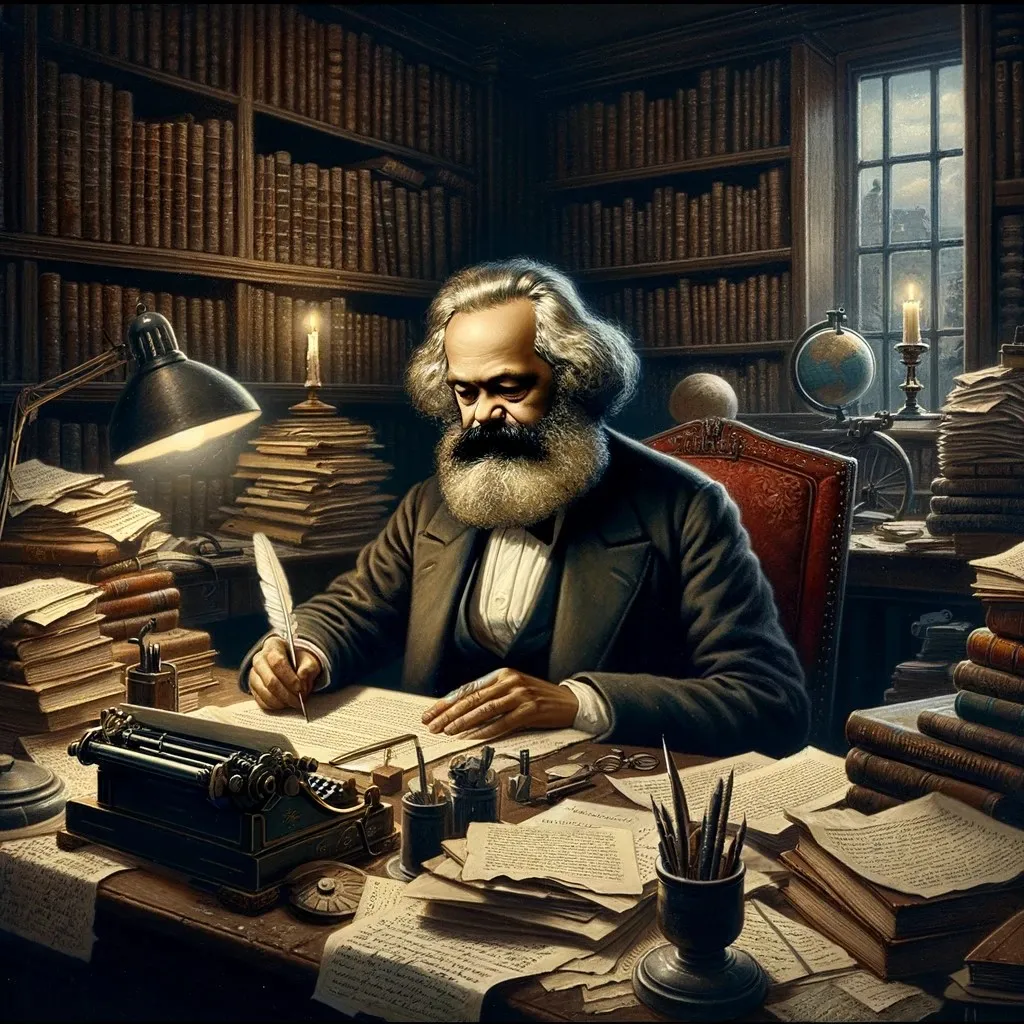
Here, “the production of the immediate material means of subsistence, and thus the particular stage of economic development of a people or an era” means the mode of production and the social stage dominated by a particular mode of production.
For example, a society dominated by the feudal mode of production is a feudal society; one dominated by the capitalist mode of production is a capitalist society. This is the most fundamental perspective because all the accompanying institutions and culture result from the operation of that mode of production.
The subject of Capital is “the capitalist mode of production and the relations of production and exchange corresponding to it.” An important task for contemporary Marxists is to explore the communist mode of production.
Whatever their field, social science researchers must connect their object of study with a particular mode of production. Only then can their research be sufficiently grounded and scientific.
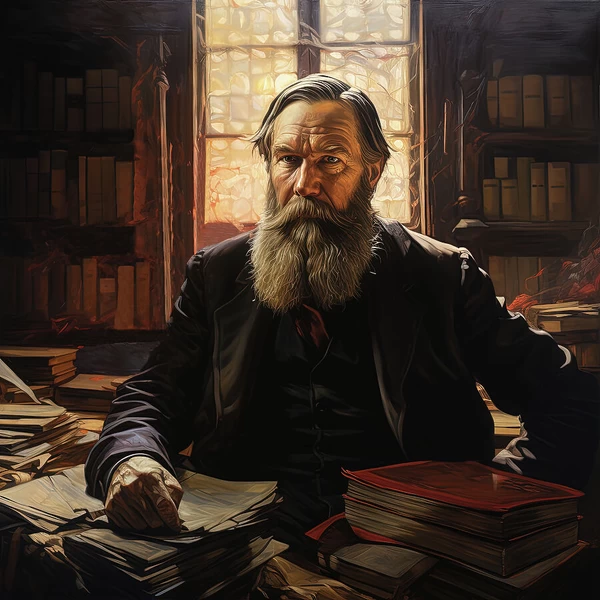
2 How Should We Understand “Mode of Production”? An Examination of the Original Texts
What, then, is a “mode of production”?
Marx first explained the meaning of the term in The German Ideology, coauthored with Engels in 1845–1846:
The way in which people produce their means of subsistence depends first of all on the nature of the means of subsistence they already possess and need to reproduce. This mode of production should not be considered merely as the reproduction of these individuals' physical existence. Rather, it is a definite mode of activity of these individuals, a definite way of expressing their lives, their definite way of life. As individuals express their lives, so they are. What they are therefore coincides with their production, both with what they produce and with how they produce. Thus, what individuals are depends on the material conditions of their production. —Collected Works of Marx and Engels, vol. 1, p. 520, The German Ideology
Here, “mode of production” means “the way in which people produce their means of subsistence.” The passage also explains its importance at the individual level. In a sentence: what you produce and how you produce, or labor, determine what kind of person you are.
In the second observation of The Poverty of Philosophy, published in 1847, Marx wrote:
Mr. Proudhon the economist understands very well that people make woolen cloth, linen, and silk fabrics within definite relations of production. What he does not understand is that these definite social relations are also produced by people, just like linen, flax, and so forth. Social relations are closely bound up with productive forces. In acquiring new productive forces, people change their mode of production, and in changing their mode of production—their way of earning a living—they change all their social relations. The hand-mill gives you society with the feudal lord; the steam-mill, society with the industrial capitalist. —Collected Works of Marx and Engels, vol. 1, p. 602, The Poverty of Philosophy
Here Marx explicitly states that the “mode of production” is the “way of earning a living.” I believe this is the key to understanding the term. It means the same thing as the summary of historical materialism in the graveside speech: people must first eat, drink, find shelter, and clothe themselves before pursuing politics, science, art, religion, and so forth. We can say that grasping the question of the mode of production allows historical materialism to be put into practice.
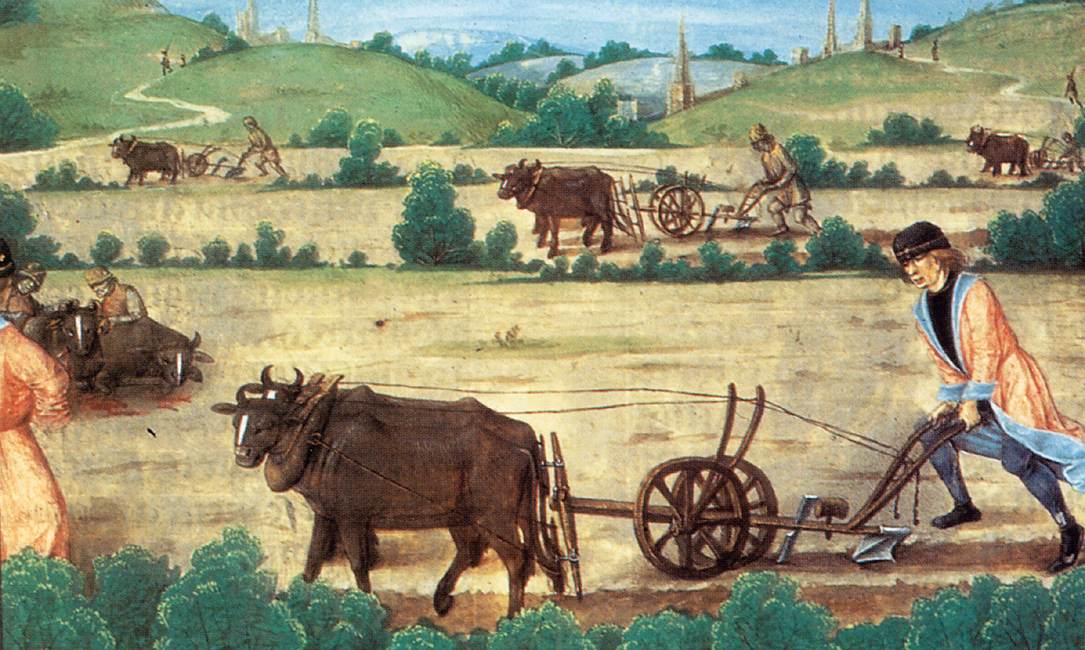
Afterward, “mode of production” became a term Marx and Engels used frequently, though with different meanings, or different emphases, in different contexts. According to the entry on “Mode of Production” in the economics volume of the Encyclopedia of China, it chiefly has the following meanings. You can skim this part.
1 A way of producing with particular means of production and methods of labor. Marx often called changes in the means of labor, primarily tools, or in methods of labor, such as cooperation and division of labor, or in both together, a transformation of the mode of production.
For example, with given means of labor, a shoemaker can make one pair of boots in a twelve-hour working day. To make two pairs in the same time, the productivity of his labor must double. That cannot happen without changing his means of labor, his method of labor, or both together. Consequently, the conditions of his labor's production—that is, his mode of production, and hence the labor process itself—must be revolutionized. —Collected Works of Marx and Engels, vol. 5, p. 366, Capital, vol. 1
2 Different types of production methods, or methods in different sectors. The former include handicraft production, manufacture, large-scale industrial production, and domestic labor; the latter include industrial and agricultural modes of production.
3 The social form of production, including socioeconomic formations and economic systems: for example, the feudal and capitalist modes of production.
In broad outline, the Asiatic, ancient Greek and Roman, feudal, and modern bourgeois modes of production may be regarded as epochs in the development of the economic formation of society. —Collected Works of Marx and Engels, vol. 2, p. 592, A Contribution to the Critique of Political Economy
[Wage labor in capitalist society is] the decisive, dominant mode of production. —Complete Works of Marx and Engels, vol. 47, p. 151, quoted in the “Mode of Production” entry in the economics volume of the Encyclopedia of China
4 The unity of the reproduction of material goods and the reproduction of relations of production.
Like every other mode of production, the capitalist mode of production constantly reproduces not only material products but also society's economic relations: the economic forms defining the process in which material products come into being. —Collected Works of Marx and Engels, vol. 7, p. 987, Capital, vol. 3
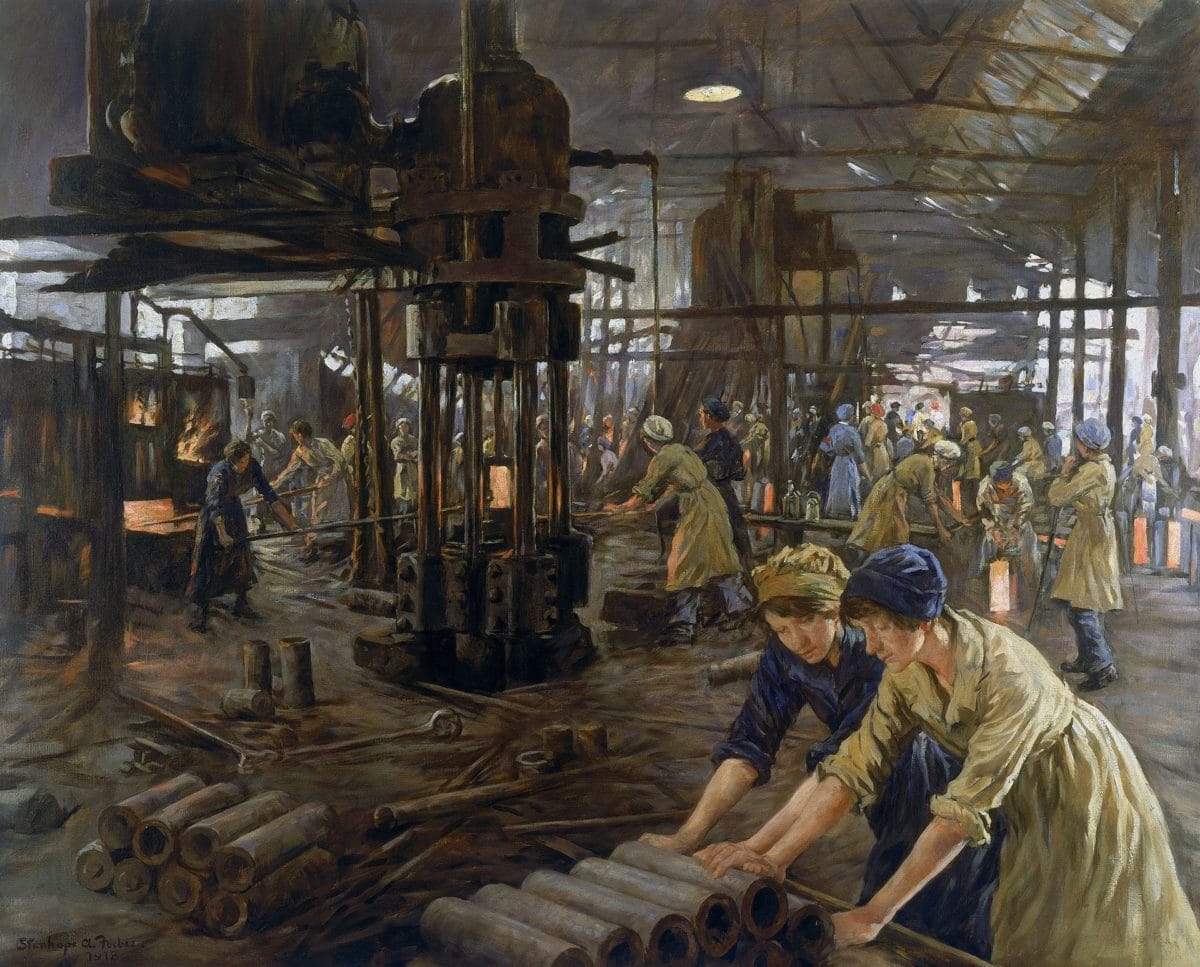
These classifications come from the Encyclopedia of China and may not be entirely accurate. Taken together, however, the materials show that the core of Marx's understanding of “mode of production” is the “way of earning a living.” We might also call it a “way of operating,” a “way of existing,” or simply a “mode of reproduction” or “mode of motion.” Production is not just a one-off act. More important is sustaining, or even expanding, the production process and maintaining all the conditions it requires. After all, the world is a collection of processes rather than finished things, and everything is connected through numerous complex relationships. This, too, is an important part of dialectics.
The concept of “mode of production” can apply on scales large and small. How an individual earns a living determines that person's character; how a department works determines the department's character; how a society operates determines that society's character. That is why Marx said: “In broad outline, the… modes of production may be regarded as epochs in the development of the economic formation of society.” He believed a society's dominant mode of production determined its nature. As for the “Asiatic, ancient Greek and Roman, feudal, and modern bourgeois modes of production,” these were conclusions he drew from his concrete analysis of the material then available. True Marxists should grasp the principle of the mode of production and draw new conclusions from real-world material. They should not elevate Marx's examples into principles and force reality to fit them.
To sum up, I believe that historical materialism makes social science scientific, and the mode of production provides the central thread through which historical materialism is applied.
3 The Components of the Mode of Production: Soviet Influence
China's study and understanding of Marxism have been greatly influenced by the Soviet History of the Communist Party of the Soviet Union (Bolsheviks): Short Course. Produced in 1938 under Stalin's personal direction, this was not simply a history book. It was also a work of theoretical study and political and ideological education, described as “an encyclopedia of the fundamentals of Marxism-Leninism” and “a correct interpretation of the history of the CPSU(B) and the fundamental questions of Marxism-Leninism.” Historically, many Party cadres acquired a rapid grounding in Marxism through this book. Its influence remains visible today in Life and Philosophy, compulsory volume four of China's senior secondary politics curriculum, and An Introduction to the Basic Principles of Marxism, one of the university's “four sacred textbooks.”
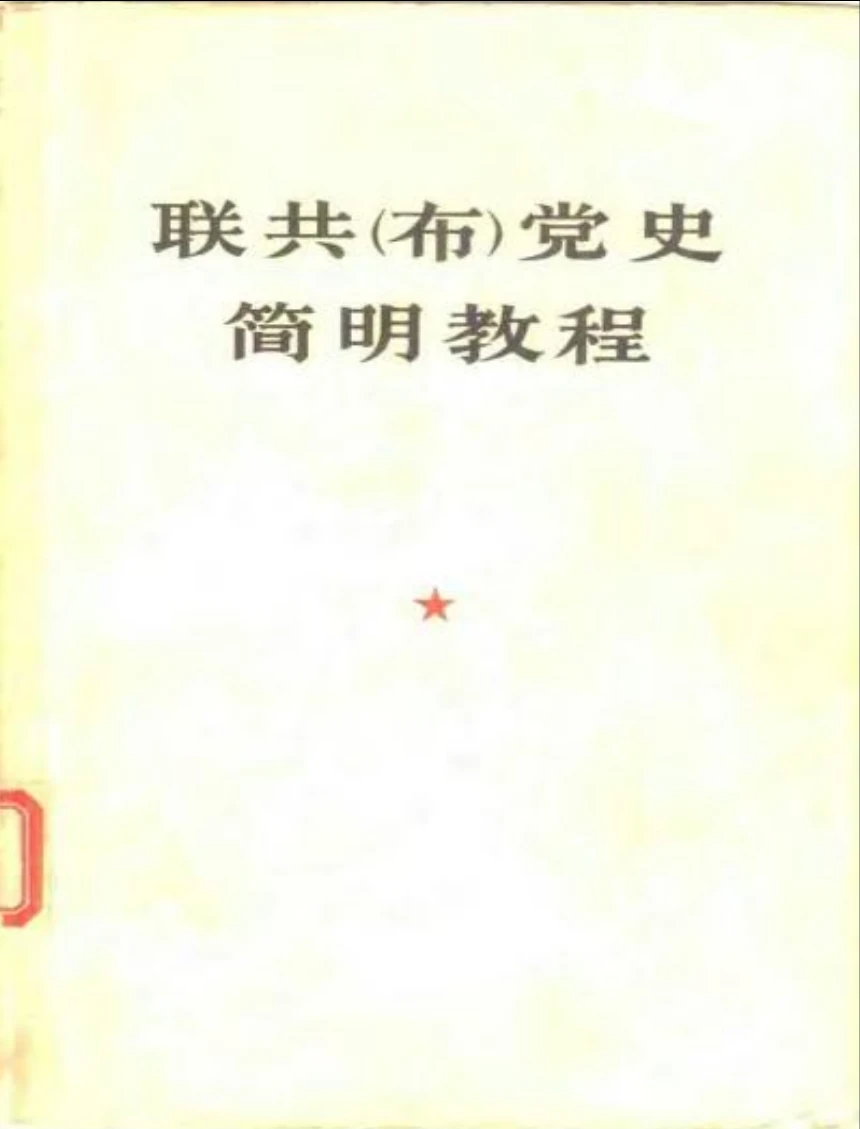
Chapter four, section two of the Short Course is titled “Dialectical and Historical Materialism.” Written by Stalin himself, it introduces the philosophical foundations of the Marxist-Leninist party: dialectical materialism is its worldview, and historical materialism is the application and expression of dialectical materialism in the sphere of human society.
The essay has three characteristics: ① It is accomplished: its author had clearly read a great deal of Marx and Engels and understood them deeply. ② It is accessible, clearly organized, and easy to study. ③ It serves practical needs: it could train cadres, unify thinking, and strengthen Stalin's authority, achieving several objectives at once.
The essay divides the mode of production into productive forces and relations of production. Productive forces comprise tools of production and workers; relations of production comprise who owns the means of production, the ownership system, and who controls them, the distribution system.
The hierarchy is so simple and clear that it can be represented in a mind map:
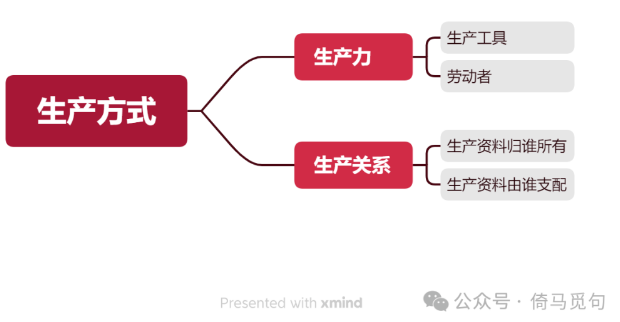
The advantage of this classification is that it reduces the question of the mode of production to four elements and indicators. People can then confidently declare: our country has large-scale industry and a working class in power; most means of production belong to collectives and society as a whole; we distribute according to the amount of labor performed. If we are not socialist, who is? By this standard, building socialism in one country is certainly feasible. With the Soviet Union as a model, socialist states arose around the world, chiefly in Eastern Europe and East Asia, and after the Second World War formed a camp that divided the world with the capitalist camp.
The disadvantage is precisely that it simplifies the complex, integrated question of the mode of production into four isolated indicators. Considering indicators in isolation inevitably leads to mistakes. Do capitalist countries not have large-scale industry? Could ruling workers' party cadres not become a new privileged class? If a privileged class holds power, do all workers still control the means of production in state-owned enterprises? Could workers' wages under capitalism not be described as distribution according to labor? Thus, by the Soviet Union's later years, these indicators still allowed it to be called socialist, while considering its mode of production as a whole made that description much harder to sustain.
It was also “Dialectical and Historical Materialism” that proposed the famous “five-stage theory” of human history. The original reads:
History knows five basic types of relations of production: primitive communal, slave-owning, feudal, capitalist, and socialist. —History of the Communist Party of the Soviet Union (Bolsheviks): Short Course, People's Publishing House, p. 137
Now compare Marx's statement:
In broad outline, the Asiatic, ancient Greek and Roman, feudal, and modern bourgeois modes of production may be regarded as epochs in the development of the economic formation of society. —Collected Works of Marx and Engels, vol. 2, p. 592, A Contribution to the Critique of Political Economy
We can identify three differences between these formulations:
1 Marx leaves room for qualification. “In broad outline” and “may be regarded” indicate that his examples were provisional conclusions. Those examples were not his main point, and the labels were unimportant. Stalin's tone, by contrast, is certain and categorical, as though announcing the standard answer, with everything else being wrong.
2 Marx's method is inductive: he offers preliminary conclusions after studying extensive real-world material. Stalin's method is deductive, or supplies a theorem for us to use deductively. Astronomers use Newton's laws to calculate celestial velocities, while Marxist historians use the “fivefold classification” to divide ancient history into stages. Indeed, Guo Moruo and Fan Wenlan debated for a long time whether the Western Zhou was a slave or feudal society.
3 Marx's criterion for dividing historical stages is the mode of production. Stalin's is the relations of production—or, according to his classification, who owns and who controls the means of production.
Broadly speaking, Marx was a scientist, while Stalin was a politician. Of course, Stalin's theoretical understanding was also considerable. The five-stage theory, for example, is essentially unobjectionable, and understanding things at that level was enough for Party cadres. Historians, however, should not be overly constrained by it. For example, better understanding ancient China's feudal society may require subdividing it into “feudal lordship” and “feudal landlordism.” I will explore this in a future article.
None of this is the main point. What matters is that “Dialectical and Historical Materialism” consolidated Stalin's position within the Party, fostered unity in the Soviet Communist Party, trained many Soviet and even Chinese Communist Party cadres, and addressed the practical problems of its time. Dividing the mode of production into a few indicators also facilitated practical work then. I have said this already, but it bears repeating.
Some criticize Stalin for misleading his students; others continue to treat his views as eternal truths. Both positions betray a lack of the materialist conception of history. As a politician and leader facing troubles at home and threats abroad, Stalin wrote this popular explanatory essay for the socialist cause. Naturally, he emphasized and simplified certain things. Is it not perfectly normal for it to have flaws? Insisting on seizing those flaws to attack the Stalin of ninety years ago—is that not simply bad faith?
4 The Mode of Production: The Central Question of Social Science
Today almost every country has institutions researching social science: the social sciences section of the American Academy of Arts and Sciences, France's École des Hautes Études en Sciences Sociales, and the Chinese Academy of Social Sciences, for example. Even where no specialized social science institution exists, similar advisory groups and think tanks do. The Hanlin Academy in ancient China had comparable functions.
These academies of social science, or think tanks, have three functions: ① advancing social science, culture, and scholarship; ② providing explanations that legitimize the ruling class's rule; ③ providing the ruling class with tools, methods, and advice for governing.
Social science researchers are themselves part of society and occupy particular positions within it. Their research is constrained by their circumstances and interests. Naturally, then, they cannot work entirely according to scientific principles or their own wishes. They must also consider the state's needs. Without state salaries and bonuses, without state research funding, they would lose their jobs.
To accomplish anything, today's social science researchers must therefore combine their scientific ideals, if they have any, with the state's practical needs. Otherwise, survival is difficult. Failing to understand this and remaining a pure idealist well into adulthood can easily lead to depression.
Given the need to consider the state's requirements, how can researchers make their work more scientific? I believe the answer is to focus on the mode of production.
As I said earlier, historical materialism makes social science scientific, and the mode of production is the central thread for applying it. Grasp the question of the mode of production, and historical materialism can be applied. Apply historical materialism, and you uphold scientific principles and methods. Combine those principles and methods with the collection and organization of real-world material, and you will surely reach relatively scientific conclusions and discover more social patterns. The mode of production can therefore be called the central question of social science.
Social science was never inherently divided. Its current disciplines exist to meet practical needs. Social science itself involves only two procedures: collecting material and analyzing it, or “investigation” and “research.”
In collecting material, historians' work organizing ancient texts is excellent. Sociological surveys, institutional data collection, and document organization all provide valuable material. Society is full of material, some organized and some not. Accelerating the collection and organization of material at risk of being lost, so that future generations can study it, is itself a contribution to social science.
In analyzing material, we encounter various theories and viewpoints: every discipline has its theories and histories of theory. Giving more thought to the mode of production at this stage can make research better grounded and more scientific, especially in disciplines crowded with disparate theories.
For example, journalism is such a strong discipline because our country and Party have long relied on newspapers and television for reporting news, popularizing science, explaining policy, and conducting political publicity. This creates a need for theories to guide the work and train its practitioners. Later, as television became widespread, the market economy developed, and the internet flourished, journalism alone became inadequate, so communication studies were introduced. This explains why journalism, though logically a branch of communication studies, has a relatively independent theoretical tradition with a distinctly Chinese character, while communication studies have imported many Western theories. Online communication has now developed into an independent course, a change closely tied to the development of society's productive forces.
Today's journalism and communication studies are being pulled along by the rapid development of practice, with theory lagging behind. Scholars in these fields should recognize that we live in a market economy: the government demands stability, major media companies seek profit, and content creators must find ways to survive, satisfy consumers' needs, and stay within the rules. To study consumers' needs, we must study their work, their lives, and their thinking. In a word, we must study the mode of production. There are so many meaningful questions to investigate here.
Of course, I am talking about social science researchers. For most journalism and communication students, the priority is to build professional skills and find work. Others aim for postgraduate study, a public-sector post, or a professional title, which is essentially also about finding work. I am not encouraging everyone to stop earning their own living and study how others earn theirs, the mode of production. I am simply offering a perspective, nothing more.

Literature is similar. Some people still write classical poetry, though it has long lost its vitality: most people are not good at writing it, and few read what they produce. Others encourage reading the classics, though much of that literature is also out of step with the times. Beauty is objective; aesthetic appreciation is subjective. If people today cannot create and appreciate the literary works of the past, that is not a sign of worsening social customs or moral decay. The mode of production has changed. What is popular now is online fiction and short dramas, forum posts, Zhihu answers, and WeChat public account articles, though traditional books still have many readers. Literature certainly exists within these forms; it simply differs from earlier forms and awaits further study and synthesis by literary theorists.
New things grow vigorously every day. Theorists should not remain confined to their own disciplines. On the one hand, they should work hard to study ancient modes of production and Capital, the capitalist mode of production. On the other, they should collect, organize, and study today's new phenomena and identify new patterns. All of these contain the seeds of the future society's new mode of production. That is my view.
There is really nothing new in this article. It merely repeats old themes from Marx, Engels, Lenin, Stalin, and Mao. If it helps readers understand Marxism a little better, I would be deeply honored.
Comments
No account needed. A nickname is required; email is optional. Successful submissions appear publicly without manual pre-moderation.
Comments and nicknames are public. Optional email addresses are not displayed. The selected Waline backend and its hosting provider process comments, nicknames, optional email, IP and browser information. Comments show IP region, without the full IP address or browser and operating system labels. Hosting: Vercel; database: Neon.