(I wrote this article in the summer of 2022. I have revised some wording in paragraphs 8, 12, and 13 and am now publishing it. I firmly support the leadership of the Communist Party of China, but I expect that many people will misunderstand me and post comments detrimental to unity. The comments section will therefore not be fully open.)
1 In The Communist Manifesto, Marx and Engels listed various kinds of “socialism.” These fell into three categories: a. “reactionary socialism,” including “feudal socialism,” “petty-bourgeois socialism,” and “German, or ‘true,’ socialism”; b. “conservative, or bourgeois, socialism”; and c. “critical-utopian socialism and communism.” None of these was the socialism Marx and Engels advocated. They listed these diverse socialisms precisely to contrast them with the communism they supported, and their communist views form the main content of The Communist Manifesto.
2 The “socialism” and “communism” mentioned above can be understood either as a set of views or a theory, or as a social system or stage of society. In Marx and Engels's time, they generally described themselves as “communists” rather than “socialists.” As a doctrine, communism is what we now call Marxism; as a stage of society, communism is the “association of free individuals” that replaces capitalist society: “In place of the old bourgeois society, with its classes and class antagonisms, we shall have an association in which the free development of each is the condition for the free development of all.”
3 In Critique of the Gotha Programme, Marx first divided communist society into a first phase and a higher phase. The advances of the higher phase over the first include: a. the disappearance of the individual's enslaving subordination to the division of labor; b. labor becoming not merely a means of making a living but itself life's prime need; c. greater all-round development of the individual; and d. from each according to their ability, to each according to their needs. This first phase of communism is what later came to be called the socialist stage.
4 According to Marx's division in Critique of the Gotha Programme, most of Marx and Engels's ideas about future society concern measures for the first phase of communist society, such as seizing political power, expropriating landed property for state expenditure, and abolishing the right of inheritance.
5 Distribution according to labor is a bourgeois right. Yet no country to date has achieved even complete distribution according to labor: each producer, after the various deductions, receives back from society exactly what they have given it. By this standard, there have been no so-called socialist countries in the world, much less has humanity entered the socialist stage.
6 In The State and Revolution, Lenin discussed in detail “the transition from capitalism to communism,” “the first phase of communist society,” and “the higher phase of communist society.” In his account, “socialist society” and “the first phase of communism” are synonyms.
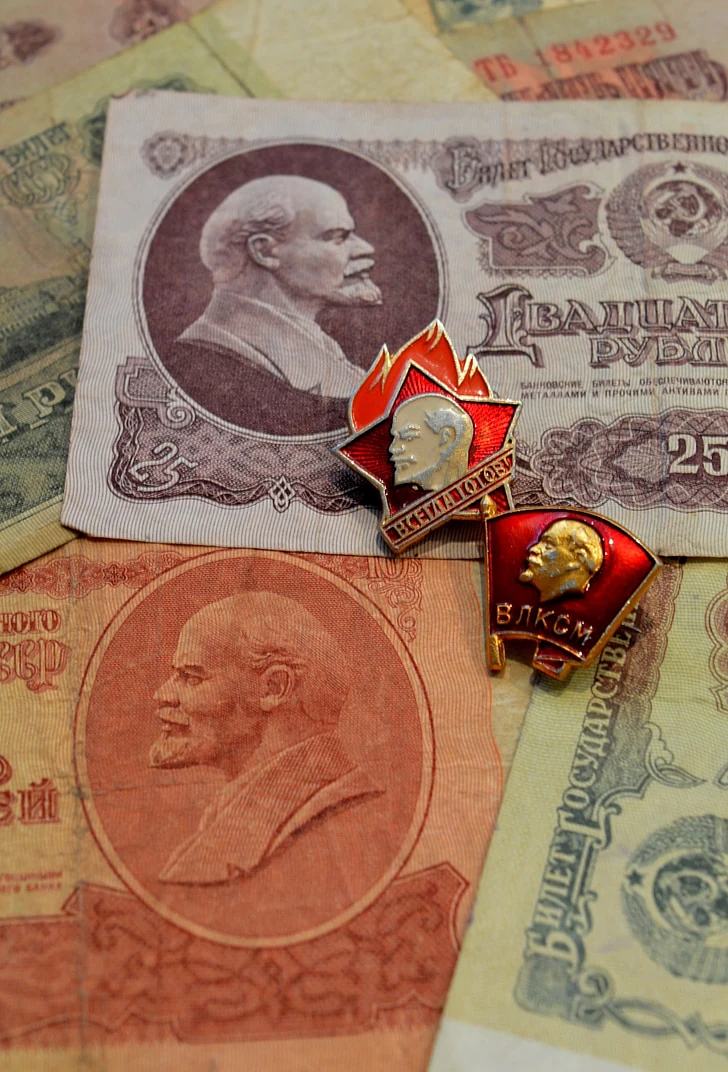
7 The Soviet Union and New China put Marxism into practice. In 1936, the Soviet Union declared that it had built socialism. In 1956, China completed the Three Great Transformations and announced that it had entered socialism. Both declarations were based on the fact that ownership of the means of production had essentially become public: the means of production belonged either to the state under the dictatorship of the proletariat or to collectives.
8 Later, the original social systems encountered obstacles in both the Soviet Union and New China. The Soviet Union dissolved, while China introduced reform and opening up, in effect abandoning its previous course. New China successively adopted policies of “a planned economy as the mainstay, supplemented by a market economy (1979–1982),” “a planned commodity economy (1983–1986),” “the state regulates the market, and the market guides enterprises (1987–1992),” and “a socialist market economy (after 1992).” Ultimately, it made certain compromises while maintaining the Four Cardinal Principles.
“Uphold the socialist road; uphold the dictatorship of the proletariat [the 1982 Constitution of the People's Republic of China replaced ‘dictatorship of the proletariat’ with ‘people's democratic dictatorship’]; uphold the leadership of the Communist Party of China; and uphold Marxism-Leninism and Mao Zedong Thought.” —Deng Xiaoping, the Four Cardinal Principles
9 Deng Xiaoping famously said, “Poverty is not socialism,” and “The essence of socialism is to liberate and develop the productive forces, eliminate exploitation and polarization, and ultimately achieve common prosperity.” Deng Xiaoping was a first-rate statesman; these words directed people's attention toward economic development. In fact, the development of productive forces is a result of changes in the relations of production, rather than a criterion for identifying a social formation, still less its essence. As for “eliminating exploitation and polarization, and ultimately achieving common prosperity,” this has become an increasingly difficult goal as reform and opening up have deepened.
10 Many contemporary Marxists have also reflected on these questions. I believe a socialist country must meet at least two conditions: a. the dictatorship of the proletariat; b. a socialist direction. At a minimum, the dictatorship of the proletariat must ensure that the proletariat has a voice in the country. A socialist direction means a tendency for society to move gradually toward the higher phase of communism. That can be discussed separately.

11 Within the question of a socialist direction, contemporary Marxists have devoted the most study to two issues: public ownership and the communist mode of production. One Marxist, Yang Heping, has proposed replacing the term “public ownership” with “common ownership,” a formulation that goes more directly to the essence: working people jointly possess the means of production, rather than people in “the public authorities” possessing them. There is as yet no systematic theory of the communist mode of production. Its main features probably include production through cooperation on a broader scale and the gradual abolition of the division of labor. I believe the mode of production is more important than the form of ownership, because ownership is the result while the mode of production is the cause. Pursuing only the result while ignoring the cause is bound to fail.
12 In sum, by Marx's standard in Critique of the Gotha Programme, no country in human history has entered socialism. By Deng Xiaoping's standard, China is of course socialist. But none of this is what matters. What matters is exploring new modes of production. Without a new mode of production to replace the old one, revolutionaries who gain state power still have to adopt the previous ways of ruling, and the revolutionary group eventually becomes a new privileged ruling class. Conversely, if the communist mode of production becomes dominant in a society, then regardless of that country's form of government, and regardless of whether its ruler is called “Emperor” or “Head of State,” that society will inevitably develop into a communist society.
13 Marxists understand human social activity as a process of natural history governed by certain laws. Social development and transformation are therefore inevitable. Contemporary Marxists should read more, learn more about society, and explore its laws more deeply. There will naturally be much they can accomplish in the future. I do not support blindly engaging in all kinds of social movements.
Comments
No account needed. A nickname is required; email is optional. Successful submissions appear publicly without manual pre-moderation.
Comments and nicknames are public. Optional email addresses are not displayed. The selected Waline backend and its hosting provider process comments, nicknames, optional email, IP and browser information. Comments show IP region, without the full IP address or browser and operating system labels. Hosting: Vercel; database: Neon.