I. Su Shi and Buddhist Chan
Su Shi was a gourmet. Everyone in China knows this, because “Dongpo pork” is so famous, as is his widely quoted line: “Eating three hundred lychees a day, I would gladly live forever in Lingnan.”
Yet Su Shi was also a student of Buddhism, a fact many people may not fully appreciate.
“Four hundred and eighty temples of the Southern Dynasties—how many towers stand veiled in mist and rain?” After entering China during the Han dynasty, Buddhism developed through the Wei, Jin, Northern and Southern Dynasties, Sui, Tang, and Five Dynasties. By the Song, it was flourishing, and Buddhist influence permeated the general atmosphere.
Su Shi grew up in this atmosphere. His father, Su Xun, was fond of Buddhism and Chan and often associated with monks. His hometown of Meizhou took its name from Mount Emei, a famous Buddhist mountain with many temples. As a child, Su Shi often visited temples to play, forming an early connection with Buddhism.
When Su Shi was seven, he met an elderly Buddhist nun surnamed Zhu and listened to her story of Meng Chang, emperor of Later Shu, and Lady Huarui composing lyrics while enjoying the cool air.
The earliest evidence of Su Shi's fondness for Buddhist scriptures dates to his appointment at age twenty-six as an assistant prefectural administrator in Fengxiang. Records show that the scriptures he read, copied, annotated, and had printed mainly included the Lankavatara Sutra, the Diamond Sutra, the Avatamsaka Sutra, the Lotus Sutra, and the Heart Sutra. These scriptures have different emphases, showing that Su Shi read them for philosophical reflection and personal liberation, without confining himself to any one school or text.
As an official, Su Shi combined the Confucian ideal of “bringing benefit to all under heaven” with Mahayana Buddhism's aim of “delivering all sentient beings.” He relieved poverty and suffering, repaired bridges and roads, provided medical care and medicine, and helped bury the dead. He was a typical honest and good official of feudal society.
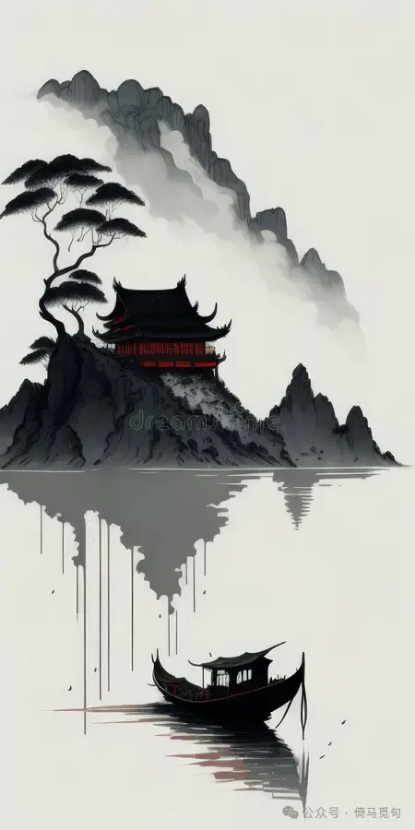
Li Gengyang of Nankai University divides Su Shi's spiritual journey in Buddhism and Chan into roughly three stages.
The first stage extended from his youth until his imprisonment in the “Crow Terrace Poetry Case.” He enjoyed reading Buddhist books and befriended monks, but did not believe in Buddhism; he remained fundamentally grounded in Confucianism. The second stage extended from his imprisonment in the “Crow Terrace Poetry Case” until his banishment to Lingnan. This stage can be summarized as “Confucian on the outside, Buddhist within”: in official life he mainly based his words and deeds on Confucian thought, while in personal conduct, especially his spiritual life, he relied mainly on Chan meditation and insight to regulate himself. The third stage extended from his banishment to Lingnan until his death. Probably because of life's trials and his closeness to ordinary working people, both his Confucian ideals and his Buddhist Chan thought receded to some extent. He increasingly judged right and wrong through his own experiences, observations, and understanding—though this is itself a feature of Chan, especially the Linji school. In other words, materialist elements were growing. —Su Shi and Buddhist Chan, p. 43
In the fifth month of the fourth year of Yuanfeng (1081), Su Shi was living in Huangzhou. As a disgraced official, he received no salary from the court, and with a large family to support, life was difficult. He therefore styled himself “Dongpo Jushi,” or “Lay Buddhist of the Eastern Slope,” obtained several dozen mu of wasteland on the slope east of the city, and led his family in clearing and farming it to feed themselves.
A jushi is a Buddhist who practices at home. After the Han dynasty, anyone calling themselves a jushi generally had some connection with Buddhism. For example, Bai Juyi called himself “Xiangshan Jushi” in old age, and Ouyang Xiu used the sobriquet “Liuyi Jushi.”
It seems Buddhism influenced Su Shi more than we might imagine.
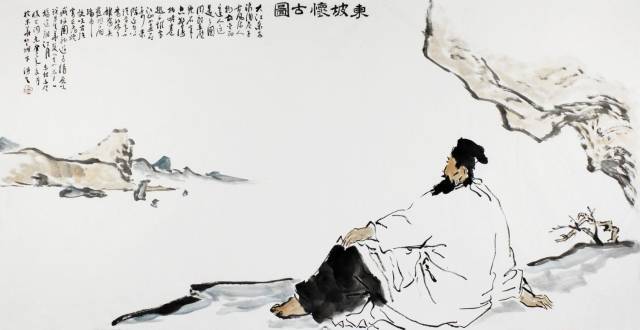
II. Buddhists Do Not Eat Meat
Monastics have to observe a very complicated body of precepts, while the requirements for lay practitioners are much simpler: generally they need observe only the Five Precepts or Eight Precepts.
The Five Precepts are: do not kill, do not steal, do not engage in sexual misconduct, do not speak falsely, and do not drink alcohol. The Eight Precepts add three more: “do not adorn yourself with ornaments, or sing, dance, or watch or listen to performances”; “do not sit or lie on high, broad, luxurious beds or seats”; and “do not eat at improper times,” meaning after noon.
When Buddhism entered China during the Han dynasty, it did not completely prohibit meat. But Emperor Wu of Liang, Xiao Yan, during the Northern and Southern Dynasties, was a devout Buddhist who entered monastic life four times—and was also a man of letters. To promote Buddhism, he drew on the scriptural injunction against killing and wrote an Essay on Abstaining from Wine and Meat, absolutely prohibiting Buddhists from eating meat or drinking alcohol. Even pigs' and sheep's heads offered in sacrifices were replaced by dough replicas. From then on, Buddhists gave up meat entirely.
Originally, observing a fast meant “not eating at improper times,” or taking no food after noon. Later, however, the emphasis shifted more toward vegetarianism.

Thus abstaining from meat evolved from the injunction against killing and became a basic rule for Buddhist practitioners after the Southern Dynasties. Even today, most lay Buddhists do not eat meat.
Su Shi, however, had never had a taste for vegetarian fare. (The Chinese wording of this sentence would make good tongue-twister material for a presenters' recitation team.)
Despite calling himself a lay Buddhist, Su Shi loved meat and could not avoid killing. He was especially fond of pork.
One of his short poems is very famous: “Better to eat without meat than to live without bamboo. Without meat one grows thin; without bamboo one grows vulgar.” Although he says “better to eat without meat,” the lines indirectly show that he liked meat and ate plenty of it: after all, “without meat one grows thin.”
Su Shi also wrote a piece called Ode to Pork. Its full text reads:
Wash the pan clean, add a little water; bank the firewood so no flames rise. Let it cook by itself; do not hurry it. When it has had enough heat, it will taste fine. Huangzhou's pork is good, and cheap as dirt. The rich will not eat it, the poor do not know how to cook it. Rise in the morning and serve two bowls; let me eat my fill and pay me no mind. —Su Shi, Ode to Pork
A translation follows:
Clean the pot and add a little water. Light firewood and brush, then damp down the fire, simmering over gentle heat without open flames. Let it cook slowly on its own; do not hurry it. Once it has cooked long enough, it will naturally taste wonderful. Huangzhou has such fine pork, yet it is as cheap as dirt. Rich households will not eat it, and poor households do not know how to cook it. In the morning I get up and serve myself two bowls. Let me eat my fill and do not concern yourself with me.
People supposedly developed “Dongpo pork knuckle” from this account. Yet clearly, whether today's Dongpo pork knuckle or Dongpo braised pork, it is difficult to call either Su Shi's own invention. After all, Ode to Pork can hardly be described as a practical recipe.
Eating meat was one thing, but Su Shi also liked to do it openly. He even ate meat in temples. More remarkably, some monks cooked pork in temples specifically to entertain him.
When Su Shi visited Jinshan Temple, Foyin personally cooked pork for him. Su Shi even wrote a poem about it, A Playful Reply to Foyin:
Master Huiyuan bought wine for Tao Qian; Foyin roasts pork to entertain Zizhan. After gathering a hundred flowers to make honey, who knows for whom the toil makes sweetness?
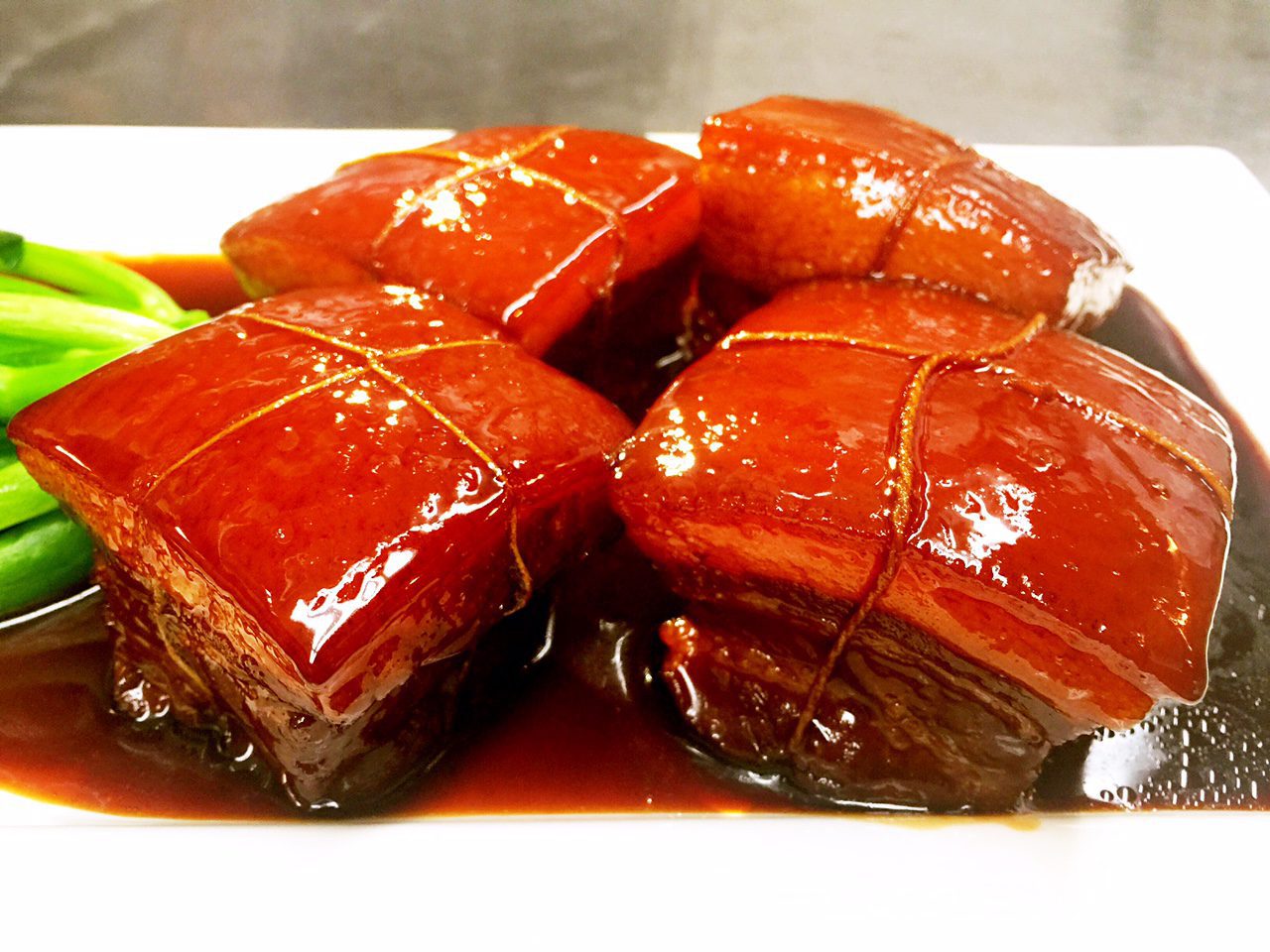
III. Su Shi: The Master of Excusing Meat-Eating While Practicing Buddhism
Many people in history believed in Buddhism yet could not avoid killing and eating meat. They found numerous excuses and remedies for themselves.
The first method, inspired by Mencius, was to stay away from the kitchen: “The gentleman keeps his distance from the kitchen.”
In dealing with birds and beasts, the gentleman, having seen them alive, cannot bear to see them die; having heard their cries, he cannot bear to eat their flesh. Thus the gentleman keeps his distance from the kitchen. —Mencius, King Hui of Liang, Part I
An unwillingness to kill is ordinary human feeling. It is unsurprising that Buddhist and Confucian sages agreed on this. And “out of sight, out of mind” is indeed one method.
The second method was to write a confession. A representative example is Shen Yue of the Liang dynasty in the Southern Dynasties.
Your disciple Shen Yue bows his head and addresses all Buddhas and holy beings: ... When I lie down in the hot months and mosquitoes and gnats bite my skin, anger rises in my heart and my hand responds. Those I kill each year number nearly ten thousand. My hand moves in anger; their lives end at my hand. Every element of killing is present. Even now, I have not yet managed to stop completely. —Shen Yue, Confession
He piously confessed before the Buddha that he had swatted mosquitoes. Although this meant nothing to the mosquitoes, Shen Yue himself could indeed find psychological comfort in it.
The third method was to change the names: in other words, to deceive oneself and others. Su Shi wrote in one essay:
Monks call wine “wisdom soup,” fish “water-shuttle flowers,” and chickens “fence-boring vegetables.” It does no good at all; it is merely self-deception, and people commonly laugh at it. Yet when people commit injustice and dress it up with a fine name, how is that any different?
We can see that public opinion at the time held that Buddhists should not eat meat or drink wine, but many monks still tried every means to excuse themselves.
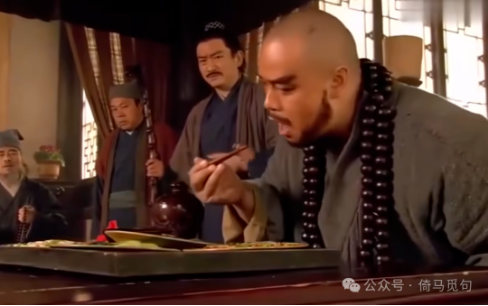
When it comes to excuses, however, Su Shi was really the master. His methods were as follows:
1. Eat Only the Flesh of Animals Already Dead
Volume Seven of Tao Zongyi's Shuofu records this statement by Su Dongpo:
Yesterday I bought ten doves. Four were alive, so I released them; the rest fortunately served as an offering with a cup of wine. For today's ordinary family meal, I bought several jin of fish and kept them in water. Those alive I released to save their lives; those dead I cooked to please my palate. Although I have not been able to give up my appetite for meat entirely, for now I make this temporary accommodation.
He bought ten birds and released the four living ones; he bought several jin of fish and ate the dead ones. “A temporary accommodation”—he would compromise like this for the time being.
2. Recite Buddhist Scriptures for the Creatures Eaten
Yuan Zhongdao wrote in After Reading the Essay Against Killing:
Dongpo studied Buddhism, yet his appetite would not let him give up meat. After arriving in Huizhou, he killed chickens all day long. Relishing their flavor but fearing the resulting sin, he therefore devoted two days each month to reciting scriptures, to deliver the souls of the chickens killed that month.
Su Shi killed chickens quite frequently in Huizhou and feared the Buddha would blame him, so he set aside two days each month to perform rites for that month's slaughtered chickens. Thus the chickens could ascend to heaven, he could practice Buddhism, and nothing interrupted his meat-eating: three benefits at one stroke.
3. Comfort Yourself: Chickens All Have to Die
In After Reading the Essay Against Killing, Yuan Zhongdao gives another of Su Dongpo's reasons for eating chicken: “There is no chicken in the world that will not be killed; all must die once.”
Since chickens are born to be slaughtered, if he did not kill them, someone else would. Every additional chicken he killed meant one fewer for someone else to kill, reducing that person's sins. Apparently, killing chickens counted as a good deed too.
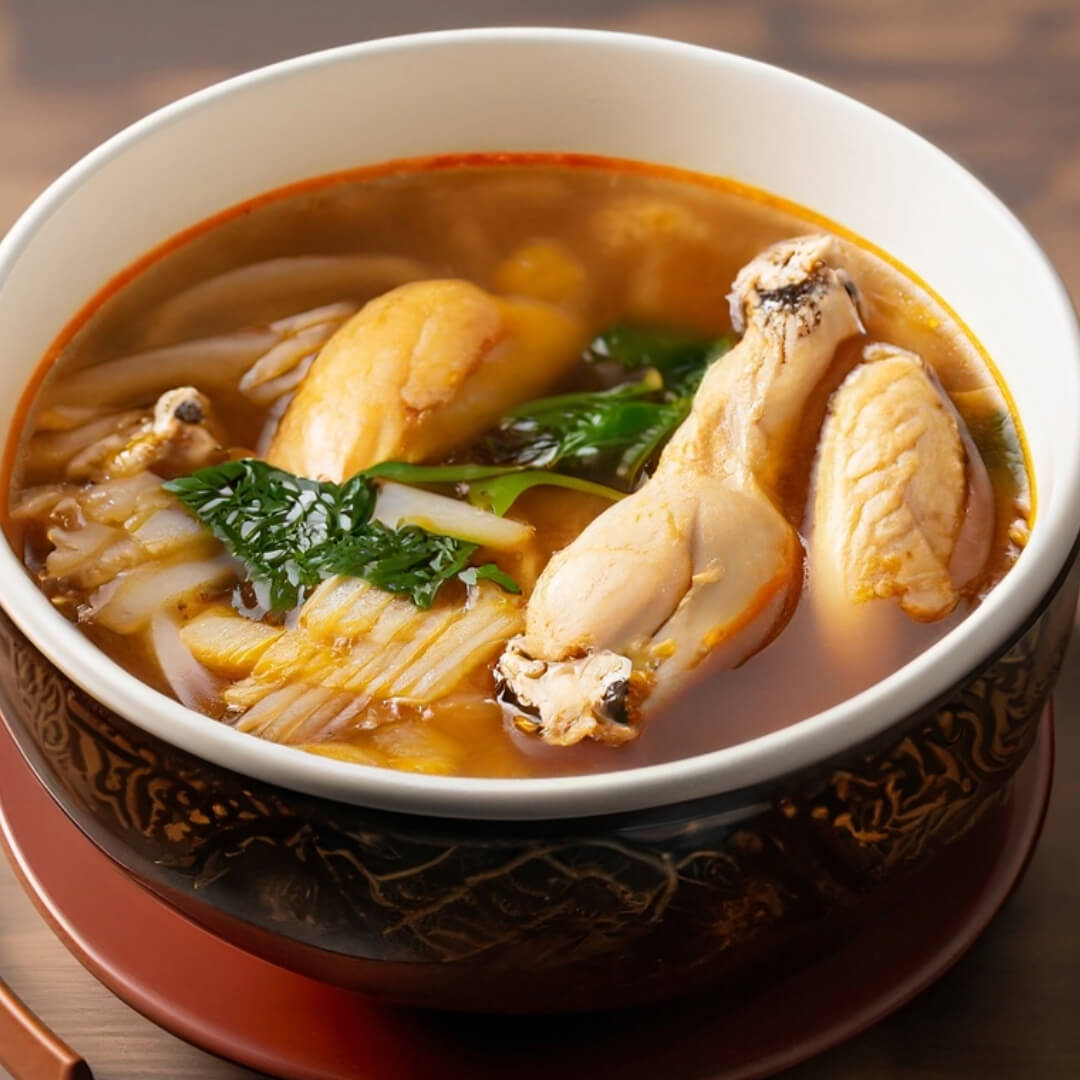
4. Argue Your Way Out of It
Su Shi once wrote a Chan Play Verse:
Cooked meat has no prospect of coming back to life. What is wrong with putting it in Dongpo's pot of unhindered soup? I ask all you Chan practitioners: tell me, is this meat or vegetarian fare? May it be eaten or may it not? How very strange, how very strange: one bowl of soup exposes all the Chan practitioners under heaven.
“Chan practitioners” here means people who meditate on Chan, or monks. The passage means:
Meat that has already been cooked cannot become a living creature again. What, then, is wrong with putting it in a bowl of soup? Masters, is this soup meat or vegetarian? Can it be eaten or not? Are you unable to answer? How strange that a bowl of soup should stump so many masters.
5. Rinse Your Mouth
In Dongpo's Forest of Notes, Volume Two, Note on Reciting Scriptures, Su Shi wrote:
Dongpo ate meat while reciting scriptures. Someone said, “You may not recite them.” Dongpo took water and rinsed his mouth. The person said, “How could a bowl of water rinse it clean?” Dongpo replied, “I am ashamed—the master understands!”
The term for “master,” sheli, means an eminent monk. The passage means:
Su Shi was eating meat while chanting when a monk said, “Stop chanting.” Dongpo picked up some water to rinse his mouth. The monk said, “How could a bowl of water rinse it clean?” Su Shi replied, “I'm ashamed, I'm ashamed—you seem quite experienced yourself, Master.”
IV. Su Shi's Attitude Toward Buddhist Chan
After the “Crow Terrace Poetry Case,” Su Shi's faith in Buddhism sometimes grew firm and sometimes wavered. Clearly, however, he never clung to scriptural doctrine. Instead, he had his own understanding of Buddhist Chan and made its wisdom serve his life.
Su Shi mocked monks for calling wine “wisdom soup” and teased an eminent monk for apparently having experience rinsing his mouth after eating meat. This shows that he did not consider these precepts particularly important. Those who emphasized the rules yet failed to follow them were really no better than he was, openly eating meat.
Su Shi disregarded precepts, drank wine in temples, ate meat while reading scriptures, and took courtesans to visit monks. But so what? Many eminent monks in history did not abstain from wine or meat. Shakyamuni himself had been a royal prince and only left home to practice at twenty-nine; before that, he had also broken plenty of precepts.
As the saying goes, “Wine and meat pass through the gut; the Buddha's image remains in the heart.” I believe that as long as one is compassionate and does good deeds, the Buddha will surely not blame one.
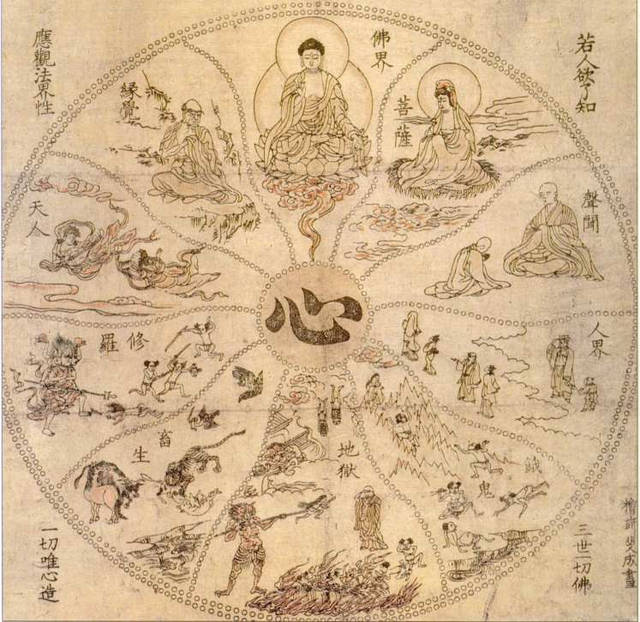
Buddhism teaches the “six realms of rebirth”: according to the causes and effects of one's previous life, one enters a different realm. There are three favorable realms: gods, humans, and asuras; and three unfavorable realms: hell beings, hungry ghosts, and animals.
Su Zhe's Epitaph for My Late Elder Brother Zizhan, Academician of Duanming Hall, records:
Ten days before his end, with only his sons attending him, he said, “I have done no evil in my life; in death I shall surely not fall. Take care not to weep and disturb my passing.” Asked about arrangements after his death, he did not answer, but passed away serenely. It was the dinghai day of the seventh month.
Before dying, Su Shi told his sons: I have done no evil in my life and will certainly not fall into the three unfavorable realms after death. Do not cry. He then passed away peacefully.

Main references:
Li Gengyang and Li Boyang. A Free-Spirited Life: Su Shi and Buddhist Chan [M]. Zhengzhou: Henan People's Publishing House, 2001.
Yuan Huang. Liao-Fan's Four Lessons [M]. Translated and annotated by Zhang Jing and Zhang Songtao. Beijing: Zhonghua Book Company, 2016.
Comments
No account needed. A nickname is required; email is optional. Successful submissions appear publicly without manual pre-moderation.
Comments and nicknames are public. Optional email addresses are not displayed. The selected Waline backend and its hosting provider process comments, nicknames, optional email, IP and browser information. Comments show IP region, without the full IP address or browser and operating system labels. Hosting: Vercel; database: Neon.