I. Yuan Liaofan’s Story
In the Chinese phrase “We shape our own fate and seek our own blessings,” the words meaning “by” and “from” are similar, as are “I” and “self.” The sentence means that the quality of our fate is determined by ourselves, and that we must also pursue our own well-being.
This is the central value of Liaofan’s Four Lessons. To explain it, we must begin with a story.
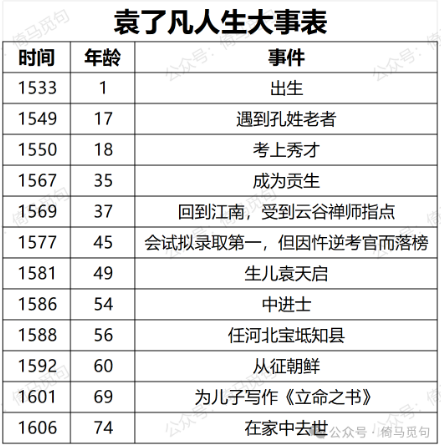
The author, Yuan Liaofan, was not originally called Liaofan. His name was Yuan Huang, his courtesy name Qingyuan, and his literary name Xuehai. He came from the Jiangsu–Zhejiang region. His father died during his childhood, and his elderly mother told him not to pursue the imperial examinations but to study medicine, fulfilling his father’s final wish.
At 17, Yuan Huang met an elderly man surnamed Kong at Ciyun Temple who was skilled at fortune-telling. Mr. Kong advised him to pursue the examinations and predicted his results for the following year: fourteenth place in the county-level examination for entry-level candidates, seventy-first in the prefectural examination, and ninth in the examination overseen by the education commissioner.
The following year, Yuan took the examinations. All three results matched Mr. Kong’s predictions exactly, and Yuan successfully became a xiucai, a licentiate.
Mr. Kong then predicted the fortunes and misfortunes of Yuan’s entire life:
In a certain year, you will place at a certain rank in the annual examination; in another year, you will become a stipendiary student; in another, a tribute student. A certain number of years after becoming a tribute student, you will be selected as a local official in Sichuan. After serving as a county magistrate for three and a half years, you should resign and return home. At the hour of chou on the fourteenth day of the eighth month in your fifty-third year, you will die at home. Unfortunately, you will have no son in this life.
After that, none of Kong’s predictions about Yuan’s examination results failed. Yuan later became a stipendiary student and, at 35, a tribute student as foretold. He grew even more convinced that fate was predetermined. Becoming detached from worldly pursuits, he later spent a year in Beijing without even reading, sitting quietly all day.
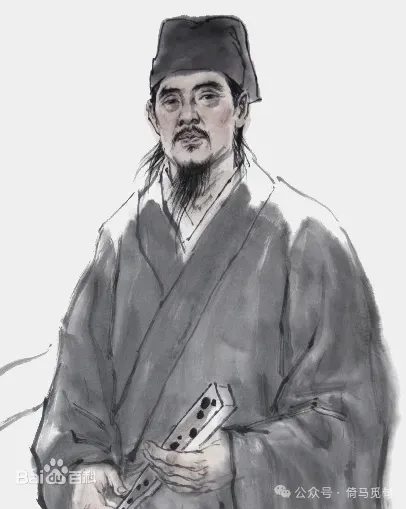
At 37, Yuan returned to Jiangnan and visited Chan Master Yungu at Mount Qixia. They sat facing each other in a room, talking for three days and nights without sleeping.
Yungu was impressed: ordinary people could not become sages because they could not discard delusive thoughts, yet Yuan had entertained none for three days. How had he managed it?
Yuan replied that Mr. Kong had already calculated all the honors and humiliations of his life. Everything was fixed, so there was nothing to fantasize about.
Yungu disagreed: “I thought you were an exceptional man, but it turns out you are merely an ordinary mortal.”
He then explained his view:
If a person cannot eliminate the delusive worldly mind, they remain bound by everything around them from beginning to end. How could they not have a predetermined fate? But only ordinary people have fixed destinies. For an exceptionally good person, the originally appointed fate cannot keep fortunes and misfortunes unchanged; nor can it do so for an exceptionally evil person. For twenty years, Mr. Kong has predicted your fate accurately without the slightest alteration. Does that not make you an ordinary mortal?
Yuan asked whether one could escape a predetermined fate.
Yungu said:
We shape our own fate and seek our own blessings. The Book of Songs and Book of Documents clearly teach this. Our Buddhist scriptures say, “Seek wealth and honor, and obtain wealth and honor; seek sons and daughters, and obtain them; seek longevity, and obtain longevity.” False speech is a great prohibition laid down by Shakyamuni. How could the buddhas and bodhisattvas deceive people?
Yungu then urged Yuan to perform more good deeds, assuring him that his fate would change.
He also offered much inspirational talk to fire Yuan up, such as:
Let everything before be as though you died yesterday; let everything afterward be as though you were born today. This is rebirth through moral principle.
“Tai Jia” says, “Calamity sent by Heaven may still be avoided; calamity brought upon oneself leaves no escape.” The Book of Songs says, “Always accord with Heaven’s mandate, and seek many blessings for yourself.” … The Book of Changes counsels the noble person … Its opening principle states, “A family that accumulates goodness will have blessings to spare.”
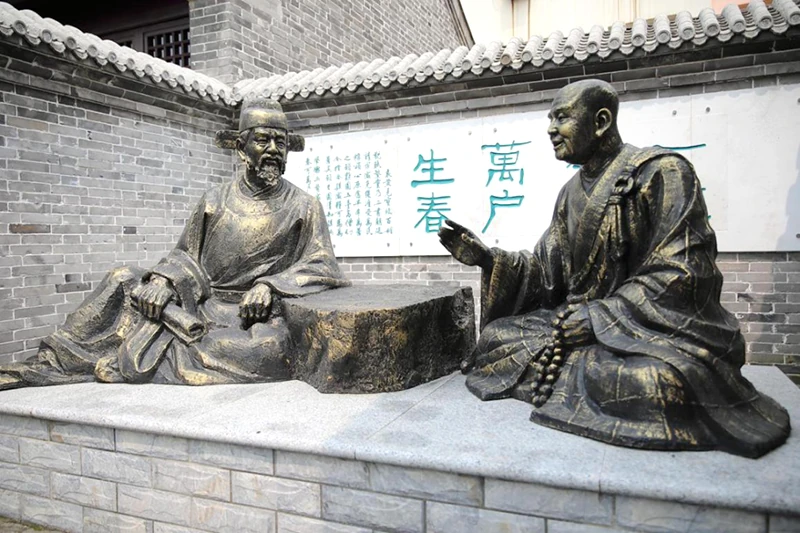
Yuan strongly agreed and did three things to show his sincerity:
1 — Before the Buddha, he confessed his past wrongs and vowed to perform three thousand good deeds.
I therefore laid bare all my past sins before the Buddha and wrote a petition, first seeking success in the examinations and vowing to perform three thousand good deeds in gratitude for the kindness of Heaven, Earth, and my ancestors.
2 — He accepted Yungu’s ledger of merits and demerits to record his daily conduct.
Yungu showed me a ledger of merits and demerits and told me to record my actions every day: add the good deeds and subtract the bad. He also taught me to recite the Cundi mantra, so that the result would surely be fulfilled.
3 — He changed his literary name from Xuehai to Liaofan, meaning that he would no longer remain in the rut of ordinary mortals.
My original literary name was Xuehai. That day I changed it to Liaofan, having understood the teaching of shaping one’s fate and wishing not to remain in the rut of ordinary mortals.
From then on, Yuan Liaofan became modest and cautious, striving to remove evil and promote good.
The following year, at 38, he took another examination conducted by the Ministry of Rites. Kong had predicted third place, but Yuan came first. He later successfully became a juren, a provincial graduate. At 49, he completed his three thousand good deeds and had a son named Yuan Tianqi. At 51, he vowed to perform another ten thousand good deeds. At 54, he became a jinshi and was appointed magistrate of Baodi, where he governed benevolently and continued doing good.
Kong had originally predicted that Yuan would die peacefully at 53. Yet when Yuan wrote this essay, he was already 69. He eventually lived to 74, completely changing what had supposedly been his predetermined fate.
II. An Introduction to Liaofan’s Four Lessons
The account above is the main content of the first lesson, “Learning to Shape One’s Fate,” and the most important part of the book. Through his own story, Yuan expresses his central idea: “We shape our own fate and seek our own blessings.”
At its core, this idea does not reject fatalism but places greater emphasis on moral recompense. Yuan skillfully combines the two most popular theories of fate of his time and joins them with his personal experience, making the account persuasive. Liaofan’s Four Lessons is also called “China’s foremost book encouraging goodness.”
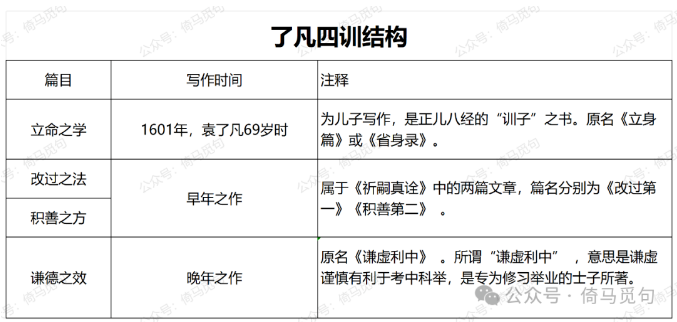
The four essays were not written together. Yuan wrote the first, “Learning to Shape One’s Fate,” for his son at 69, urging him to do more good deeds. The second, “Methods of Correcting Faults,” and third, “Ways to Accumulate Goodness,” were earlier works. The fourth, “The Benefits of Humility,” was written late in life. Later readers compiled these four essays with similar themes into what is now Liaofan’s Four Lessons.
“Methods of Correcting Faults” argues that before doing good, one must first correct existing faults. First, one needs a sense of shame, reverence, and courage. Second, one must understand three paths to reform: “changing one’s actions,” “changing through understanding principles,” and “changing one’s heart.” Finally, the author gives a series of examples of people reforming themselves.
“Ways to Accumulate Goodness” gives ten examples of good deeds to demonstrate that “a family that accumulates goodness will have blessings to spare.” It also discusses eight distinctions in doing good: true and false, upright and crooked, hidden and visible, right and wrong, partial and proper, half and full, great and small, difficult and easy. Finally, the author lists ten ways to do good: help others practice goodness, keep love and respect in one’s heart, help others succeed, encourage goodness, rescue people in emergencies, build works of public benefit, give wealth to create blessings, uphold the true teaching, respect elders, and cherish living beings.
“The Benefits of Humility” begins by quoting maxims from the Book of Changes and Book of Documents to explain humility’s benefits. It then tells five stories demonstrating that “pride invites loss, humility brings benefit,” before focusing on the imperial examinations: if you set your aspirations, strive for achievement, wealth, and honor, remain modest and cautious, and make things easier for others, you will certainly succeed in the examinations.
That is the book’s content in broad outline.
III. My Reflections
In “On Science and Faith: People with Inner Strength Have Coherent Beliefs,” I wrote:
People with inner strength have a coherent system, including a complete worldview and set of values. … What that system is—science or theology, communism or pragmatism, liberal democracy or sophisticated self-interest—does not really matter.
Xie Yuqing, WeChat official account: Yima Miju “On Science and Faith: People with Inner Strength Have Coherent Beliefs”
Clearly, the worldview and values in Liaofan’s Four Lessons form a highly coherent system. Yuan does not deny fatalism but emphasizes moral recompense and ties good deeds to worldly success, wealth, and honor. Once you believe this account, you can pursue achievement and goodness with single-minded focus. The more you believe, the more fully you exercise your own agency, and the greater your eventual chance of success.
From society’s perspective, although the book encourages the pursuit of achievement, wealth, and honor, its prescribed path is altruistic. It urges people to do good and remove evil, remain modest and cautious, and consider others. It contains the idealism of Confucian “helping all under Heaven” and Buddhist “saving all beings,” a much broader outlook than today’s “meritocracy” and “sophisticated self-interest.”
I believe there is no harm in having wealthy and powerful people who lack benevolence, or students who know only relentless competition, read more of Liaofan’s Four Lessons. Overall, I therefore support the book.
It also bears the marks of its era. The author, for instance, values having sons and passing the imperial examinations. Readers today can adapt such points for themselves.
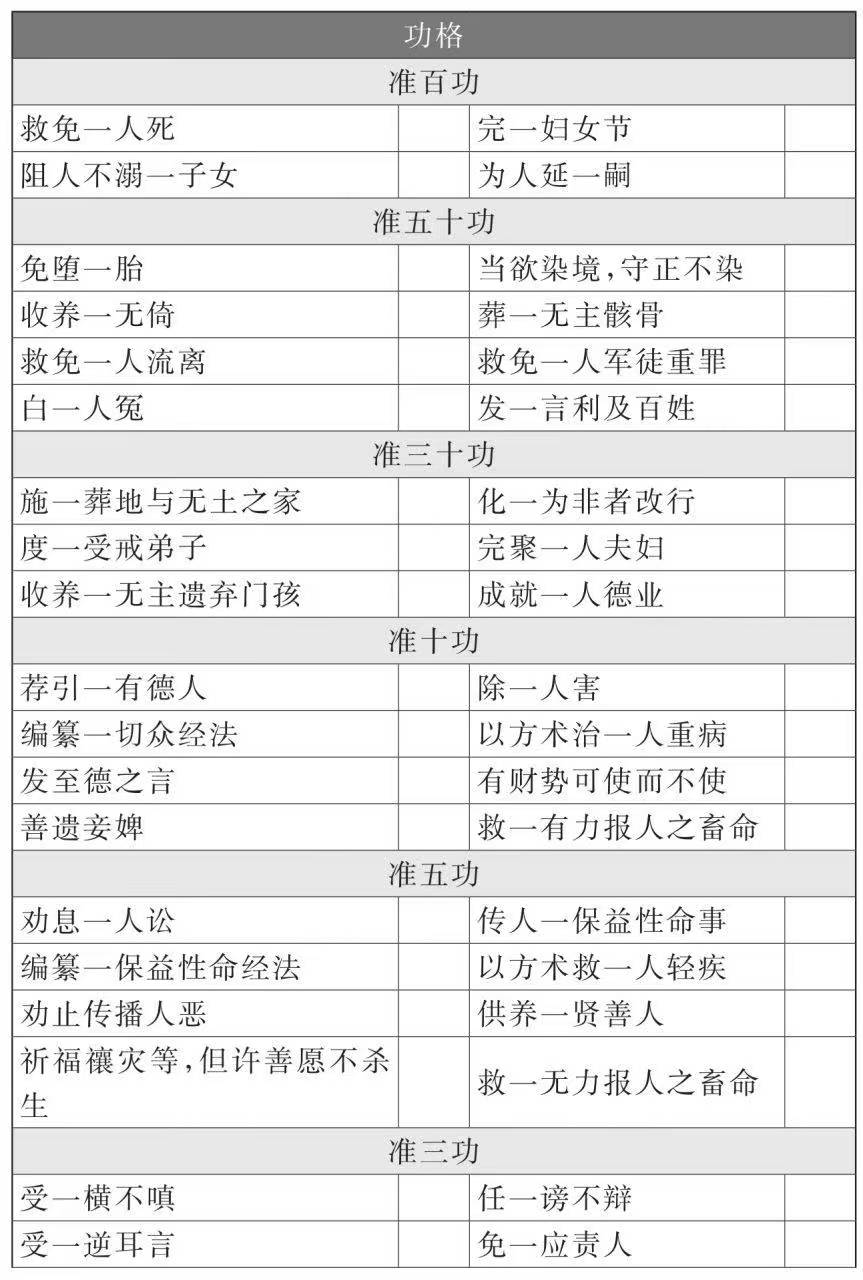
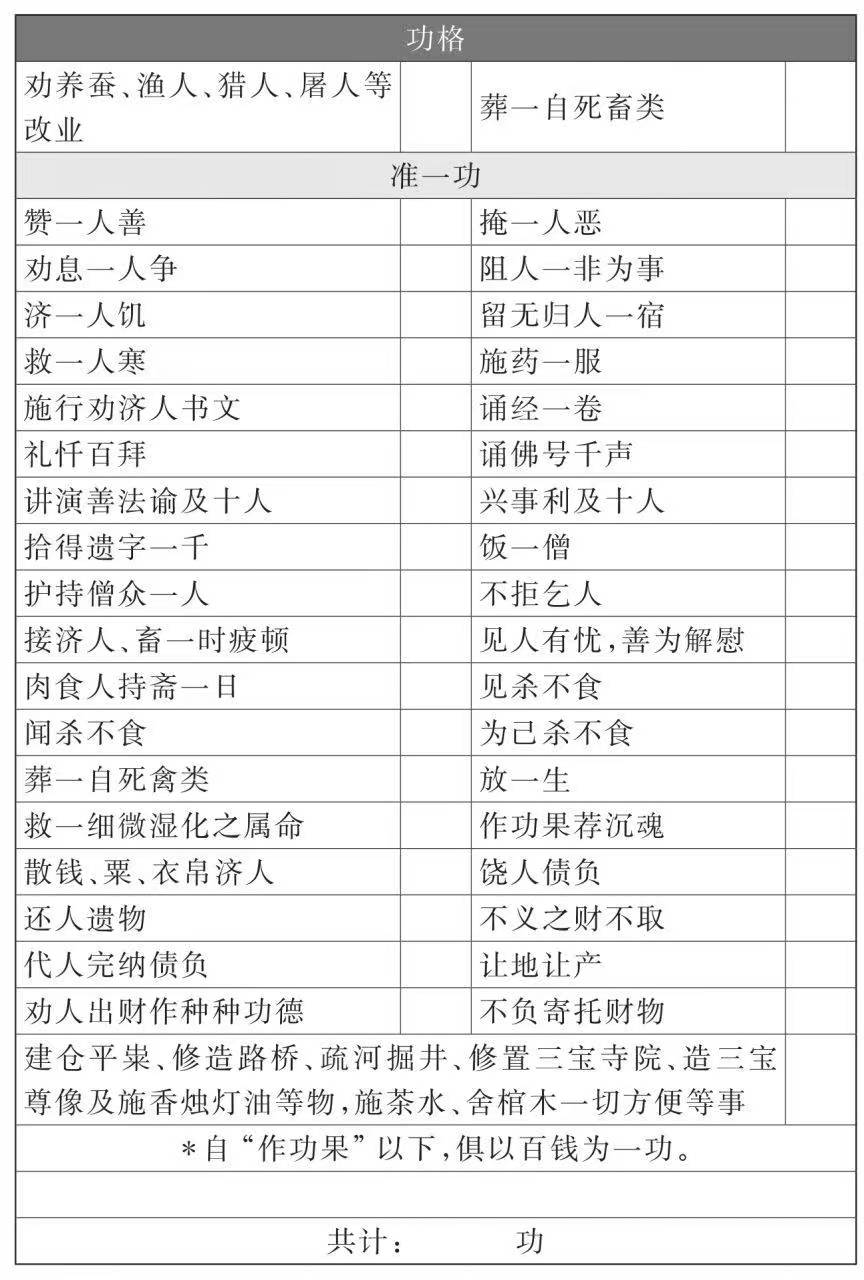
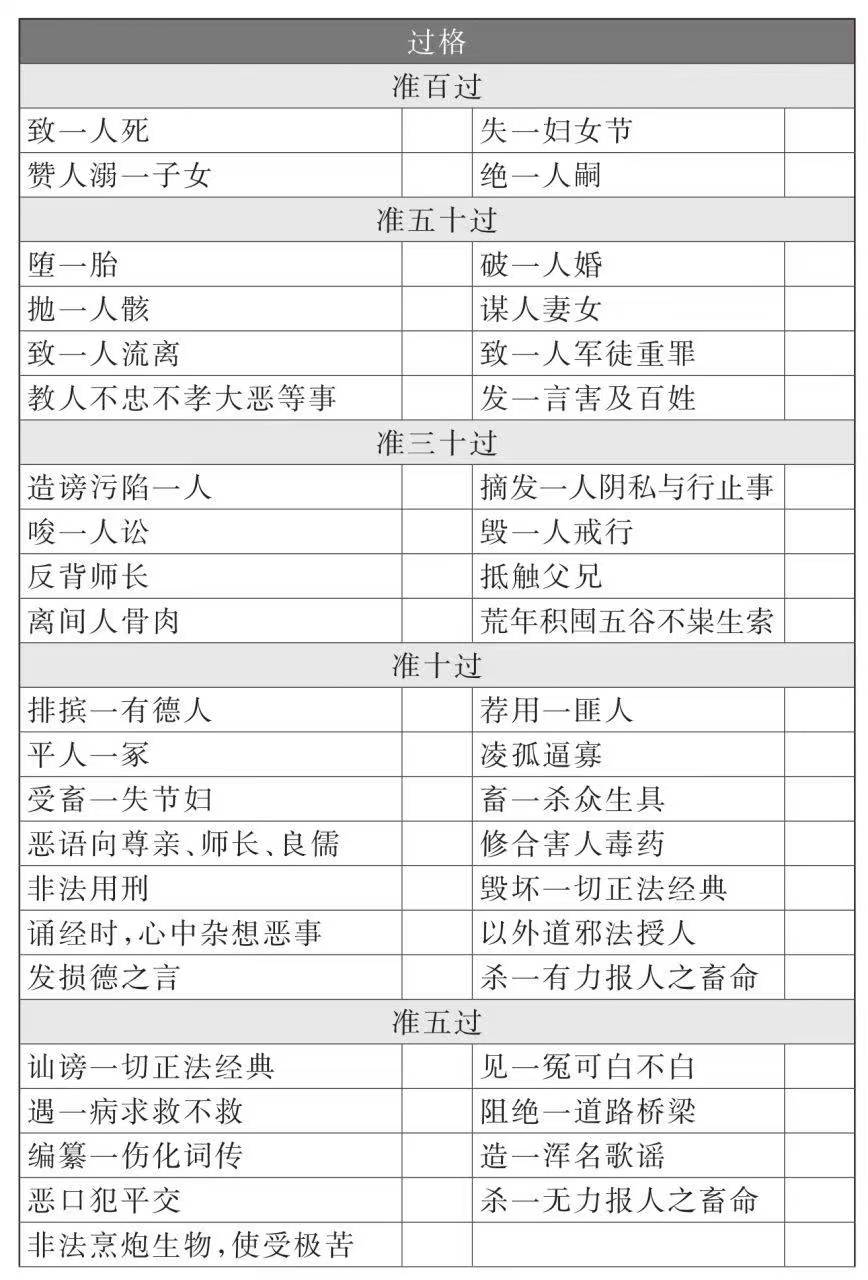
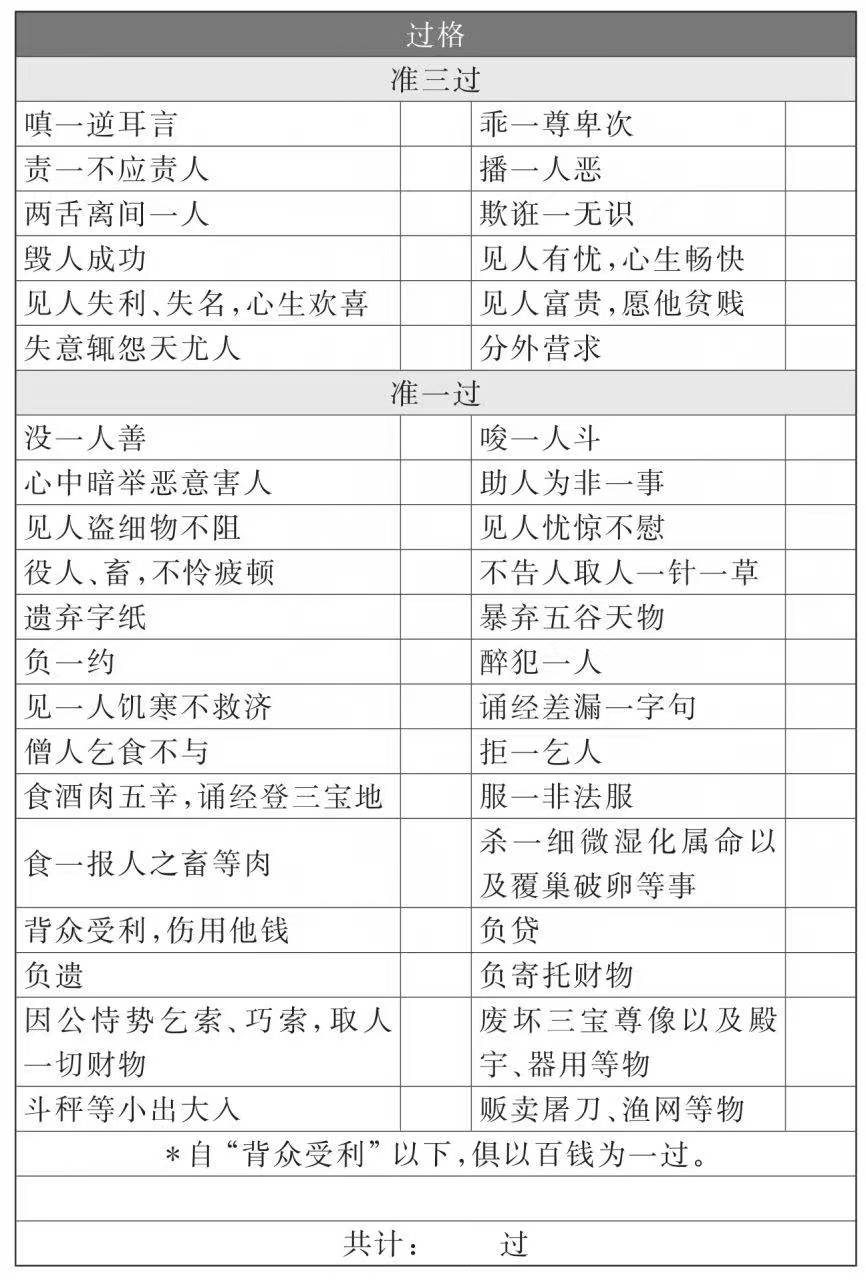
Finally, the edition I read includes a ledger of merits and demerits, the kind Yungu gave Yuan: a booklet for recording good and bad conduct. It contains many outdated ideas but is fascinating. I reproduce it below for discussion.
Main reference:
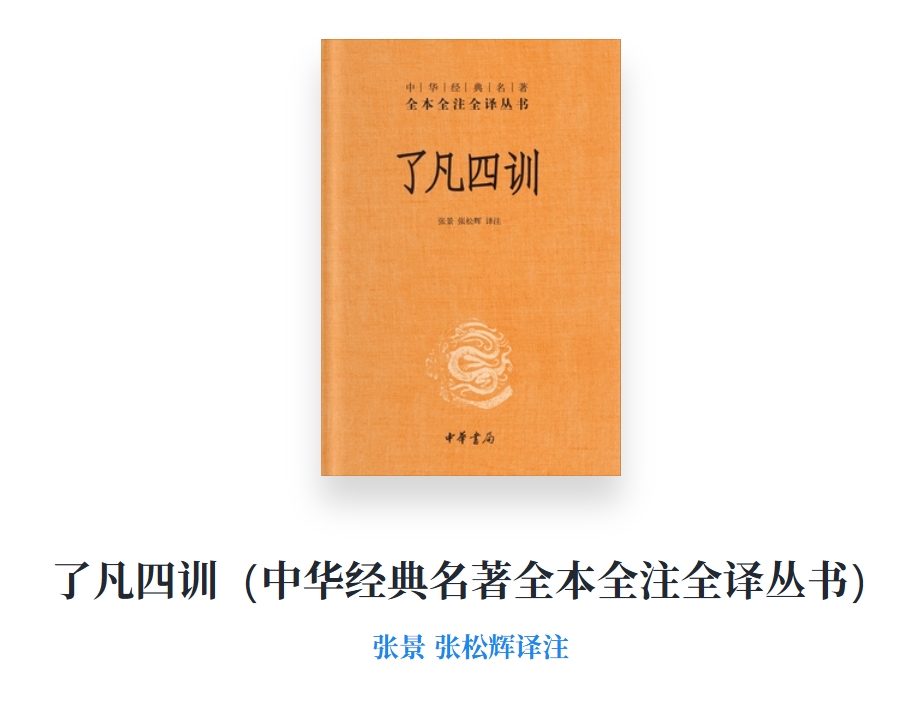
Yuan Huang. Liaofan’s Four Lessons [M]. Translated and annotated by Zhang Jing and Zhang Songtao. Beijing: Zhonghua Book Company Limited, 2016.
Comments
No account needed. A nickname is required; email is optional. Successful submissions appear publicly without manual pre-moderation.
Comments and nicknames are public. Optional email addresses are not displayed. The selected Waline backend and its hosting provider process comments, nicknames, optional email, IP and browser information. Comments show IP region, without the full IP address or browser and operating system labels. Hosting: Vercel; database: Neon.