I
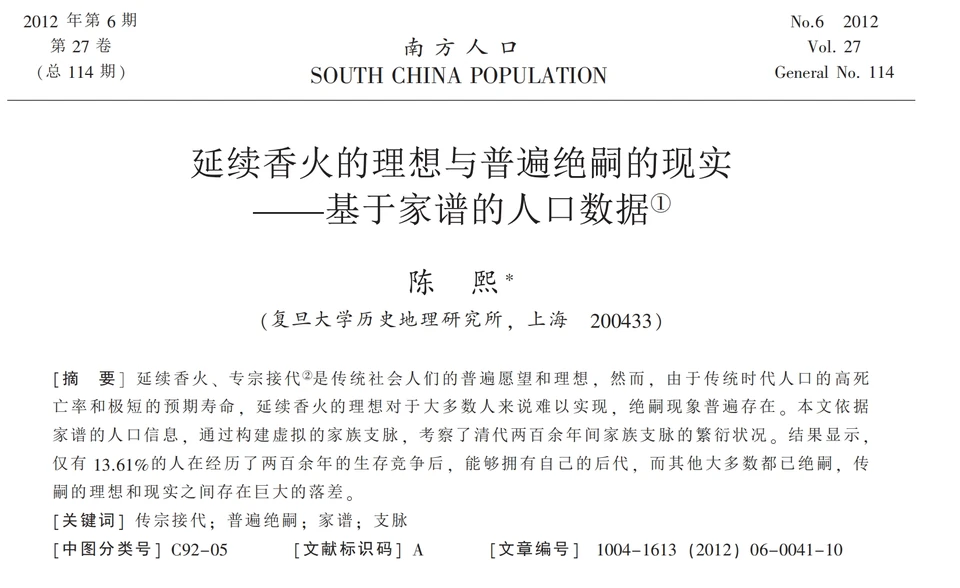
In 2012, Dr. Chen Xi of Fudan University’s Institute of Historical Geography published a paper in South China Population titled “The Ideal of Continuing the Family Line and the Reality of Widespread Lineage Extinction: Population Data from Genealogies.” It states:
Only 13.61% of people still had descendants after more than two centuries of competition for survival; most of the rest had seen their lines die out. There was an enormous gap between the ideal of perpetuating a lineage and reality.
This means that, assuming the social environment remained unchanged, nearly 86.39% of men would have no male descendants of their own after more than 200 years—what traditional thinking calls “the extinction of one’s family line.”
It also means that the paternal ancestors of everyone reading this, more than 200 years ago, belonged to the 13.61% who won this struggle for survival. That was no easy feat.
How was this figure obtained?
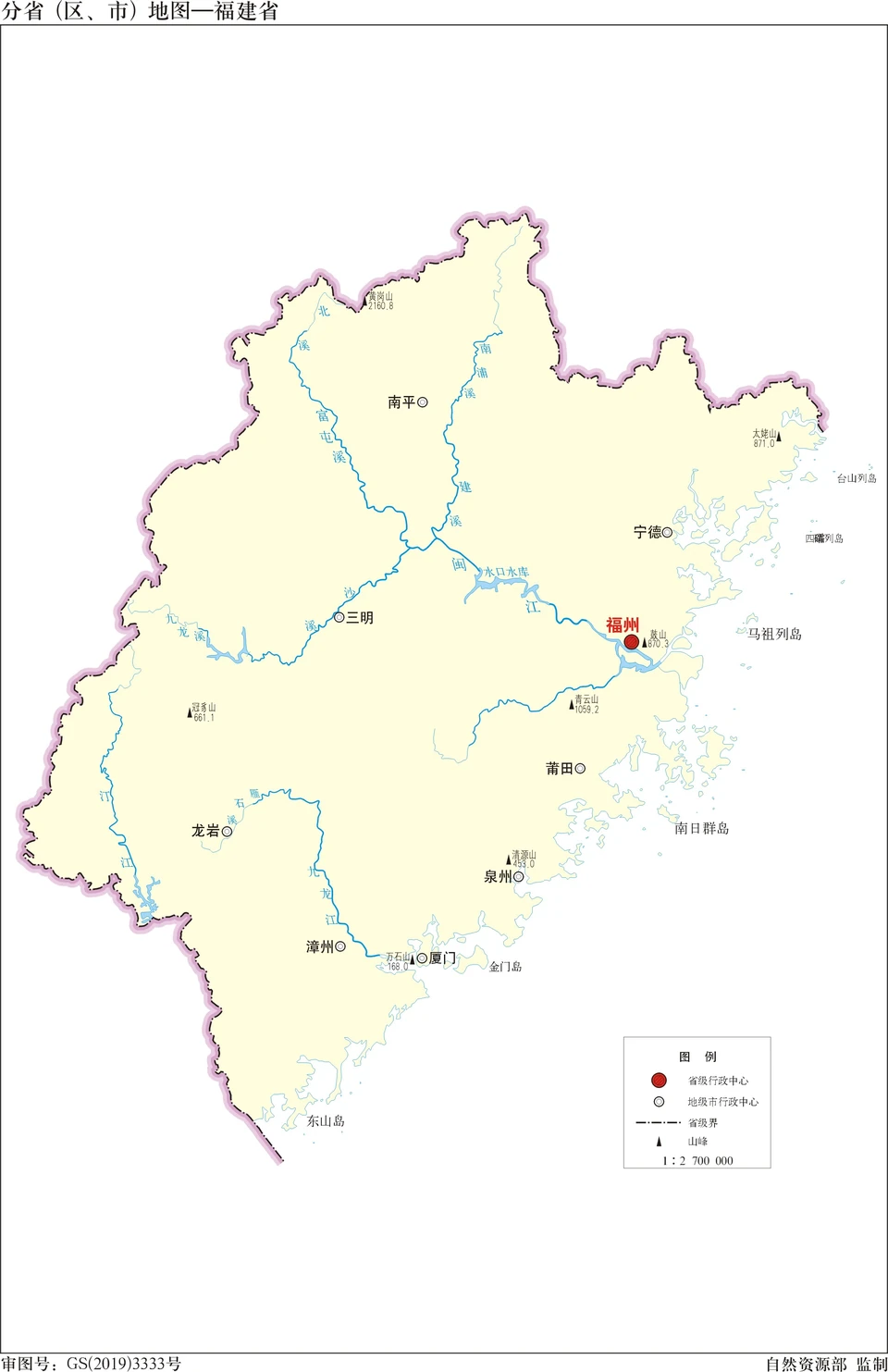
The author’s conclusion comes from an analysis of the Genealogy of the Wei Clan of Songyuan. Songyuan Town lies in the mountains of northwestern Fujian—it should be today’s Songyuan Subdistrict in Songxi County, east of Nanping. It is a relatively enclosed river-valley basin, little affected by the outside world. Even movements such as the Taiping Rebellion did not cause major population losses there, so it can reflect population reproduction in rural China under normal conditions in the past.
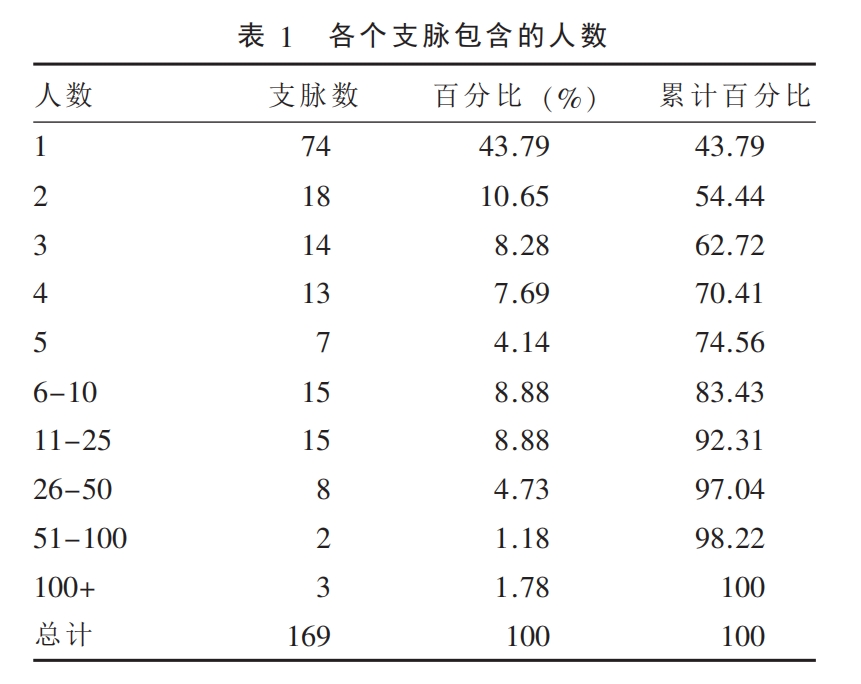
The Genealogy of the Wei Clan of Songyuan was first compiled in the eighth year of the Zhengde era in the Ming dynasty, 1513. It was revised and expanded several times afterward, with the fifth revision completed in the sixth year of the Republic, 1917. The study covers the period from the genealogy’s 20th generation to that fifth revision. The genealogy’s 20th generation is treated as the study’s first generation. It contained 169 men, each regarded as the founder of a separate branch. The earliest birth in this first generation occurred in the seventh year of the Shunzhi era, 1650, which serves as the beginning of the observation period. The fifth revision in 1917 marks the end, giving a span of 267 years.
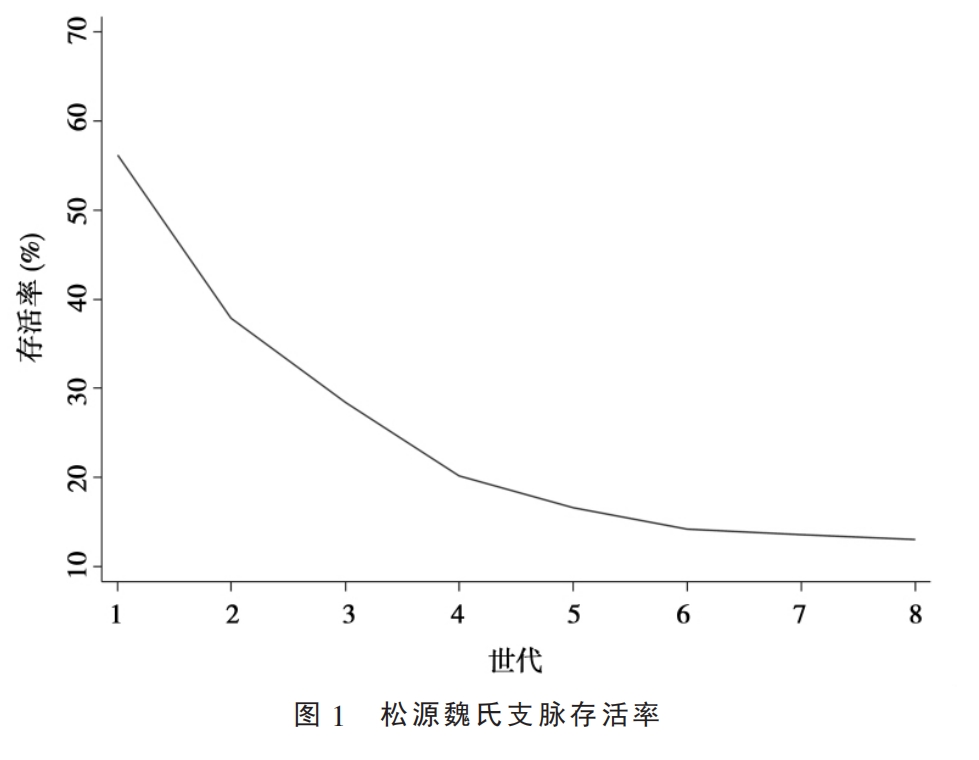
The study found that after the first generation reproduced, 43.8% of the men of the Songyuan Wei clan already had no continuing line: more than four in ten lines had died out. By the second generation, 62.13% of the branches had been eliminated; by the third, 71.60%. By 1917, 86.39% of the original 169 branches had died out at one time or another.
This finding is said to be close to the results of Zhao Zhongwei’s demographic microsimulation. In Zhao’s experiment, after nine generations of reproduction among 3,000 people, only 398 still had descendants, a lineage-continuation rate of just 13.27%.
I therefore find the study persuasive and believe it can reflect a general tendency in traditional society. Its findings certainly cannot be applied to everyone, but they show at least this: although many people in the past wanted to perpetuate their family lines, lineage extinction was actually the norm.
Even if the extinction rate over 267 years did not reach 86.39%, the difference would probably not be very large. Perhaps this is what lies behind the saying, “Poverty does not last three generations, and wealth does not last three generations.” Poor people’s lines were likely to die out after a few decades, while rich families declined after a few decades—or at least many of their branches did. Families that prospered for a long time were extremely rare.
What, then, were the main factors affecting the continuation of a family line?
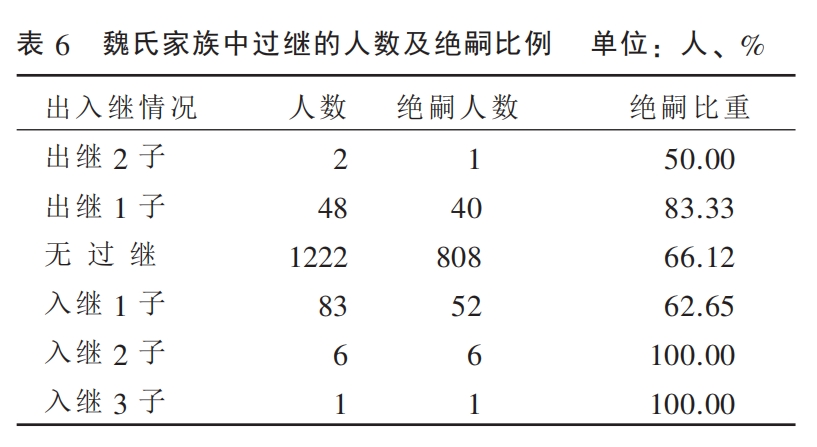
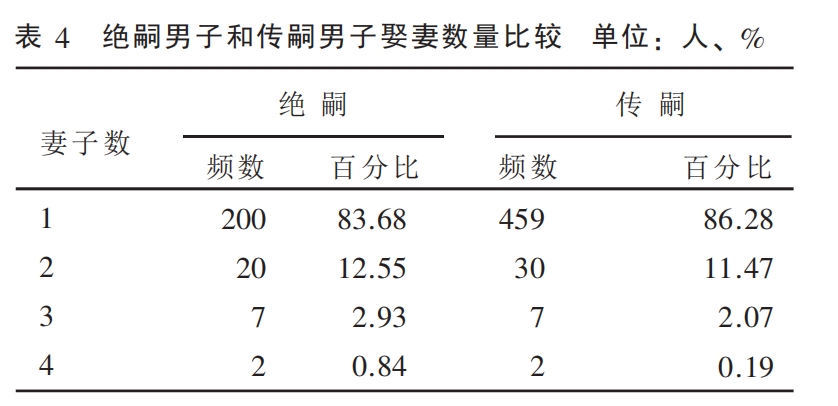
The paper points out that the number of sons had the most direct effect: the more sons, the greater the chance of continuing the line. But the number of sons was itself related to a person’s socioeconomic status. Clan heads and men with imperial examination credentials, for example, were often more likely to leave descendants. Other factors, such as the number of wives and adoption, had little influence. Most men had only one wife, and those with more wives did not necessarily have more children. Adoption had both positive and negative implications: although it could increase the likelihood of lineage continuation, it also indicated that a family was already in serious decline.
II
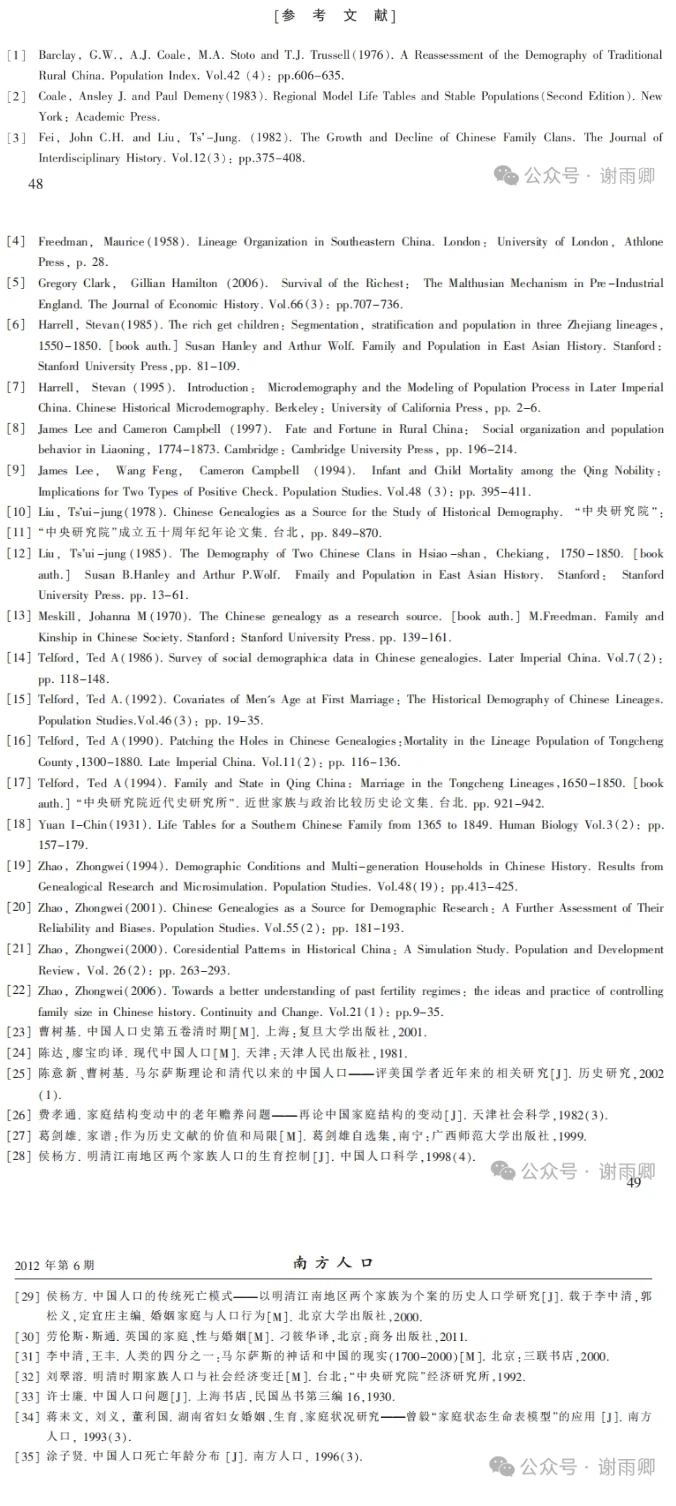
Those are the paper’s central arguments. But it cites a wide range of sources and contains much more material. I have listed some interesting findings below for reference. The sources are given in parentheses, and the paper’s bibliography is presented at the end so readers can check them.
1 The idea of continuing the ancestral “incense”—the family line—is deeply rooted among ordinary people and is the most important belief in Chinese society (Fei Xiaotong, 1982).
2 China’s population grew explosively during the Qing dynasty, from 160 million in the 18th year of Kangxi, 1679, to 436 million in the second year of Xuantong, 1910 (Cao Shuji, 2001). Mortality remained high, however, and life expectancy was very low. Population reproduction still followed the traditional pattern of high births and high deaths, and life expectancy at birth may have been below 30 years (Zhao, 2000).
3 Early marriage has been regarded as an important feature of China’s historical population, but some recent studies show that it was only women who married early. Many men did not marry until their thirties or forties, and more than 5% never married at all (Li Zhongqing and Wang Feng, 2000).
4 While the total population grew rapidly, lineage extinction was also widespread. These two apparently contradictory phenomena lead us to hypothesize that the enormous population of the late Qing may have descended from only a small proportion of the people alive in the early Qing, while the vast majority of the early Qing’s 160 million people saw their lines die out over the following two centuries. This means that the ideal of perpetuating a lineage may have been difficult for most people to realize, with only a minority able to leave descendants (Chen Xi, 2012).
5 Demographic conditions constrained families chiefly because short average lifespans limited the formation of large extended households. With lifespans so short, several generations living together was difficult to achieve, making the nuclear family the predominant household form (Zhao, 1994, 2000).
6 Early studies of traditional Chinese lineages by Freedman and others showed socioeconomic differentiation within clans. They included wealthy merchants as well as impoverished people, prominent gentry with examination credentials as well as peasants at the bottom of society (Freedman, 1958).
7 John C. H. Fei and others (1982) examined the population histories of ten clans and found a CMV, or critical maximum value, in clan population growth. Once a clan’s population reached its peak, the clan inevitably began to disintegrate. This may have resulted from competition caused by the shortage of land resources within a particular area.
8 Clan members with examination credentials could marry and have children earlier, making it easier for them to leave descendants. One could say that “the rich have descendants” (Harrell, 1985).
9 Research on England’s population before the Industrial Revolution found a clear correlation between wealth and the number of offspring: the wealthiest people left twice as many descendants as the poorest (Gregory Clark and Gillian Hamilton, 2006).
10 Poverty delayed men’s age at marriage (Freedman, 1958) and was the principal reason men over 35 remained unmarried (Chen Yixin and Cao Shuji, 2002).
11 Existing research shows that fertility behavior in traditional China was deliberately controlled, rather than being in a purely “natural state.” People regulated childbearing according to their household finances and expectations for the future. Once they had enough sons to ensure lineage continuation, they might stop having children to reduce the financial burden (James Lee and Cameron Campbell, 1997; Hou Yangfang, 1998; Zhao, 2006). Delaying childbirth after marriage, ending childbearing earlier, and lengthening intervals between births were three demographic mechanisms producing low fertility (Li Zhongqing and Wang Feng, 2000).
III
After reading this paper, we can gain a deeper understanding of some ideas in traditional society. Why, for example, did it attach so much importance to continuing the family line and ancestral incense? Because doing so required effort, relentless struggle, and putting all one’s ingenuity and strength into it. Those who paid even slightly too little attention to it saw their lines die out; those who left descendants all took it very seriously.
The paper also tells us that there is little reason to make a fuss about the many people today who neither marry nor have children. In the past, people’s family lines ended involuntarily; now people choose to end them. A new society needs new ideas, otherwise the Earth’s population will keep growing until there are not enough resources.
In other words, if nearly 40% of people in traditional society lost their lines after a single generation of reproduction, then even if one-third of young people today do not reproduce, that is quite normal and will not have too great an effect on the population structure in the long run.
In the past, goods failed to sell; now there is excess production capacity. In the past, people involuntarily lost their lines; now they voluntarily forgo childbearing. This shows that people’s awareness keeps improving: children and grandchildren may not have blessings of their own, but if I do not have them, I will certainly enjoy a better life myself.
References
Chen Xi. “The Ideal of Continuing the Family Line and the Reality of Widespread Lineage Extinction: Population Data from Genealogies.” South China Population, 2012, 27(06): 41–50.
Comments
No account needed. A nickname is required; email is optional. Successful submissions appear publicly without manual pre-moderation.
Comments and nicknames are public. Optional email addresses are not displayed. The selected Waline backend and its hosting provider process comments, nicknames, optional email, IP and browser information. Comments show IP region, without the full IP address or browser and operating system labels. Hosting: Vercel; database: Neon.