Having no money certainly does not make you happy, but does having money guarantee happiness? I have never thought so. As far as I know, rich people still eat, drink, and use the toilet every day; they get digestive problems and hemorrhoids too. They still do housework, endure grievances at work, and get scolded by their wives at home. If you think many troubles will automatically disappear once you have money, you will surely be disappointed when you actually become rich, and may even be less happy.
You may find my limited experience unconvincing, so let us look at a coal boss's own account.
Thirty Years in a Coal Boss's Own Words was written by Lao Wu and Jin Fei. Lao Wu is himself a coal boss; half his family and 80% of his social circle are coal bosses, so he knows their lives inside out and can describe them effortlessly. His family ranks among the wealthiest in Shanxi, he moves in elite circles, and he regularly associates with many businesspeople and officials. He is unquestionably a “rich man.” Jin Fei is Lao Wu's “literary friend,” who polished some of the book's language.
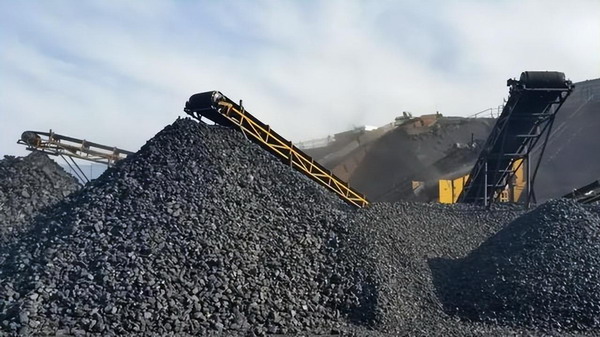
We have previously used this book to examine coal bosses' private lives. Today, let us examine their troubles, summarized below.
1. Problems with Women
We already explored this in Prostitutes, Mistresses, and Actresses—Troubles in Coal Bosses' Lives.
First come sexually transmitted diseases. The book says:
Speaking from experience, I urge everyone to stay away from sex venues. Condoms cannot protect against every disease. Two friends of mine are now long-term sufferers of severe sexually transmitted diseases and endure great misery. Their doctors say they were not infected by prostitutes, that the illness arose within their own bodies—lust truly has poisoned their hearts. Another friend contracted AIDS. He was always careful and carried the most expensive condoms. What good did that do? He still caught it.
Then there is the problem of failing to keep mistresses under control and being schemed against by them. The book says:
One boss's mistress, hoping to get pregnant, repeatedly slipped aphrodisiacs into his wine. She never became pregnant, but he became completely impotent and remained uncured five or six years later. Another boss's mistress could never conceive, so she paid a Beijing extras agency a large sum to find someone who looked very much like him. They actually found one. She secretly kept the extra as a lover whose sole job was to impregnate her, hoping to produce a high-quality counterfeit heir to wealth. Had she not been caught in the act by chance, this highly inventive mistress would almost have succeeded.
A boss called “Dali” had sought a child for years without success. At last, one of his wives became pregnant:
…One of Dali's concubines had a son. Before the excited Dali could even celebrate the baby's first month, a tip-off arrived: there had been a misunderstanding. The son was not his; the cuckold's horns were.
These are only the cases discovered; many more remain unknown. After all, wherever there is oppression, there is resistance. Who can completely control another person? The author cannot help sighing:
Life has improved, but the world has worsened. If you take a mistress, character still matters—though quitting altogether is better, of course.

2. Problems with Children
Coal bosses' children are also called the “second coal generation.” Many coal bosses endured poverty and struggled up from the bottom, but their children grew up in comfort, and many are disappointments.
First, they do poorly at school. A doctorate is not such a problem, since connections can arrange it relatively easily. But university entrance and master's admissions involve examinations, and without ability, arranging things takes considerable effort. Many parents therefore have no choice but to send their children abroad to scrape together a diploma.
Poor academic performance is one thing, but these children also acquire bad habits, and some behave terribly. Forget inheriting the family business—their parents would thank Heaven simply if they did not squander it.
For example, a coal boss's son called Xiao Zang did badly at school from childhood. Only his family's interventions got him through a master's degree and eventually secured a doctoral admission letter. With their help, he also married the daughter of a former provincial Party leader.
Yet while the couple were honeymooning, the doctorate fell through. Xiao Zang had an awful reputation during his master's studies, driving luxury cars around and sleeping with other men's girlfriends. People dug into his past and discovered that his English was worse than the cafeteria server's, his Chinese insufficient to write a decent résumé, and his master's degree bought…
Three months later, his wife could stand him no longer and demanded a divorce. Xiao Zang was simply too stupid: on meeting officials, he directly asked for a post, saying he wanted to become a division chief in a ministry and asking, “Will three million be enough?” It was utterly humiliating. He also constantly bought books supposedly exposing the dark side of officialdom and spent every day with rich second-generation friends discussing childish questions about who would fall and who would rise. He was hopeless.
Still, these children cannot bear all the blame. They grow up lacking parental affection, with fathers who have many wives and complicated family relationships. It is hard to develop a well-balanced personality in such an environment.
Some coal bosses institute strict family rules. One prescribed whipping for a son who gambled, crushing in a wooden clamp for drug use, and severed fingers for a son-in-law who embezzled. These punishments were actually carried out and had some deterrent effect, but they treat the symptoms rather than the causes.
The book records:
The major coal boss Zhang Zhongkui, born in 1935, had married twice, with three sons, five daughters, and four generations under one roof. Nicknamed Cao Cao, Zhang was capable, courageous, and a formidable figure. Unfortunately, most of his children amounted to little: some gambled, some took drugs, and some enjoyed both. To keep them from degenerating completely into wastrels, after his sixty-fifth birthday Zhang grimly imposed “family law.” Its precise provisions are unknown, but judging by its enforcement, it roughly worked as follows: anyone caught gambling received thirty lashes the first time and fifty the second; the third brought a permanent ban from any position in the group and a halving of their inheritance. Drug use was punished even more severely, apparently beginning with wooden clamps. Those who remained incorrigible and relapsed would be expelled from the family without a penny.
3. Health Problems
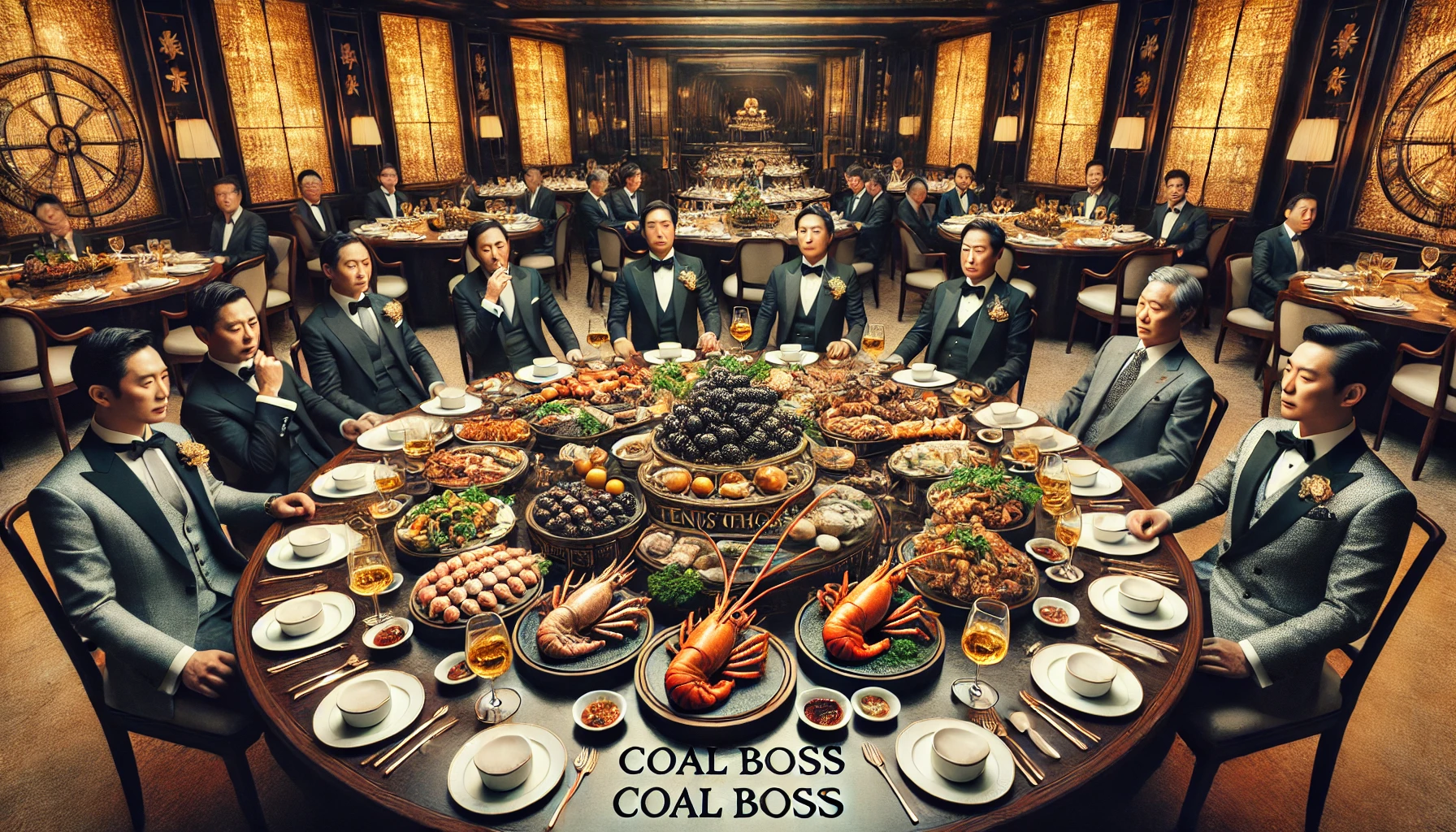
Coal bosses get illnesses besides sexually transmitted diseases. They attend many banquets, and lavish banquets at that; attending too many cannot be good for their bodies. The author says:
Coal bosses have many banquets—that is unavoidable—and they must be expensive, or there is no face to be had. These meals are about spectacle and status, not nutrition. It is fucking ridiculous. Eating more and eating expensive food do not necessarily make you strong. Instead, they burden your body, reduce your stamina, and make illness slow to heal. These are things I have experienced. After the “mung-bean miracle doctor” Zhang Wuben appeared, raw eggplant and mung-bean soup turned up at banquets paid for by coal bosses. That was quite good, not because they saved money but because they were simple and made the meals a little fresher. Chinese meals are far too rich and complicated. Five or six people can eat tens of thousands of yuan in one sitting—how can the human body digest all those complicated things? It would be a miracle if eating so much made you healthy.
I do not believe mung beans cure every disease, or that long eggplants and white radishes are invincible. I believe Zhang Wuben's qualifications may indeed be questionable, but I am still rather grateful to him. He made our decadent banquets much fresher. More mung-bean soup and raw eggplant are better than foie gras and hairy crabs. The simple diet he advocates receives far too little encouragement in China. Think of all the waste. However high mung-bean prices rise, how expensive can they be?
A relative followed Zhang Wuben's advice and kept drinking mung-bean soup, and his high blood pressure came down. Previously, however much medicine he took, it made little difference. I believe the experts' criticisms of Zhang Wuben, but I also believe the real events around me. What a pity China has never produced a genuine expert who could play Zhang Wuben's role. Suppose a fake expert told us to embrace fasting therapy and simple diets, eat masses of mung beans and long eggplants, and claimed they could cure cancer, diabetes, high blood pressure, and minor illnesses. If I were an ordinary person, I would honestly want to believe him. Believing early could prevent illness; believing late would at least offer spiritual comfort, better than undergoing chemotherapy and dying in a hurry.
For ordinary people like us, a table costing one or two thousand yuan is already quite respectable. These coal bosses spend tens of thousands on five or six people—truly excessive nutrition. Meals also inevitably involve alcohol. Although the text does not directly say so, everyone knows that drinking gatherings harm the body.
Coal bosses are also prone to mental illness, connected to their other troubles.
4. Gambling Problems
As a coal boss, you rake in money every day. What could be more exciting than operating a coal mine? Only gambling. Many therefore like to gamble, but few actually make money.
The book says:
Wanting an advantage is a universal human weakness. Receiving something for nothing, or for little, is humanity's dream. Gambling offers only a small chance of success, but there is a chance. Everyone wants to be the lucky exception, and frenzy is inevitable. Many lose their fortunes; I have seen families ruined and lives lost. Yet gamblers see only the few who win big. Gambling is a microcosm of society and human nature. Nine out of ten people who want to get rich quickly are either gamblers or swindlers.
Coal bosses gamble in tens of millions, and many consequently sink deep into debt. Some become so carried away that they mortgage coal mines worth billions. That is certainly a destabilizing factor.
5. Business Problems
Though coal bosses rake in money, their businesses are not foolproof.
Mining disasters, for example, were less of a problem in the past. Later, any disaster brought major losses, disrupted production, and generated public pressure. The book says:
Coal prices are high, and so are the risks. If one day you step through the manhole cover marked “mining disaster,” serious damage is certain. On top of that, the authorities periodically consolidate resources, stabbing coal bosses a couple more times. The wounds are too large for even double-sided tape to patch.
Many therefore seek other investments:
For us coal bosses, good times today do not guarantee good times tomorrow. Transformation is something we must consider. Real estate is attractive, but it belongs to old operators like the Mountain King, Lan Qian, and Weibo Pan. High-tech industries look appealing: advocated by the government, supported by policy, and highly respected.
But unexpected storms arise, and fortune changes overnight. Coal bosses can encounter other problems, such as political upheaval and economic crises.
Doing business requires someone above you. With a good patron, things naturally go well. But what happens if that patron falls? Once a coal boss becomes influential, he faces the question of political alignment himself. How can he be sure of making no mistakes? Many find the will of those above unfathomable. How could they avoid worrying?
Economic crises are similar. The crisis of 2008 inflicted heavy losses on many coal bosses, leaving plenty deeply in debt. Such crises, too, are difficult to predict.
6. A Crisis of Faith
Yet all the above are actually minor matters. The most important is a crisis of faith.
Lao Wu's father, “Hao Ertie,” came from poverty. Orphaned as a child, he joined the Communist Party's Anti-Japanese Children's Corps early in life. He experienced many things after the founding of the People's Republic but remained steadfast in his communist ideals.
Thus, after becoming a coal boss, Hao Ertie had no crisis of faith. With his wealth, he supplied gas and heating free to the entire county, built a new village for his hometown, and promised to establish village and township enterprises to employ everyone there. The book says:
Honestly, Father was never a clever man. He often did not understand what we considered sound reasoning. He simply stressed that life is short and there is little one can do: “You've got food and drink. What's wrong with letting your old man try a little communism? It'll work sooner or later. What's the rush?” As Liuwan New Village neared completion, Father was nearing death. Wuxi came limping to see him with two bottles of liquor and a carton of cigarettes, asking whether there would be a house for him in the new village. Father nodded and told him to educate the next generation properly, keeping them off the wrong path. Before he died, Father told us to cremate him and scatter his ashes over the Taihang Mountains. Mother said, “Isn't that too far? It'll be inconvenient for the children to visit your grave.” Father said, “No need. I'm a communist.”
After Father died, honors poured in. He had provided free heating and gas to the whole county for ten years, worth more than 600 million yuan; spent more than 100 million building Liuwan New Village; and donated more than 200 million to education. Yet throughout his life he endured hardship, refused luxury, ate and used simple things, and would never leave his old house, sleeping on an earthen kang all his life. In the end we did not cremate him, but buried him in an imposing cemetery. I wonder whether his spirit in Heaven would curse us: “Who told you to bury me here?” In the second year after his death, we began charging the county's residents for heating and gas.
Such coal bosses were a tiny minority. By the era of the younger generation, there were none like him at all. Yet they all encountered a crisis of faith.
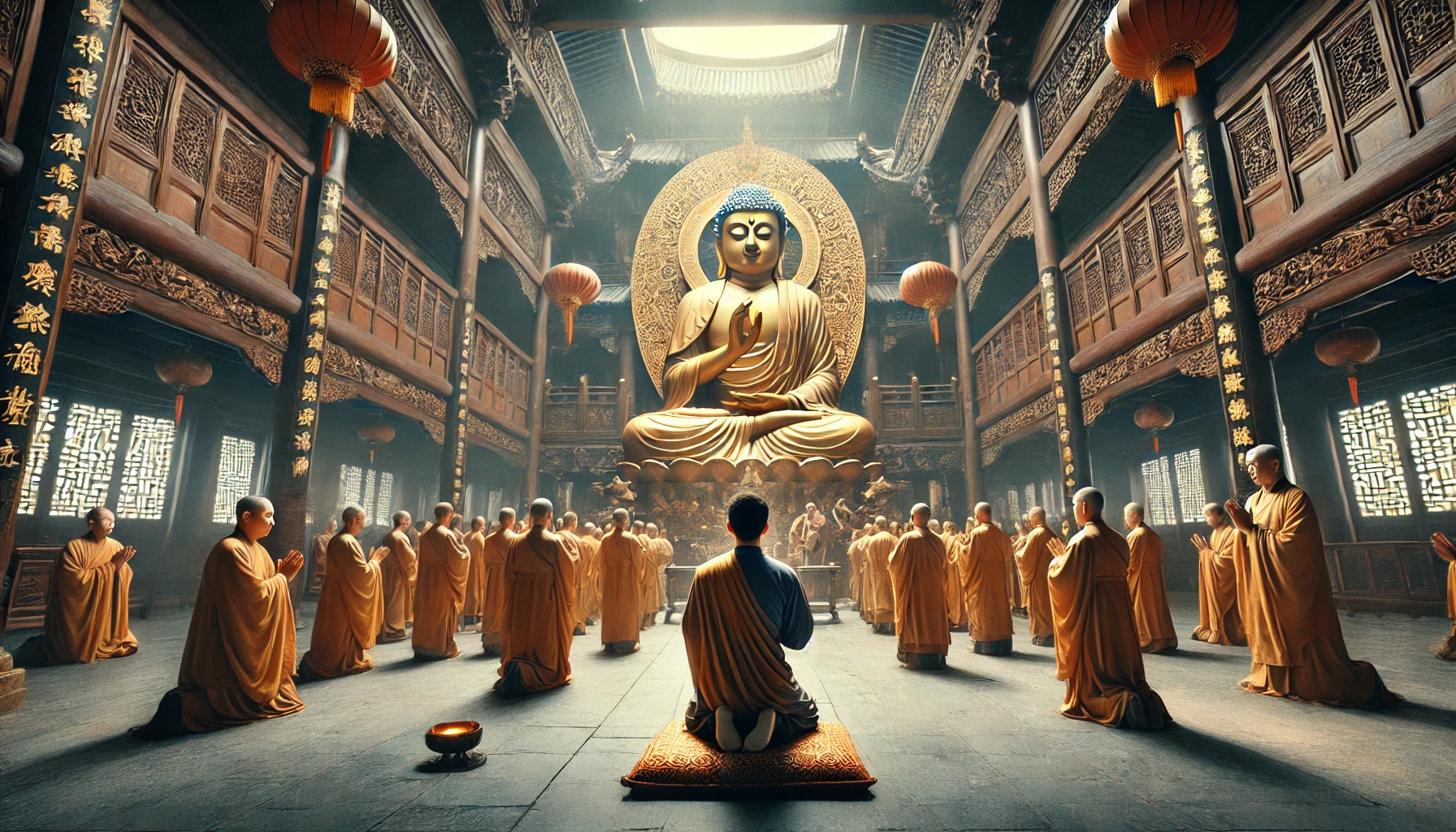
How could they resolve it? Religious belief offered the best solution. One of the author's close friends, Xing Meng, became a monk in 2005, the first coal boss in the province to do so.
Why call religion a good thing? Because with religious belief, illnesses disappeared, mining disasters decreased, addictions were overcome, and business improved. The book says:
After two years of torment from severe depression, Xing Meng was saved by a disc: Master Jingkong's Harmony Saves Us from Crisis. Xing Meng became a Buddhist—a true believer—and went to Singapore to seek an elderly master and learn Buddhism. The master told him to follow the Standards for Being a Good Pupil and Child in daily conduct and repent every day. Returning from Singapore, he went straight to Ge Village, kowtowing at every household. He spent 200 million yuan there on a school, hospital, old people's home, and temple. Xing Meng truly transformed himself. He stopped gambling, womanizing, killing living things, and eating meat. He continually fingered prayer beads and recited the Buddha's name, knelt before the Buddha in repentance every day, and donated everything he earned.
…Strangely enough, the more enthusiastically he supported charity, the better his mine performed. There were simply no accidents, not even the minor ones considered normal. These days, one mining disaster ends everything, and every coal boss fears it. Many superstitious bosses thought Buddhism had benefited Xing Meng and followed him into the faith, but none went as far as he did. When there were taxes to evade, they certainly still evaded them.
The author himself also took refuge in Buddhism in October 2009 and discussed Buddhist scriptures with eminent monks daily. Buddhists must not lie, and this book, published in 2011, may contain an element of repentance. I therefore broadly believe its authenticity. Of course, everyone rationalizes their own behavior, so some flattering treatment of himself, his relatives, and friends is understandable. Intelligent readers will be able to distinguish it.
The author also places great faith in Liao-Fan's Four Lessons. He actually appends the entire text to this book, perhaps as another good deed encouraging others toward kindness.
Li Shangyin wrote: “How could four decades as emperor fail to match the Lu family's life with Mochou?” Emperor Xuanzong of Tang, you spent more than forty years on the throne enjoying every luxury—but so what? In the end, did you not lose Chang'an, flee to Sichuan, get forced to abdicate by your own son, and watch your beloved hang herself? You really were worse off than ordinary people with a spouse, children, and a warm kang.
So what if coal bosses have so much money? Do they not end up studying Liao-Fan's Four Lessons every day? I discovered that book while still young. In that respect, I feel I am truly wiser than most coal bosses.
Comments
No account needed. A nickname is required; email is optional. Successful submissions appear publicly without manual pre-moderation.
Comments and nicknames are public. Optional email addresses are not displayed. The selected Waline backend and its hosting provider process comments, nicknames, optional email, IP and browser information. Comments show IP region, without the full IP address or browser and operating system labels. Hosting: Vercel; database: Neon.