This year, several relatives and I once again drove home together. We left Haiyan County in Jiaxing at 11:30 am on January 21 and arrived in An County, Mianyang, at 4:30 pm on January 22. Driving and resting together took about twenty-nine hours.
I had three impressions along the way.
First, the weather seemed warmer. I remember the journey home being very cold. Some years it snowed, and roads in some places iced over and became slippery. This year, however, it was not cold at all. We set out in bright sunshine and even felt a little hot. Only at night did it become somewhat chilly.
My second impression was that there were fewer people. The Spring Festival travel rush used to be extraordinary: traffic jams were inevitable when driving home, sometimes stretching for several kilometers, with long periods of crawling along the expressway. This time, we encountered a little congestion only near the start, mostly caused by accidents ahead. Once we passed the accident site, traffic sped up again. Particularly in the small hours near Xiangyang, there were so few vehicles on the expressway that it felt as though I owned the road.
My third impression was that my driving had improved. We took turns, and I drove for about eight hours, including a stretch from 12:50 am to 5:20 am. I covered five hundred kilometers in those four and a half hours, the fastest stretch of the trip, because traffic was light, the road was good, and there were few tunnels.
I realized that driving is very complicated, but when it comes to controlling speed, it still follows Newton's first law.
Newton's first law states:
Every object remains at rest or moves uniformly in a straight line unless a force acting upon it changes that state of motion. An object's tendency to maintain its original state of motion is called inertia. Force is what changes an object's state of motion.
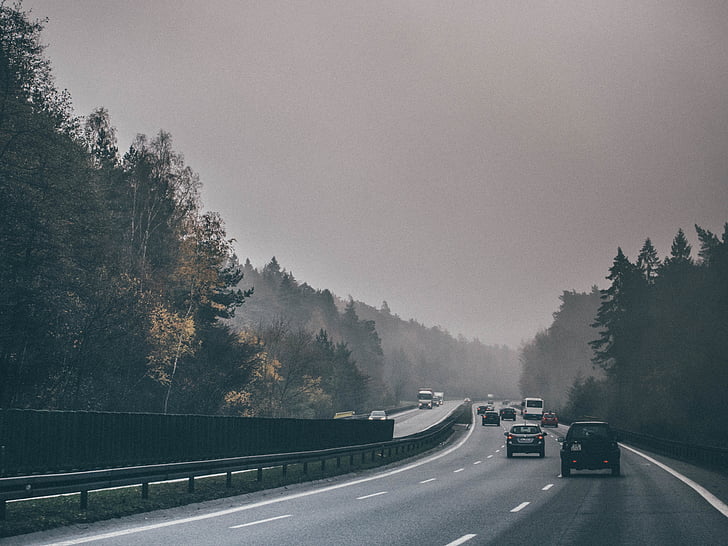
Applied to driving, this means that a vehicle tends to remain at rest or move at a constant speed in a straight line. In reality, however, a moving vehicle continuously experiences a backward frictional force and therefore slows down.
Pressing the accelerator supplies a forward driving force. While moving, if you press it gently with your right foot so that the driving force just offsets the friction acting on the vehicle, it will maintain a constant speed. Controlling that pressure requires experience and feel. Better drivers control it better, making the ride smoother.
Now consider other factors, such as gradients and road conditions. Going uphill can be viewed as an increase in friction, so maintaining a constant speed requires more accelerator pressure. Going downhill can be viewed as a decrease in friction, or as an additional driving force, so maintaining a constant speed requires easing off the accelerator or braking gently. Speed bumps can likewise be viewed as an increase in friction.
By combining Newton's first law with real conditions, then, we can drive both smoothly and economically.
For smoothness, avoid changing speed too quickly. For fuel economy, make full use of the force supplied by the accelerator rather than wasting it. Put simply, brake less often and more gently.
How can we brake less often? The most important thing is to make full use of the friction acting on a moving vehicle.
Many people drive jerkily because they wait until slowing down is unavoidable before braking, then brake too hard and abruptly. This is neither comfortable nor fuel-efficient.
Making full use of friction means easing off the accelerator ahead of time when you need to slow down, allowing the vehicle to decelerate gradually by itself. I think this is the key to smooth, economical driving.
That makes maintaining a following distance and paying attention especially important.
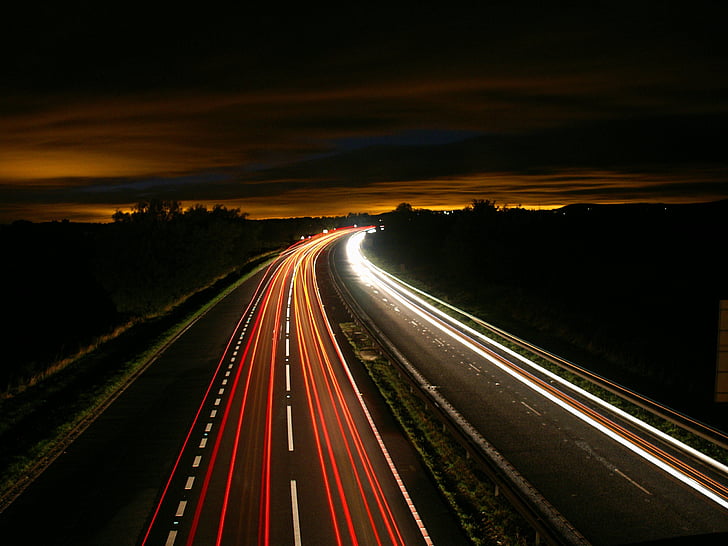
Suppose I am driving on an expressway with a maximum speed limit of 120 km/h.
If I look ahead and see no vehicles, I can press the accelerator harder, increase to 135 km/h, and maintain that speed.
If navigation then announces a speed camera five hundred meters ahead while I am traveling at 135 km/h, there is no need to panic. I release the accelerator, draw my right foot back to relax, and let the car slow gradually. By the time I reach the camera, it will certainly have slowed to around 120 km/h and will definitely not incur a speeding violation (less than 10% over the limit attracts neither a fine nor penalty points).
If I see a car ahead, I also release the accelerator and let my speed fall to 120 km/h, then press gently to maintain that speed while keeping more than eighty meters between us. I then observe that vehicle.
If it is a truck, it will travel at most 100 km/h, or 110 km/h at the absolute limit, so I should not remain behind it and can look for a chance to overtake.
If it is a passenger car with nothing ahead of it, it will maintain around 120 km/h. I can then judge further: if it is traveling fast, I can follow it; if it is slow, I can look for an opportunity to overtake.
If it is a passenger car with another vehicle in front of it, with traffic generally also present in the other lanes, caution is needed. I can ease off the accelerator to slow slightly and watch what happens next. I must not chase speed here; I should maintain my distance. That gives me a buffer even if the vehicle ahead brakes suddenly, helping ensure safety.
If a vehicle ahead is preparing to overtake, there is no need to be too nervous. It will most likely accelerate, so I can simply maintain my speed or even follow along.
If a vehicle ahead usually travels quickly and has a clear road in front but suddenly slows, it is probably approaching a speed camera and merely slowing to avoid penalty points. It will accelerate again after passing the camera. I need not panic either: easing off the accelerator is enough, without braking.
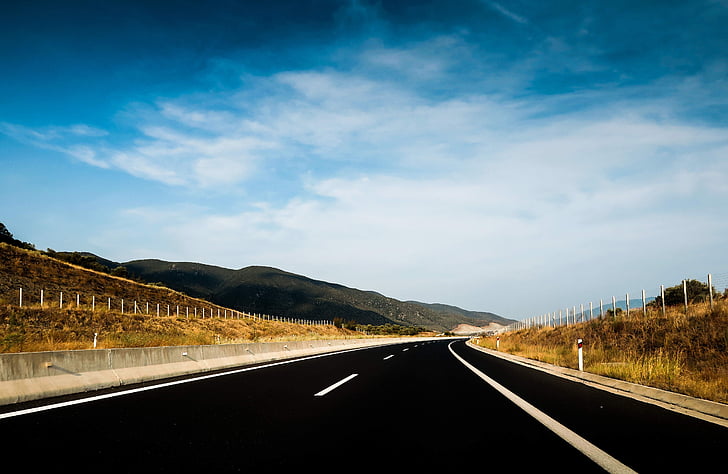
In short, learn to infer the intentions of the vehicle ahead, observe road conditions, anticipate whether acceleration or deceleration will be needed, and act early. There are only a handful of physical laws, but real situations vary endlessly. With more driving, proficiency will come naturally.
Of course, I have only a few modest insights into driving. I hope experienced drivers will forgive this amateur offering advice before the experts.
-END-
This is a WeChat public account where you can learn something new. Follow me for more interesting articles~
Comments
No account needed. A nickname is required; email is optional. Successful submissions appear publicly without manual pre-moderation.
Comments and nicknames are public. Optional email addresses are not displayed. The selected Waline backend and its hosting provider process comments, nicknames, optional email, IP and browser information. Comments show IP region, without the full IP address or browser and operating system labels. Hosting: Vercel; database: Neon.