On this trip from Beijing to Dongguan, I spent more than twenty hours on the train, met several friends along the way, and had some interesting experiences. Here are my notes.
I. Basic Information
-
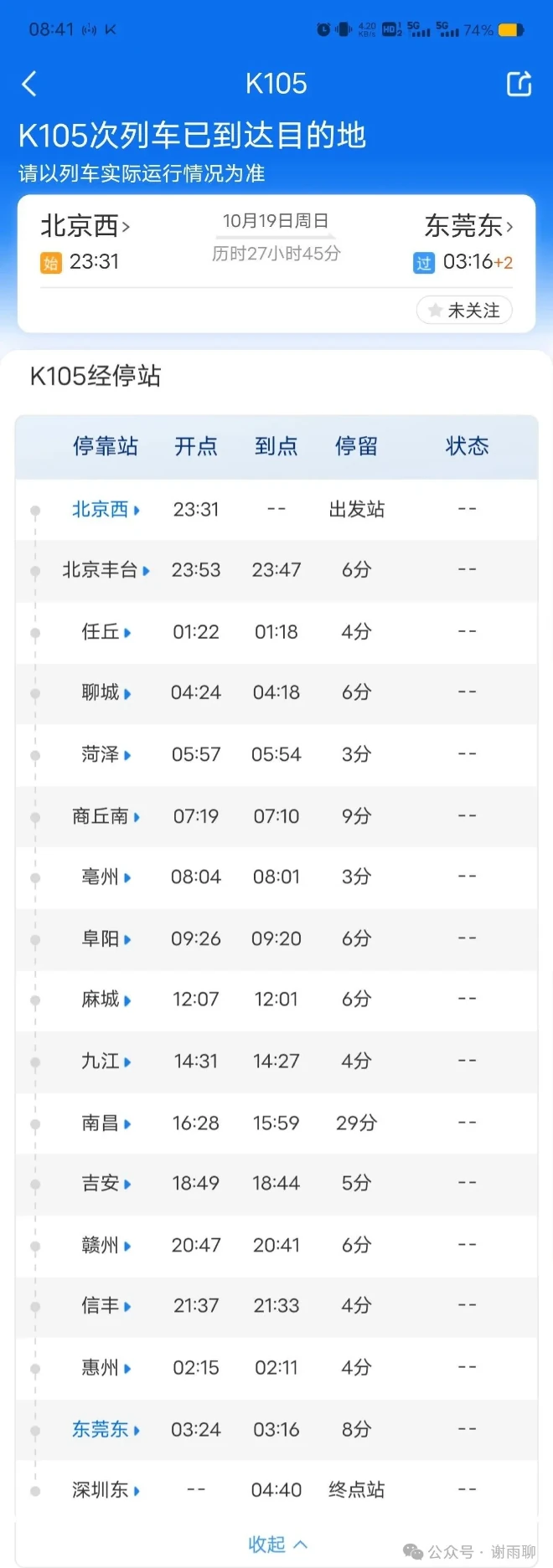
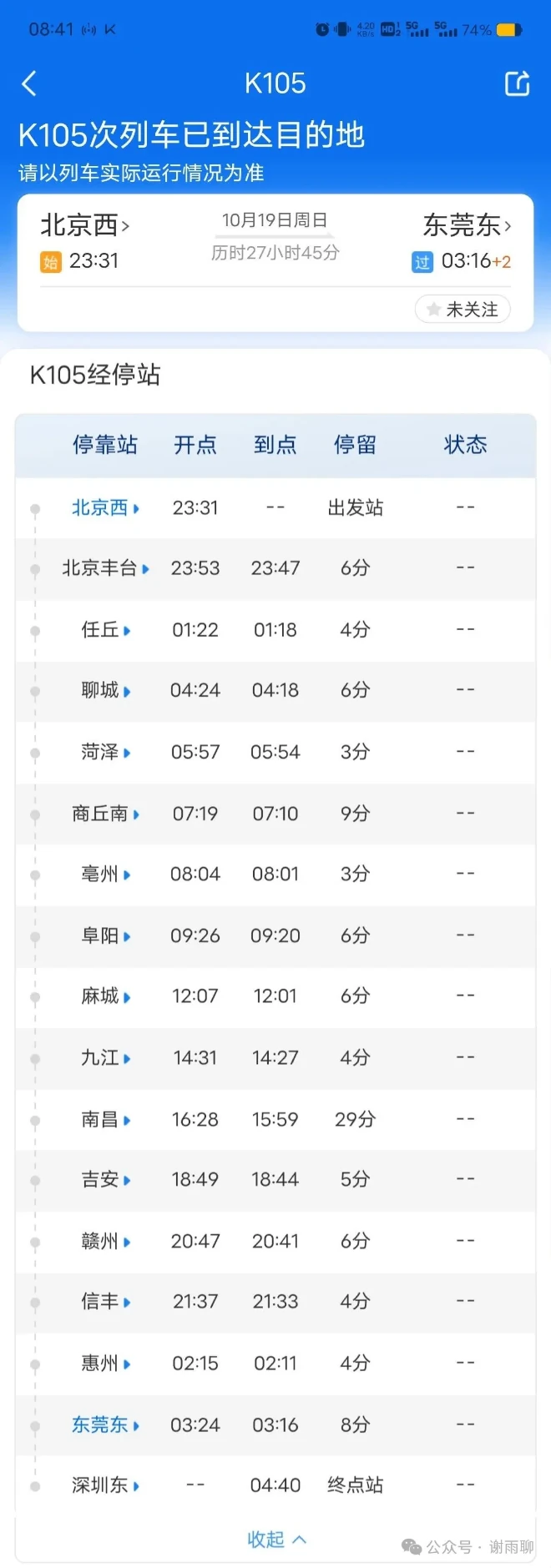
K105, departing Beijing West at 23:31 on Sunday, October 19, 2025, and arriving at Dongguan East at 3:16 on October 21.
-
Stops (Beijing–Kowloon Railway; Beijing Railway Bureau): Beijing West, Beijing Fengtai, Renqiu, Liaocheng, Heze, Shangqiu South, Bozhou, Fuyang, Macheng, Jiujiang, Nanchang, Ji'an, Ganzhou, Xinfeng, Huizhou, Dongguan East, Shenzhen East. (Total distance: 2,372 kilometers.)
-
Hard sleeper, car 17, upper berth 09, 426 yuan. The dining car is car 6.
-
People I met: a man from the Northeast, a woman from Dazhou, a Beijing boy, a minor Hengdian actor, and a Tianjin University law student.
II. The Man from the Northeast
-
From Heilongjiang, in his early fifties. He had been working in Beijing, argued with his boss, collected his wages, and boarded a southbound train to seek a living in Shenzhen.
-
Ate instant noodles twice, liked to drink alcohol with them, added a flatbread, and had brought sunflower seeds.
-
Said the Northeast has a tradition of "hunkering down for winter." From late October to March, the weather is freezing and outdoor activity is difficult, so people traditionally stayed home. Nowadays, Northeasterners go south in winter and return in spring, like migratory birds.
-
Apparently Northeasterners already control many industries in Hainan, and many now live on the island.
-
Why not settle in the south? He said he was getting older, had social connections back home, and did not want to leave. His child also attends school in the Northeast, so he cannot move away.
-
Looked older than his age, with gray temples, but seemed in decent spirits.
III. The Woman from Dazhou
-
From Dazhou, working in graphic design in Huidong, in her forties. Her hair was already gray, but her skin looked young, and she had something of an intellectual air.
-
From Xuanhan in Dazhou. Apparently Xuanhan Secondary School is Dazhou's best, sending more than a dozen students to Tsinghua and Peking University each year.
-
Her husband is from Henan, where her son took the university entrance examination. In 2020, he entered a top-two university to study optoelectronics. He has now gone directly into a doctorate and is in his second year.
-
Has tried many side businesses, including group buying and selling through WeChat. WeChat sales did not make money, but contacts she added became clients for her advertising work, which earned her quite a lot.
-
On this trip, she returned to Sichuan and then visited her son in Beijing. She was now taking this train to Shenzhen before returning to Huidong.
-
Apparently she once met a well-known lawyer on a train who had handled many famous cases. The lawyer said he was currently handling a case involving Yu Moulong in Inner Mongolia. She did not ask further questions.
-
According to her, Huangpu Town and Jilong Town in Huizhou have taken in factories relocating from Shenzhen, and a nuclear power plant and the Chinese Academy of Sciences have also moved in, making their future promising. Both places have many factories worth investigating as sources for e-commerce.
IV. The Beijing Boy
-
From a suburban district of Beijing, born in 2003. Studied cooking at vocational secondary school and nursing at junior college, graduating last year. Worked for a year as a care aide at a top-tier hospital in Chaoyang District, then recently resigned. He looked for work in District M without finding anything suitable, so planned to take a break and visit his aunt in Shenzhen for two or three months.
-
His father is a Beijinger in the funeral business. Apparently a single job earns ten or twenty thousand yuan and lasts a little over ten days. I do not know his monthly income, but he is certainly well-off. Their family home was also redeveloped, and they now have four apartments.
-
His mother is from City L in Shandong, as is his aunt's husband. His aunt's family initially tried to make their way in Beijing without success, then moved south to Shenzhen. They now have an electronics-related company that is doing well.
-
He likes care work very much. Although it is exhausting and often requires night shifts, he considers it a growing, promising industry he can work in long-term without worrying about unemployment. After returning from Shenzhen, he plans to look for care work in District M again.
-
Cheerful, optimistic, and polite. His manner strongly reminded me of an English teacher from Shandong at my university, and also of a Douyin personality called "2-Meter Rice Bucket," the one who visits other people's homes to eat… He really did have a large appetite, eating at least two bowls at every meal and still not feeling full.
V. The Minor Hengdian Actor
-
From Shenzhen, born in 1997, working as an actor in short dramas in Hengdian. She has spent four years trying to make it there. She had traveled to Beijing for a week's sightseeing and was taking the train to Jiujiang before transferring to Hengdian.
-
Spoke in clear, precise Mandarin, with crisp articulation and a resonant voice. She really had an actor's manner, reminding me of my experiences leading the recitation and drama groups at school.
-
Short-drama actors are generally paid by the day: they shoot for fifteen or twenty hours at a time, then get paid. Compared with traditional film and television, the production cycle is shorter; they can see themselves on screen in about a week or two. Traditional TV dramas take a long time to film, and minor actors must wait a year or two to see themselves, with the possibility that their scenes will be cut.
-
I did not ask about pay, but judging by her lifestyle on WeChat Moments and frequent travel, she probably earns a fair amount. She called herself a minor actor, a small fry. Fair enough: major actors would not take the train.
VI. The Tianjin University Law Student
-
From Fuyang in Anhui, born in 2003. Graduated this July in finance from a northern Project 985 university. Having failed the postgraduate entrance examination, she had not prepared for job-hunting in advance and had only one internship from her third year. She spent all of July, August, and September searching without finding a job. This trip was for an interview in Beijing, followed by another in Shenzhen.
-
By any reasonable standard, she graduated from a prestigious university and had the highest educational qualifications of anyone I met on the train. Yet she was also the most worried and anxious. She said jobs were hard to find: some finance-related positions had every slot already filled, some companies traditionally hired only men, and some interviewed only master's and doctoral graduates. Yet she said even a junior secondary school student could do these jobs, since university graduates also know nothing before starting and have to learn while working.
-
Her parents run a shop in Beijing. She argues with them constantly because they keep urging her to take the postgraduate exam again, but she no longer wants to. She had two interviews in Shenzhen, and while on the train received a call from a Shanghai company inviting her to a second interview. If the upcoming interviews still did not work out, she planned to look for work directly in Shenzhen. She had a very poor impression of Beijing and thought the rent far too high. We said people generally live in the suburbs and commute for one or two hours. She found that unacceptable.
VII. Other Impressions of the Train
-
Most passengers were traveling long distances. There were only three or four hard-seat cars and two or three soft-sleeper cars; all the others were hard-seat cars.
-
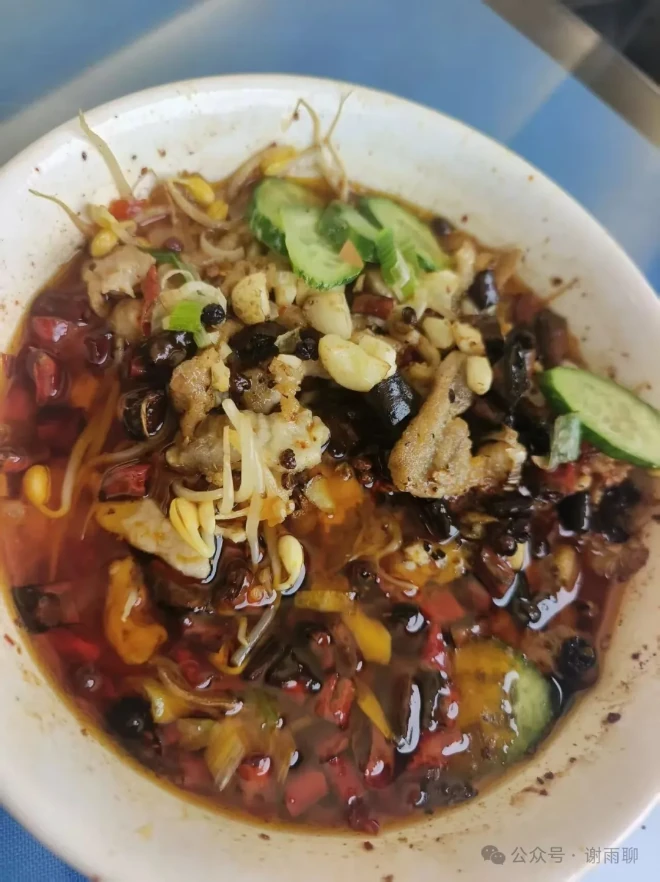
The dining car was car 6. The food was quite good and reasonably priced, possibly better value than some Beijing restaurants. For example, the Sichuan boiled pork slices cost 58 yuan, came in a large portion, and tasted excellent. A boxed meal cost 30 yuan for three dishes and seemed worse value than ordering separately.
- There seemed to be noticeably more people born after 2000 on the train than before. I did not deliberately strike up conversations; we just naturally began chatting, because people of the same era really do have more in common. The post-2000 generation has entered society's stage, even if they are not yet the lead actors.
VIII. Impressions of Dongguan
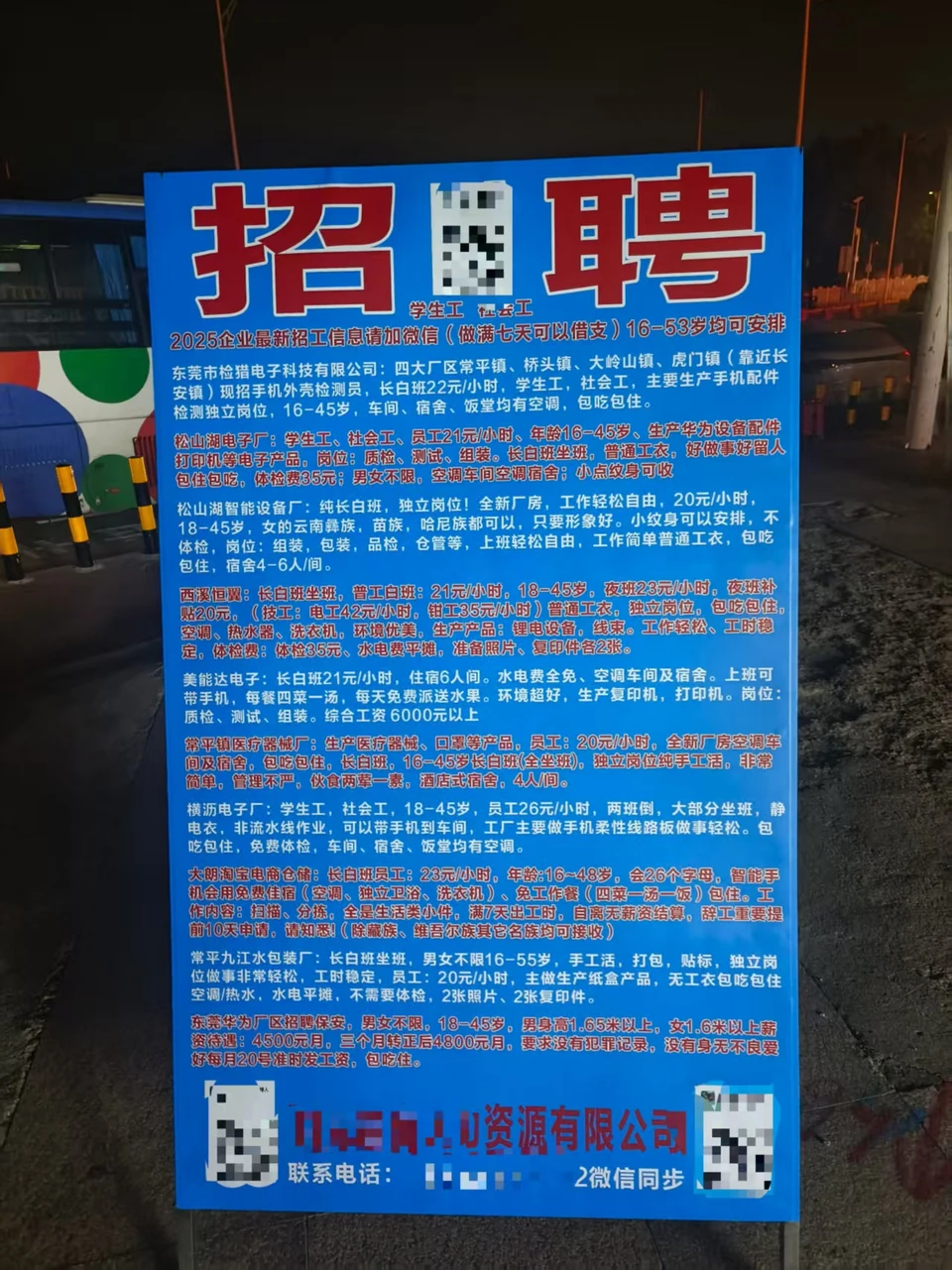
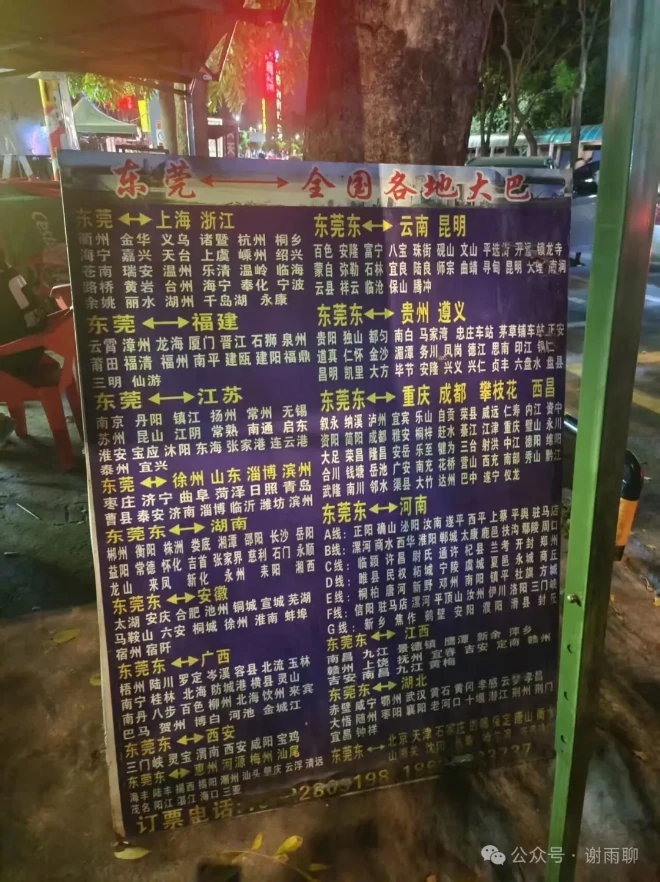
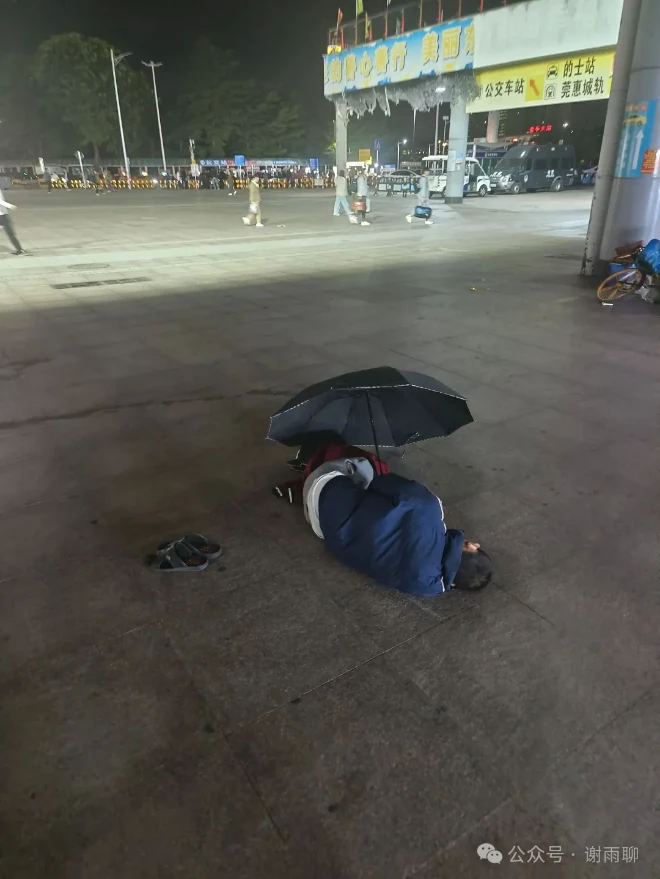
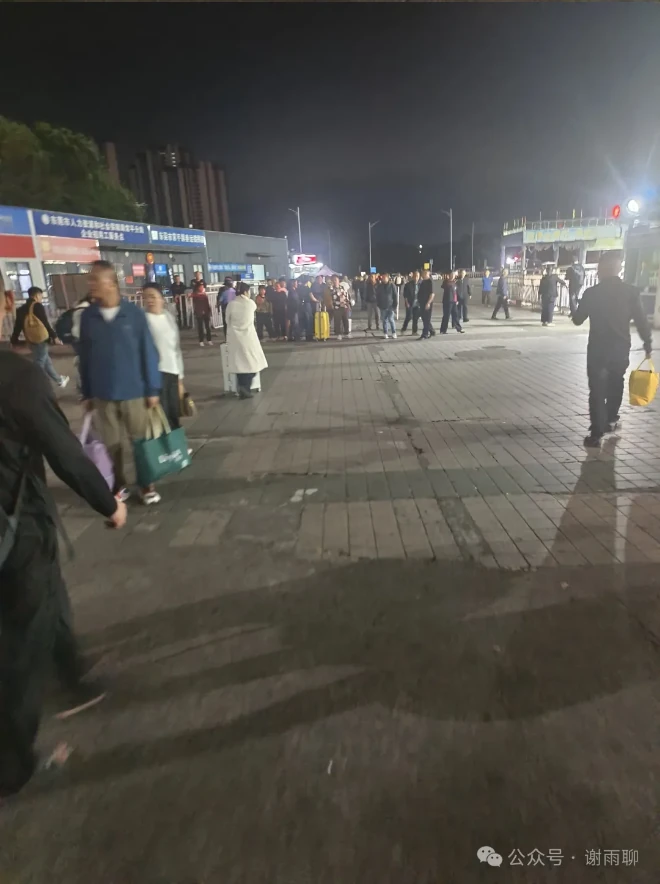
- I left Dongguan East Station shortly after 3 am. Not far from the exit stood three to five rows of people asking where we were going and whether we needed a ride. Snack shops and roadside stalls were open. Many people slept on the square, with bags of luggage beside them. Signs carried plenty of recruitment information, and there were advertisements for coaches to destinations nationwide. Turning left out of the station, I saw labor agencies and a Sichuan guesthouse with a banner reading "Self-help for fellow Yi people."
-
After walking around, I returned to a shop beside the station for a meal, then opened my laptop to work. The owner was from Anhui. Prices were affordable, but the food was average. He had a fiery temper and later argued with a customer over the shop's rule that customers must spend more than ten yuan to charge a device. The customer wanted to charge without buying anything. They traded insults about each other's parents and almost fought, but employees held them back.
-
Shortly after 5 am, I walked to Changping East Station. Unfamiliar with Dongguan's transport, I bought separate tickets from Changping East to Changping South and from Changping South to Xiping West. Only later did I learn that my first train also went to Xiping West. Once there, I found a local hotel to rest.
-
I walked ten kilometers around Nancheng, finding prosperous streets everywhere. Restaurants were still open late at night, with all kinds of cuisines available. Apparently Dongguan's twenty-eight towns each have their own center and are relatively balanced in development. Looking up the figures: Dongguan has 10.57 million people, 2,460 square kilometers, and GDP of 1.23 trillion yuan; Beijing has 21.89 million people, 16,400 square kilometers, and GDP of 4.98 trillion yuan. Dongguan has greater economic density than Beijing. Chang'an Town in Dongguan has GDP of 105.07 billion yuan, higher than Fangshan District's 94.89 billion.
-
I think these signs indicate that, compared with Beijing, Dongguan has a more active economy, more factories and people, and looser regulation. It presents a somewhat different social scene.
Note: This article was written on the morning of October 22, 2025, based on observations during the journey. All individuals have been anonymized, with certain specific details omitted. Any resemblance of events is coincidental. The purpose is to record a slice of our times and convey diverse voices.
Comments
No account needed. A nickname is required; email is optional. Successful submissions appear publicly without manual pre-moderation.
Comments and nicknames are public. Optional email addresses are not displayed. The selected Waline backend and its hosting provider process comments, nicknames, optional email, IP and browser information. Comments show IP region, without the full IP address or browser and operating system labels. Hosting: Vercel; database: Neon.