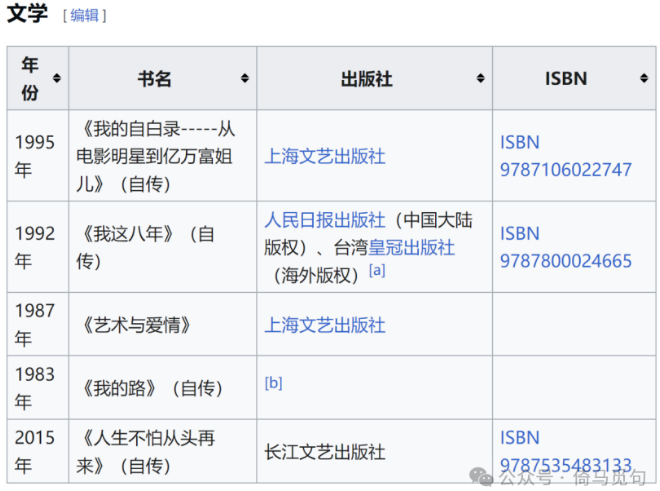
Born in 1950, Liu Xiaoqing is 74 this year. Her life has been highly successful, with remarkable achievements in many fields. Most people know her only as an actress. Some also know that she is a successful entrepreneur, but few realize that she is a writer too.
Liu Xiaoqing was born into a revolutionary family and loved reading from childhood. She later wrote many books and joined the China Writers Association early on. This article introduces her early reading history, which may give us a fuller understanding of this remarkable figure.
Liu Xiaoqing has never met her biological father. According to her autobiography, her mother and biological father held “different political views,” so her mother left him before Liu was born. Both her stepfather and her maternal uncle were members of the Chinese Communist Party's underground organization in eastern Sichuan. We can therefore speculate that her biological father may well have opposed the Communists, and perhaps even fled to Taiwan. Readers who are interested can investigate further.
Her stepfather joined the family when she was three. They were very close and emotionally were no different from a biological father and daughter. During the Cultural Revolution, he was branded a “traitor” because he came from a landlord family. Liu Xiaoqing nevertheless never cut ties with him. While he was confined in a “cowshed,” she regularly brought him meals and once even beat up a child who insulted him.
When Liu Xiaoqing was little, her stepfather took her on walks and told her stories from books as they went: Chronicles of the Eastern Zhou Kingdoms, Water Margin, Romance of the Three Kingdoms, and Dream of the Red Chamber, as well as Chinese history, Tang poetry, and Song lyrics.
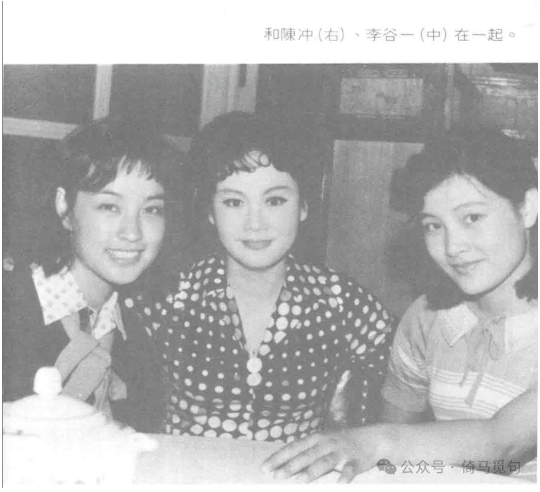
Even before starting school, Liu Xiaoqing could sing and dance well and loved drama, film, singing, and dancing. She already recognized many characters and could recite quite a few Tang poems. She recalled once watching the Sichuan opera Wangniang Beach: she cried so loudly and inconsolably in the audience that her mother eventually had to carry her outside. Clearly, her early education was quite broad. Her family originally lived in Fuling before moving to Chengdu, so her uncle called her “the artist from Fuling.” After starting school, Liu Xiaoqing often found classes boring because she thought the lessons too easy and had already read many of the texts. She frequently skipped school to climb trees and swim, roughly following a pattern of one day absent and two days in class, yet she always kept up with her studies. Eventually her teacher and mother joined forces and devised a “registration form.” Xiaoqing had to carry it between home and school. Her mother and teacher recorded her “departure from home,” “arrival at school,” and “arrival home” to keep her from wandering off. Only through this method did she gradually settle down.
Both parents worked in education and were very strict with her. They required her to know every textbook passage inside out and often refused to let her sleep until she could recite it. She still resented this many years later.
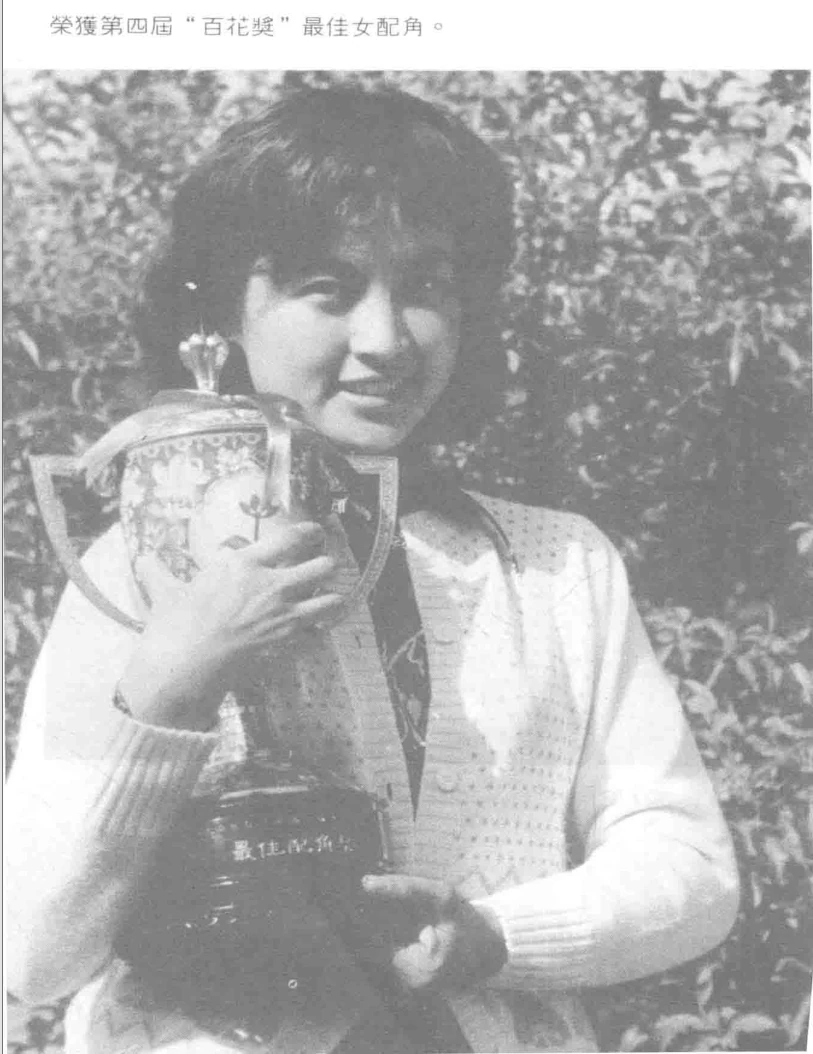
Liu Xiaoqing began reading full-length novels in third grade. Her first was Flames on the Grassland. After that, during every winter and summer holiday, her mother brought home armfuls of books and required her to finish them. She consequently read a great deal. When she found a book she loved, she could not put it down and often read until dawn.
At 11, she gained admission to the secondary school affiliated with the Sichuan Conservatory of Music. Her literary interests shifted from “thread-bound books” to “Western-bound books,” from classical Chinese literature to foreign literature, especially fairy tales. Within her first year, she had read almost every fairy tale and myth in the school library. She said: “They gave me countless beautiful imaginings and taught me pure feelings.”
In 1970, after finishing secondary school, Liu Xiaoqing was assigned to Xuanhan Farm in Daxian Prefecture. During this period she read every book she could find. She also studied acupuncture and followed the books to treat nearby farmers, who respectfully called her “Doctor Liu.” On one occasion, she put her learning into practice by consulting the Rural Medical Handbook to treat a 14-year-old girl's abdominal pain. Only the next day did she learn that the girl was pregnant. “Doctor Liu” then reopened the book and pressed several acupuncture points listed under “Contraindicated for Pregnant Women.”
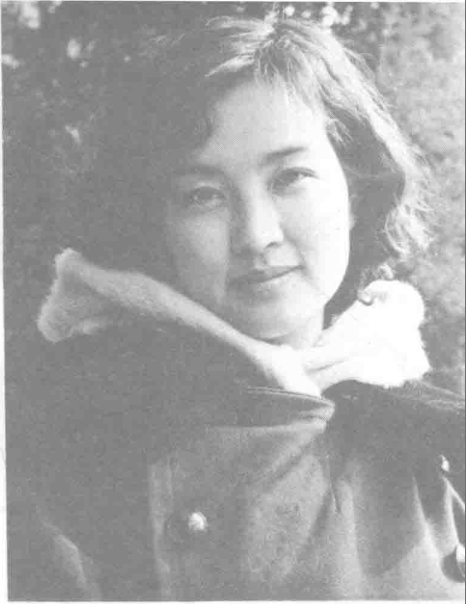
Liu Xiaoqing during her cultural troupe years
One day Liu Xiaoqing seized an opportunity to join the cultural troupe of the People's Liberation Army's Daxian Military Subdistrict, beginning her troupe years.
Her daily schedule in the troupe was simple: 1 Clean several offices in the publicity section; 2 Fetch boiled water; 3 Register books in the reading room.
“Registering books” really meant reading them. She often finished a book before entering it in the register. During her military subdistrict years she read many biographies. She said:
I read many biographies of great people and saw their distinctive personalities and independent fighting spirits. I saw that great people, presidents, and stars were all human, each just one person among the multitude, differing only in personality and circumstances. —My Road
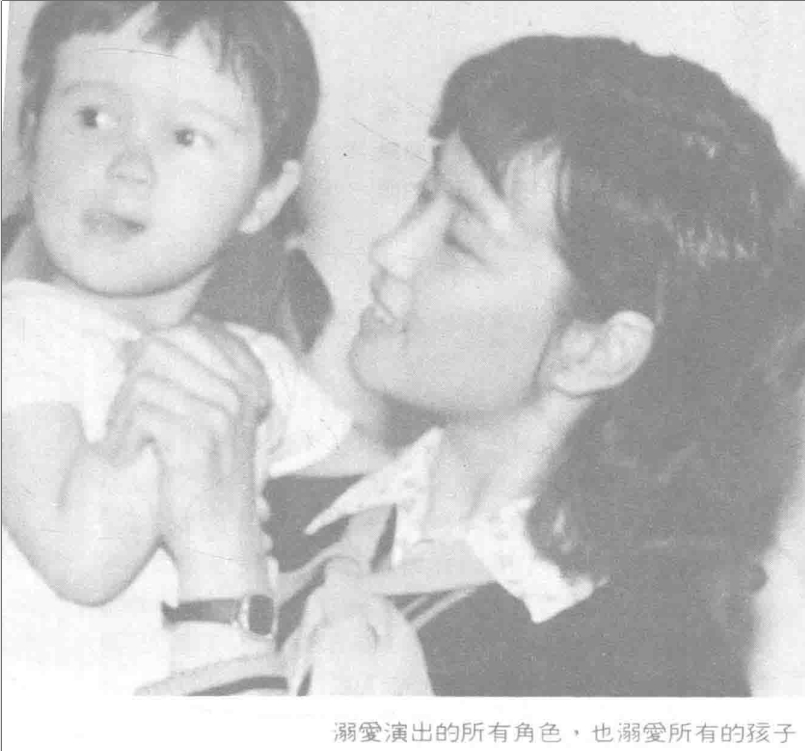
Looking back, she said that from that time onward she maintained several interests: reading, watching films, and eating fruit. Adding her later work making films, she called these her “four great interests.” She has kept all four to this day, and reading has never fallen out of the top two.
Recalling her reading preferences, Liu Xiaoqing wrote:
I favor works by women writers: Gone with the Wind, Jane Eyre, Wuthering Heights, The Gadfly… In a quiet room, I was so moved by the Gadfly's resilience and his regret-filled yet faithful love for Gemma that I lay on the desk and cried for a full twenty minutes. I favor Mérimée's works, rich in color like oil paintings; I like Zweig, whose portrayals of women are vivid and penetrating. There are also Jack London, Hugo, Romain Rolland, Balzac, and Tolstoy; Under the Sky and The Mexican, Ninety-Three, Notre-Dame de Paris, War and Peace… These books brought such rich color to my dull, monotonous life. They helped me step through life's doorway and explore its true meaning. —My Road
After some time in the cultural troupe, Liu Xiaoqing passed the entrance examination for the Chengdu Military Region Drama Troupe and became a professional performing artist. In 1975, when the August First Film Studio remade Sea Eagle, she was selected as the female lead. At 25, she formally began her acting career.
Reading in youth can influence an entire lifetime. Before she began making films, Liu Xiaoqing's life was generally uneventful, but books were always her companions, and she accumulated a great deal of knowledge. We can believe that her later achievements were inseparable from her early experiences and reading.
It has to be said: Liu Xiaoqing's early reading history is quite inspiring.
Comments
No account needed. A nickname is required; email is optional. Successful submissions appear publicly without manual pre-moderation.
Comments and nicknames are public. Optional email addresses are not displayed. The selected Waline backend and its hosting provider process comments, nicknames, optional email, IP and browser information. Comments show IP region, without the full IP address or browser and operating system labels. Hosting: Vercel; database: Neon.