I
The world is so complicated that sometimes we really cannot predict what will happen. When doubts trouble us, we want a definite answer, so we think of fortune-telling. Accurate or not, at least it gives us something to go on.
That is the attitude many people bring to fortune-telling.
There are many schools: Four Pillars astrology, bone-weight fortune-telling, physiognomy, feng shui, and imported methods such as horoscopes and tarot. There is always something to suit you and soothe your unsettled heart.
I used to think that learning these theories was the most important thing for fortune-tellers. According to them, a person’s fate is fixed at birth, and their task is merely to calculate it. Calculation must follow some theory; if the theory is wrong, the method will be wrong, and the result naturally wrong too.
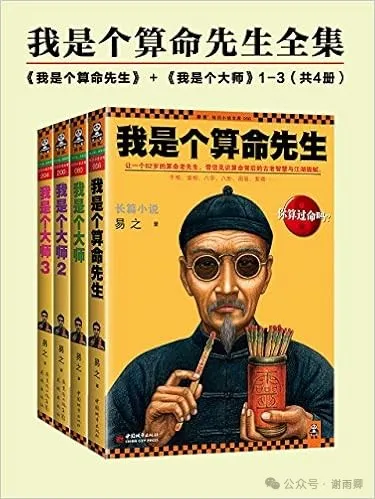
Only after reading I Am a Fortune-teller did I learn that fortune-tellers are actually the most thoroughgoing materialists. Why do I say this? Allow me to explain.
II
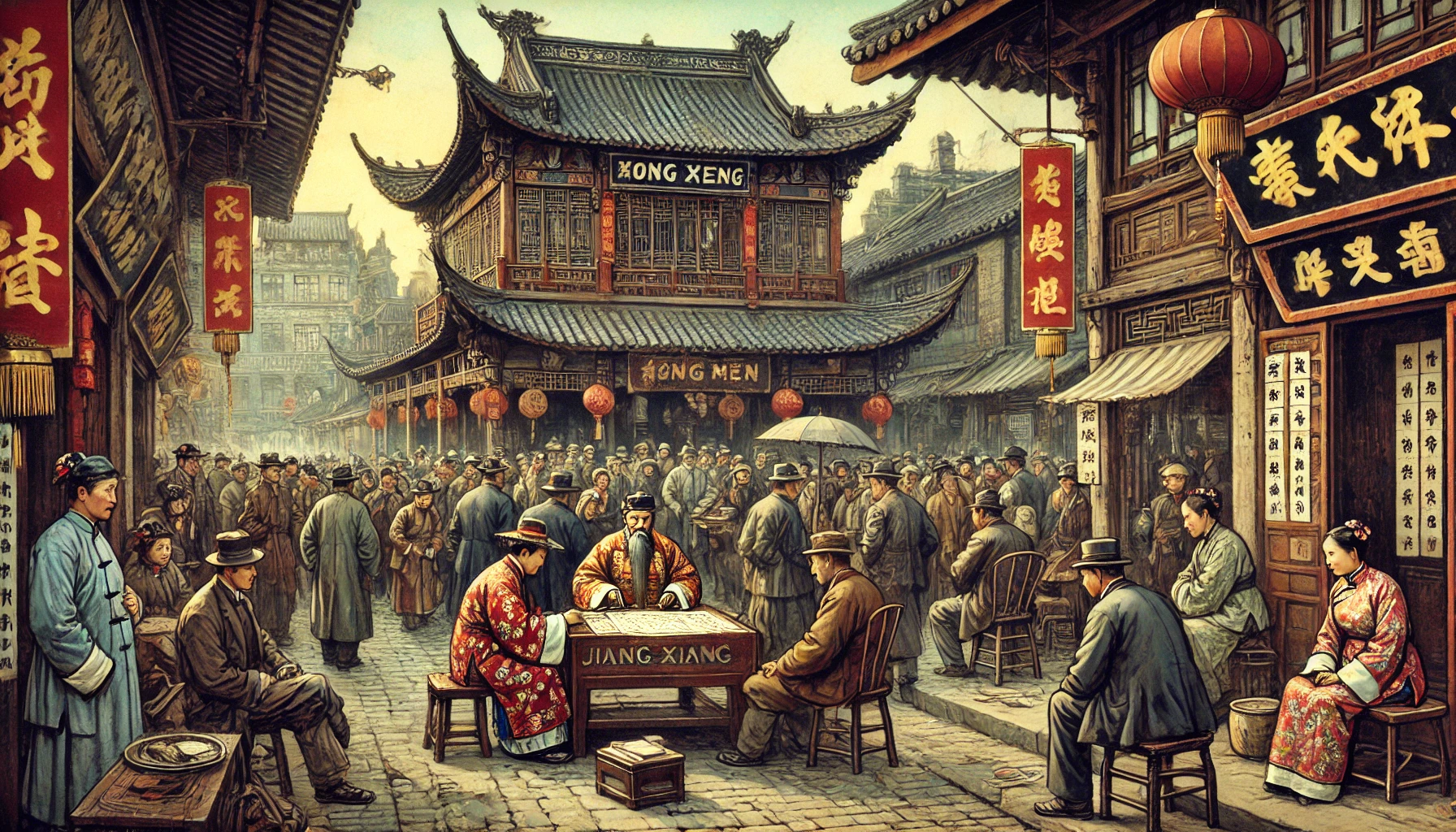
There was a school in the wandering underworld called the Jiangxiang school, a branch of the Hongmen. Hongmen was the famous Heaven and Earth Society, which existed for more than 300 years with the mission of overthrowing the Qing and restoring the Ming.
One major feature of the Jiangxiang school was swindling under the guise of fortune-telling. Initially, its fortune-telling activities were meant to “carry out Heaven’s justice” and strengthen anti-Qing forces. By the late Qing and Republican periods, however, it gradually lost its original purpose and became a purely fraudulent organization. After New China was founded, it ceased to exist as an organized group, but its tricks continued to circulate secretly.
An elderly man born in 1928 was an inheritor of the Jiangxiang tradition. He joined it in 1948, was imprisoned in 1952, and released in 1957. Later he recounted his experiences, which became I Am a Fortune-teller.
This man was the author’s great-uncle through his grandmother’s sister. The book is written in his voice. Through it, we can see how fortune-telling organizations operated at the time.
III
According to the book, the Jiangxiang school had four major lodges. The old man joined the eastern branch’s “Muzi Lian” lodge, whose leader was called the Grand Master. The heads serving under him were called batou.
Let us first see how several batou caught the Grand Master’s attention.
The First Batou had originally been a pig butcher. Once, several thugs tried to rob him of his smoked meat on the road. Furious, he beat them with extreme brutality: one had his testicles crushed, another an eye gouged out, and a third his skull smashed with a brick. The First Batou was sentenced to death. But the Grand Master saw him as a formidable man, paid to secure his release, and took him into service.
The Second Batou joined the Grand Master at 15. At the time, Jiangnan was rife with rumors of “demonic women stealing souls”: a woman would touch a child’s head, and the child immediately turned pale and stiff-limbed, their soul taken away. The rumor spread throughout Nanjing and many surrounding places. The Grand Master seized the opportunity to make a fortune exorcising demons and recalling souls. He encountered the future Second Batou in the street without the red head-cord used to ward off evil and asked whether he feared death. The boy replied, “Only a fool would believe that!” The Grand Master considered him exceptional and recruited him.
The Third Batou had also been a fortune-teller but belonged to no organization. Refined and scholarly, he knew astronomy, geography, yin and yang, and the Eight Trigrams, and had read the Analects and Mencius thoroughly. He spoke eloquently and wrote beautifully. When he told fortunes in the Grand Master’s territory, the Grand Master personally invited him to give a reading and took him to his residence, where the First and Second Batou beat him up. Yet he steadfastly refused to admit that he was deceiving people. Admiring his eloquence and nerve—especially his theatrical manner and refusal to confess—the Grand Master recruited him.
You see? Those singled out for cultivation were all ruthless men who did not believe in fate. Only by disbelieving it yourself could you truly fool others and become a pillar of the school.
IV
According to the book, after joining the Jiangxiang school, the old man had to pass through four stages before he truly entered the profession.
The first was learning yin and yang and the Five Elements, called “laying the foundations.” Even a swindler needs some foundation, so this stage was essential. But it lasted only a month, not the years of mysterious study others claimed were necessary.
The second was learning “Yingyao,” the psychology of deception. Its central mnemonic runs as follows:
1 Observe their purpose on entering; do not hesitate when speaking.
2 When Heaven asks about Pursuit, Pursuit seeks rank; when Pursuit asks about Heaven, it worries for Heaven.
3 When Eight asks about Seven, joy seeks Seven’s advancement; resentment truly fears for Seven.
4 When Seven asks about Eight, either Eight has trouble or offspring are difficult.
5 Scholars ask about their prospects; bearing grandchildren is close to antiquity.
6 Repeated questions reveal a lack; repeated questions about causes conceal a cause.
7 Monks and Daoists profess aloofness but do not forget profit and desire.
8 Accomplished men in the halls of power aspire to the mountains and forests.
9 The first brother needs a ruthless blade, the second a discarded blade, the third dates need fleas.
There is no need to study those lines closely, because much of them is jargon. Based on the author’s explanations, I summarize the general meanings below:
1 When someone comes for a reading, speak less and observe more. Establish their purpose and collect information. Once you have enough, make an unexpected statement that hits the mark and goes straight to the heart of the matter. Never hesitate when speaking, as that makes you look unprofessional.
2 Parents asking about their children almost always want to know whether they will become wealthy or distinguished. The desire for sons and daughters to succeed is universal. Children asking about their parents definitely do so because the parents are unwell; otherwise, they would not normally think of seeking a reading for them.
3 Wives asking about their husbands often show their feelings on their faces. If she is happy, her husband has recently shown signs of prosperity or advancement. Agree with her, and a reward will follow. If she looks worried, things have not been going well for him. Predict misfortune and tell her to avert it: she will pay you and thank you too.
4 A husband asks about his wife for only two reasons: either he fears she is unfaithful or she cannot bear a son. Otherwise, he would never seek a reading for her!
5 Scholars mainly ask whether they will succeed in the examinations or obtain office; merchants mainly ask how long they will live and whether great disasters or obstacles await them.
6 Repeatedly asking about one thing means that it is not going well. Persistently questioning one issue means that it is the cause underlying the matter they wish to ask about.
7 Genuine renunciants do not seek fortune-telling. Those who do are asking about profit or desire. Promise them these things, and they will be delighted.
8 Officials have even greater ambitions, so again promise them profit and desire.
9 Be ruthless with those easily hooked and extract more money. With those who doubt you, do not be greedy: take not a penny you should not. If someone comes looking for trouble, flee immediately and ask the Grand Master to settle it.
The third stage was the first reading. A newcomer had to conduct one entirely alone to enter the profession, putting previous learning into practice.
After completing that reading, the newcomer had crossed the threshold. Following a period of practice and testing, the fourth stage began: the Grand Master personally taught the six-word formula.
The six words were shen, qiao, da, qian, long, and mai: assess, probe, pronounce, deceive, flatter, and collect payment. Master them, and one could become a highly accomplished fortune-teller.
There was another mnemonic for these six words:
1 Assess before probing; pronounce swiftly and work slowly.
2 Flatter and sell together; probe and pronounce in combination.
3 Nine of ten deceptions ring true; nine of ten flatteries succeed.
4 Deceive before proceeding, and every venture succeeds.
5 Deception without flattery is the talent of a dishou.
Let us look at the author’s explanation:
Put simply, shen means assessing: a person’s clothing and bearing reveal poverty or wealth, allowing their social level to be judged at a glance. Its second meaning is listening. Let the other person speak, and speak at length: more words mean more information.
Qiao means probing. As the saying goes, “If the first knock hits, strike along the stick; if the second yields nothing, seek a snake in the grass.” On the basis of assessment, suddenly “knock.” If you are right, use da. If two probes miss, you are in danger, like searching for a snake in the grass and risking a bite. At that point, an ordinary Abao will “discard the blade.”
Da means delivering a firm judgment. Its value lies in speed: speak suddenly and decisively. More deeply, it means destroying the other person’s will. Since your probe was accurate, they trust you completely. Tell them misfortune lies ahead: a senior official will lose office, a great merchant will lose wealth, a resentful wife will be abandoned. Strike until their psychological defenses collapse.
Qian means deception, either on the spot or through a prepared arrangement. It runs through the other five words and must be slow. Rush it, and you reveal yourself. Hence “pronounce swiftly, deceive slowly.”
Long means flattery: say what the other person wants to hear and offer hope. After your pronouncement, they are frightened and at their lowest. Flatter them now: tell them hope remains and that following your advice can turn danger into safety and misfortune into good fortune. Then flatter again: once past this obstacle, they will gain great wealth and honor and live to a hundred. Naturally, they are delighted.
Pronouncement and flattery correspond: first bring despair, then offer hope. The person is now firmly hooked. Both are methods of deception and cannot be separated. If you only pronounce disaster, however skillful the deception, it is useless: the person despairs, accepts their fate, and will not take the bait. Hence “deception without flattery is the talent of a dishou.” Dishou is jargon for a fool.
The final word, mai, means selling, a stage of effortless mastery. Whatever you say, the other person accepts. Its second meaning is that it is time to collect money. Everything ultimately aims at the silver in their pocket, so collecting must be clean and decisive too.
When teaching these formulas, the Grand Master combined theory with practice. For each word, he described his own experiences in detail to substantiate it.
By this point, I imagine everyone will applaud the ingenuity.
Are these formulas mystical speculation? Obviously not. They are summaries of social reality! From practice to theory and back to practice—is this not the correct method of understanding Chairman Mao advocated in “On Practice”?
For Jiangxiang fortune-tellers, then, understanding yin and yang and the Five Elements was necessary but not most important. The key was learning how people and society worked, understanding psychological patterns in that particular society, and learning to use them to win trust and achieve one’s aims.
Yin and yang and the Five Elements were only the surface; seeking truth from facts was the substance. Without thoroughgoing materialism, one could not be a fortune-teller.

V
Let us tell another fortune-telling story from the book, said to be the only time the Grand Master failed. After hearing it, you will fully understand why I call fortune-tellers thoroughgoing materialists.
The Grand Master rarely handled cases personally unless a major deal was involved.
In the twenty-eighth year of the Republic, local underworld boss Master Kui introduced a job: swindle a senior military-intelligence official, from whom he could surely make a fortune.
Kui introduced the Grand Master to the official and tried to arrange a meeting, but three attempts failed. This was the tactic of “letting go in order to capture.”
Meanwhile, through Kui’s accounts, the Grand Master had already learned the official’s circumstances inside out.
On the fourth attempt, they met in a teahouse.
The Grand Master first asked for his birth details. “At 28, you nearly died by a bullet,” he said.
“Yes,” said the official.
“At 29, you were promoted to an officer.”
“Yes.”
“Your fate includes three wives.”
“Yes.”
“Next year you face a calamity and will lose your position.”
“Oh?”
“Do as I say, and I will adjust your feng shui.”
He explained the adjustments in detail. Finally, the official took his hand and said, “Sir, you are a true master!”
“Someone!” He ordered a subordinate to bring a case. Inside were thick stacks of banknotes. “Thank you for your trouble. Please accept this.”
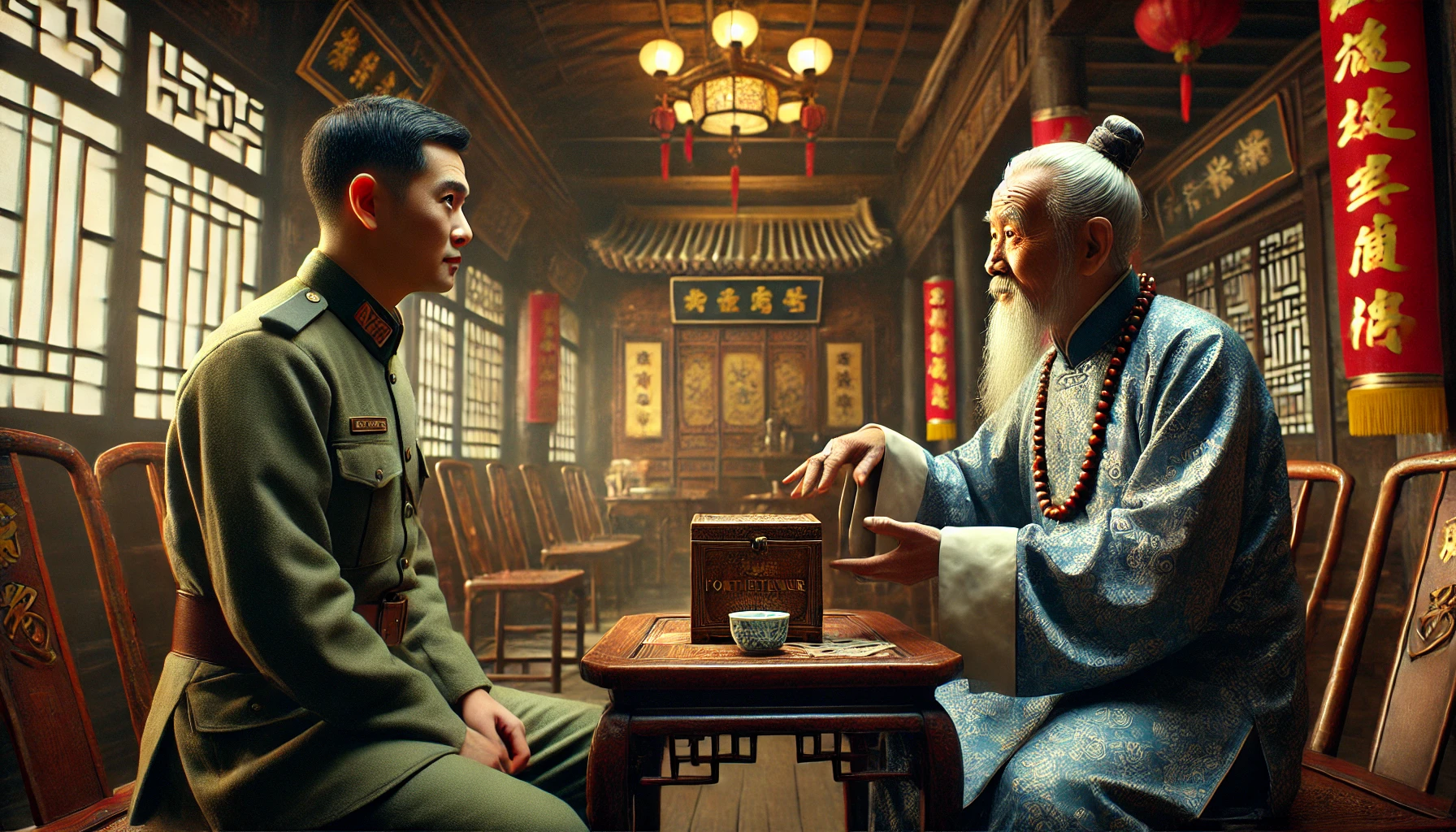
At that moment, the Grand Master sensed something was wrong, changed his plan, and refused the money.
Sure enough, trouble followed.
On his way home, agents followed him and took him to their office.
The official had suspected Kui from the start and deliberately fed him false information, inventing the story that he had nearly been shot at 28. The Grand Master had somehow “divined” this invented story. Did that not prove they were colluding? Did it not prove the fortune-teller was a fraud?
Feigning ease, the Grand Master smiled and explained: Kui had feared an inaccurate reading and supplied information to ensure accuracy, intending to split the proceeds. Not daring to offend Kui, the Grand Master had followed his account, which was why he had taken no money at the end.
The official then demanded another reading.
The director smiled. “All right. Tell my fortune now. Get it right, and I let you go. Get it wrong, and I shoot you immediately!”
The Grand Master was always the Grand Master; otherwise he would have died eighteen times over. Closing his eyes slightly and murmuring, he paused, then said calmly, “Director, you were born into one family and raised by another.”
The director froze. “What do you mean?”
“Those who raised you were not your biological parents.”
“You… keep going.”
“South of your old family home there should be a river or pond; otherwise you could not have become an official.”
The director was silent for a moment. “Continue.”
“Unless you tell me whether I am right, I dare not say more.”
His anger had already subsided. “Correct. There was a pond, but a great drought dried it up long ago.”
“You absorbed all its favorable feng shui. As you rose in office, the water naturally disappeared.”
The director chuckled.
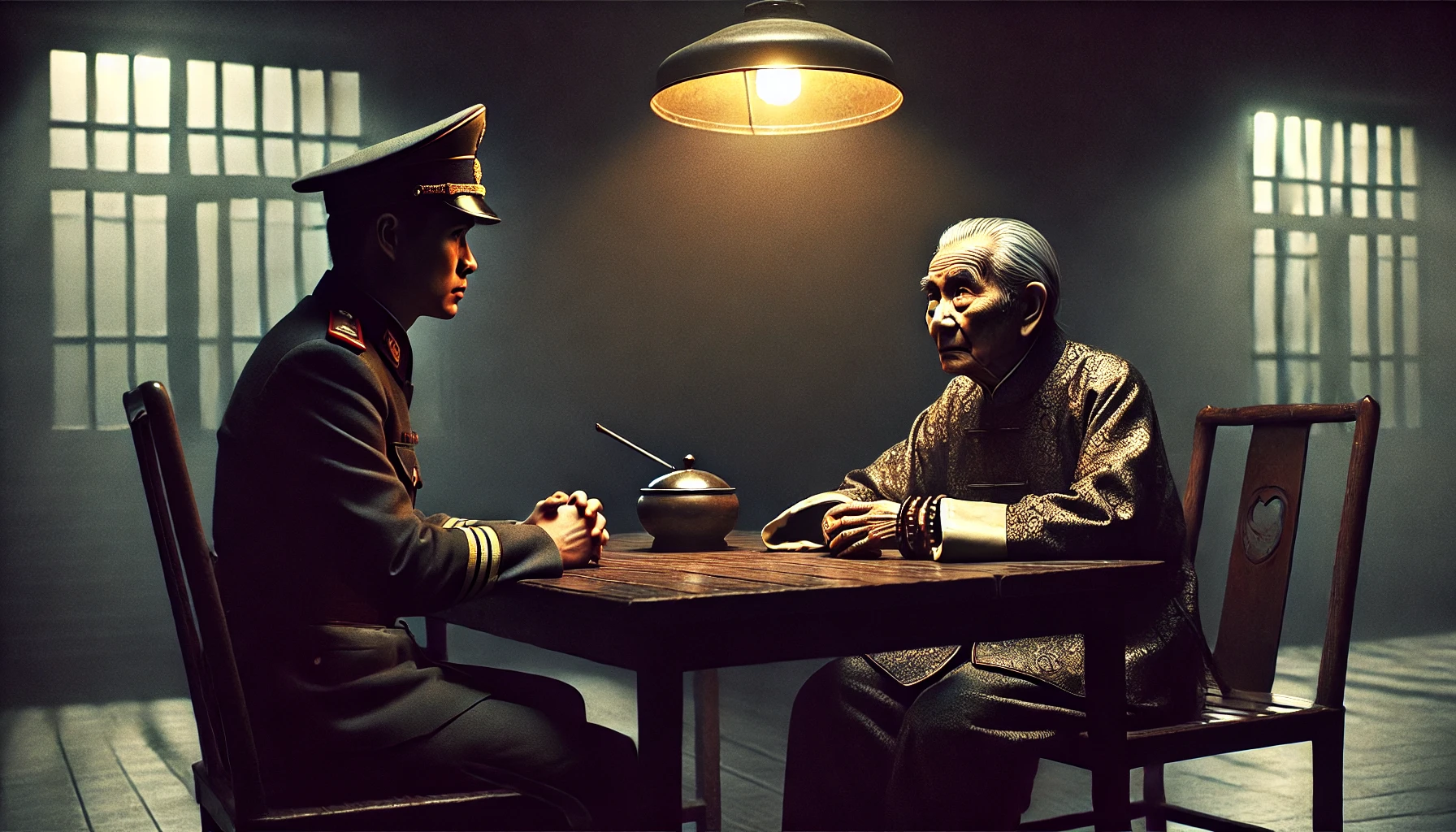
At this point, if we were that official, we too would surely be convinced.
What had really happened?
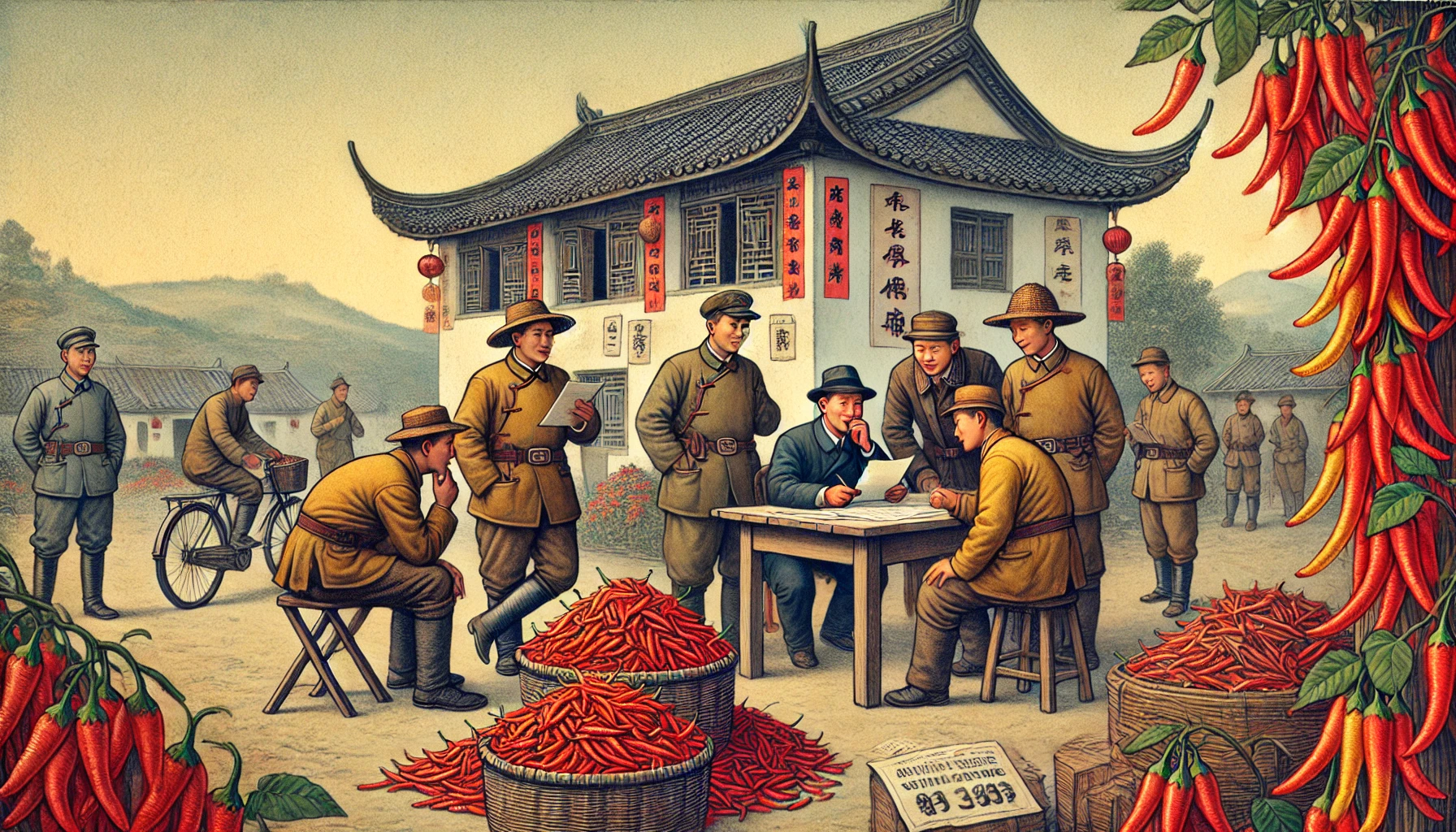
Months earlier, the Grand Master had prepared a fallback. He had not merely listened to Kui’s information: he sent subordinates to follow Kui’s clues, travel thousands of li, locate the official’s ancestral home, and record its terrain and surroundings in full. Disguised as chili sellers, they chatted with neighbors and learned things about the official’s childhood.
Now do you see? For a major deal like this, fortune-tellers conduct even more thorough and detailed investigations. How could they entrust their physical safety to nebulous birth-chart theories? The facts show that investigation is the most reliable way to understand the past and future, precisely the awareness of a materialist.
VI
A true drug lord certainly does not take drugs, and a true fortune-teller is likewise a committed materialist. Those who believe in fate cannot tell fortunes; those who can must be skilled at investigation and linking theory with practice.
Of course, demand creates a market. One can hardly blame fortune-tellers for deceiving people: there are simply too many superstitious people, and fortune-telling is too profitable.
Why are there so many superstitious people? Because society has changed, and the commodity economy is fertile soil for superstition. For a detailed discussion, see the theory of commodity fetishism.
Of course, I write this not to persuade anyone of anything, still less to destroy anyone’s livelihood. I merely want to share a story.
I hope you enjoy it.
Reference:
Yi Zhi. I Am a Fortune-teller (Complete Collection) [M]. Beijing: China City Press, 2012.
Comments
No account needed. A nickname is required; email is optional. Successful submissions appear publicly without manual pre-moderation.
Comments and nicknames are public. Optional email addresses are not displayed. The selected Waline backend and its hosting provider process comments, nicknames, optional email, IP and browser information. Comments show IP region, without the full IP address or browser and operating system labels. Hosting: Vercel; database: Neon.