I. An Accessible Way to Communicate
Over the past two days, I finished Feminism from Scratch, coauthored by Chizuko Ueno and Eiko Tabusa. Here is a brief reading report.
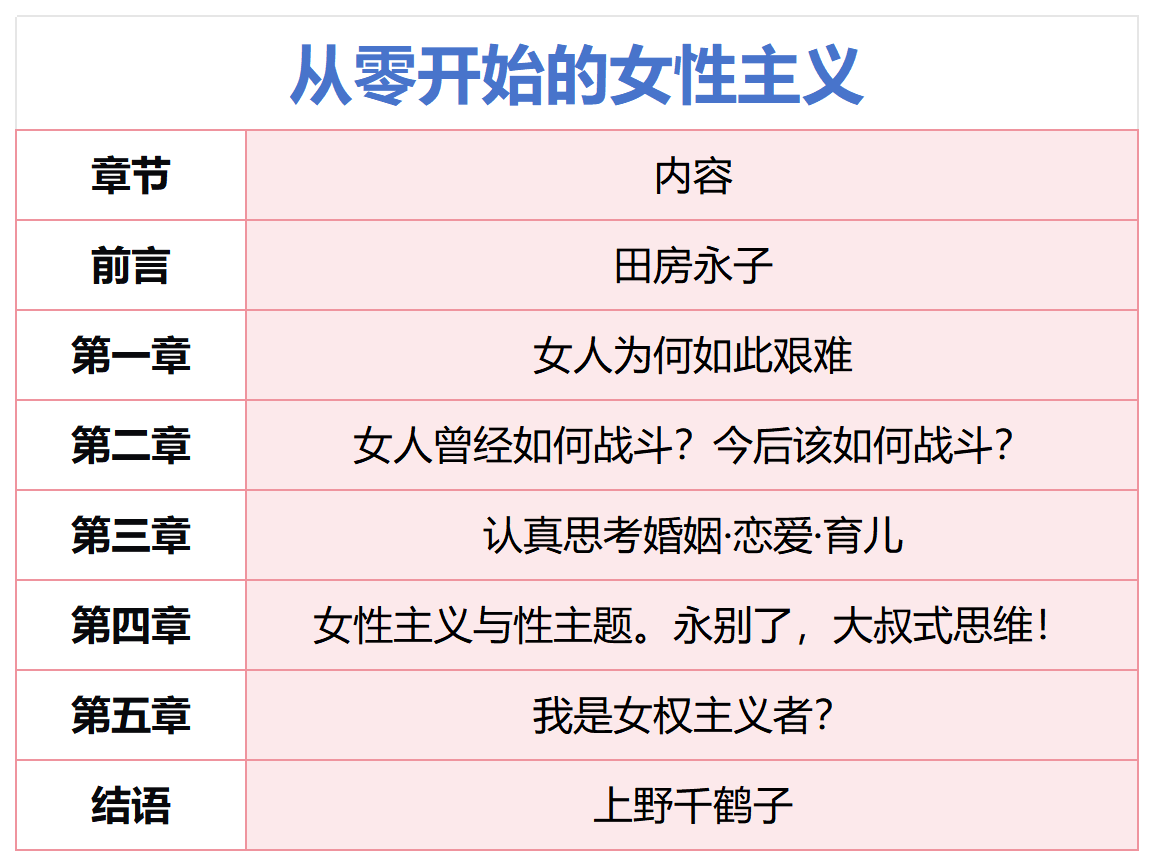
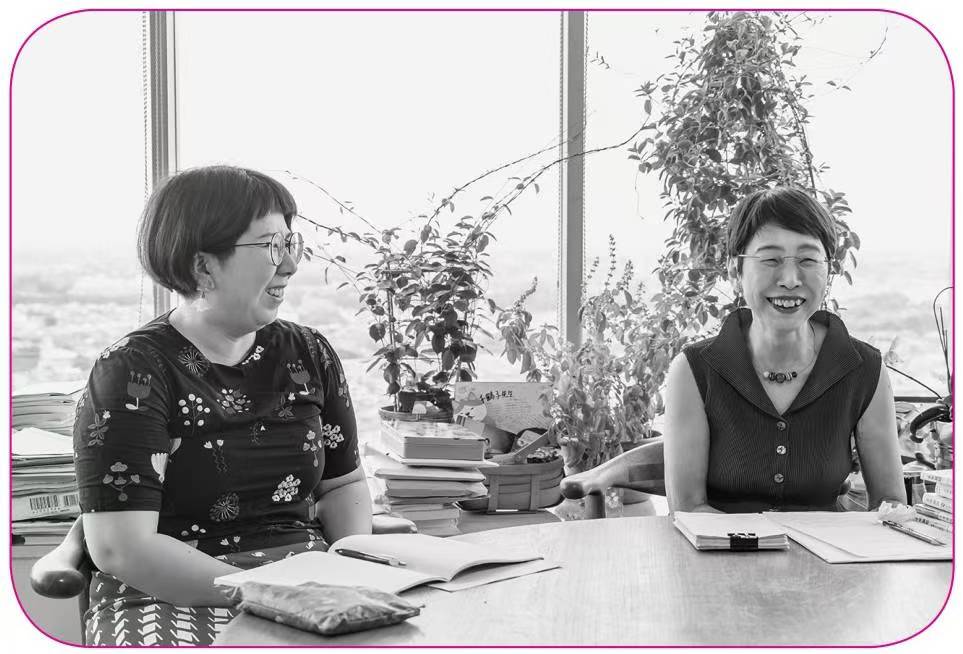
Ms. Ueno is the best-known feminist of our time. Born in 1948, she belongs to the baby-boom generation. Ms. Tabusa is a Japanese manga artist born in 1978, part of the second baby-boom generation. They therefore represent two successive generations. The entire book unfolds as a conversation between them, covering various feminist topics. Each chapter ends with a manga summary by Tabusa, and many of her illustrations appear elsewhere in the book too.
In the book, Ueno remarks:
No matter how well you do something, it still depends on whether it is passed on, so you need a good method. In this respect, Ms. Tabusa has found the method. I heard that Ms. Karin Amamiya joined both left-wing and right-wing groups when she was young. She said that left-wing groups liked using obscure language, while the right wing used simple, understandable language, and the older men on the right were all very kind. I think that approach is quite good too [laughs].
True to those words, they have updated their way of communicating in this book. Its combination of conversation and manga makes it easy and enjoyable to read, and highly effective at reaching people.
I know little about either Japan or feminism. This book introduced a great deal of relevant knowledge, and it left me with many thoughts.
My strongest impression was this: feminism is a perspective and a current of thought. It brings many problems to light and has helped society progress, but we should not expect too much of it.
Feminism is a sensitive subject. I imagine most people will not agree entirely with my views, and those with a short temper may start cursing me outright. That is fine. Allow me to explain in detail; whether you curse me afterward is up to you.
II. The Difficulties Facing Japanese Women
The book’s greatest value lies in presenting women’s perspectives. A perspective means looking at a particular issue from a particular position. The same thing may look completely different from different angles, so only by observing it from several angles can we gain a more comprehensive understanding.
The same applies to social problems. Men and women may experience the very same social phenomenon in entirely different ways. Unless men look at things from women’s perspective and consider their position, they cannot understand women’s feelings. They will easily offend women and will deserve the complaints women have about them. Reverse the genders in this sentence, and the conclusion still holds.
Through the perspectives of Ueno and Tabusa, the book describes the difficulties facing Japanese women. Some are shared by all women, some belong to particular periods in Japan, and some are simply these two women’s personal grievances. Of course, that does not matter. I have summarized the difficulties mentioned in the book below; readers can judge them for themselves.
1. Employment
In traditional societies, whether in Japan or elsewhere, women were responsible only for affairs within the home, and there were almost no jobs for them in society. In such an environment, the wisest choice for an individual woman was naturally to marry an outstanding man, manage the household, support her husband, and raise her children. That would let her live better than other women. In that era, women had neither the conditions nor the desire to rebel.
With the development of modern industry and commerce, however, many jobs for women appeared. More and more women entered employment, supported themselves, and became independent instead of relying on their families and husbands. Social attitudes began to change as well.
As society changed, old and new ideas came into conflict. Many problems arose from this.
In Japan, ideas advanced faster than reality. In the 1970s, young Japanese women had grown up in a “society that was equal on the surface,” taught from childhood that men and women were equal. But once they entered the wider world, they could not help exclaiming, “This isn’t what we were taught!”
At the time, Japanese society lacked jobs for women, and women—especially female university graduates—struggled to find work. There was even a situation in which “a woman with an education could not support herself.” Ueno says:
Companies simply had no idea how to develop female university graduates. I asked the few who had found jobs: they were all dispatched workers or temporary employees, had needed personal connections to get in, and were treated as “short-term workers” who would “leave when they got married.” The age at first marriage was very low then, so they worked for only two or three years, which passed in the blink of an eye. Remember that this was the era in which your mother was young.
Ueno believes this gap between expectations and reality explains why so many women of that generation became “toxic mothers.” A “toxic mother” is one who interferes excessively in her children’s lives, controls them too closely, and forces her own values upon them.
Both Ueno and Tabusa have poor relationships with their mothers, so they have a great deal to complain about on this subject. Ueno’s own decision not to marry—she only married in the past couple of years—or have children was largely influenced by the family she grew up in.
In the 1980s and 1990s, Japan still had the idea of “prospective brides”: female employees were seen as potential brides for male employees. At many companies, “the criteria for hiring women were looks, connections, and living with their parents.”
Ueno says:
At the time, companies hired women in the spirit of “looking after unmarried young ladies on their parents’ behalf” and “matching them with our excellent male employees.” So living with their parents conveyed a particular attitude: “We want to recruit young ladies from good families” as prospective brides.
This situation has gradually changed, however. In the 1970s, housewives were still the mainstream in Japan, while working women were outside it. By the 2010s, both housewives and working women were mainstream.
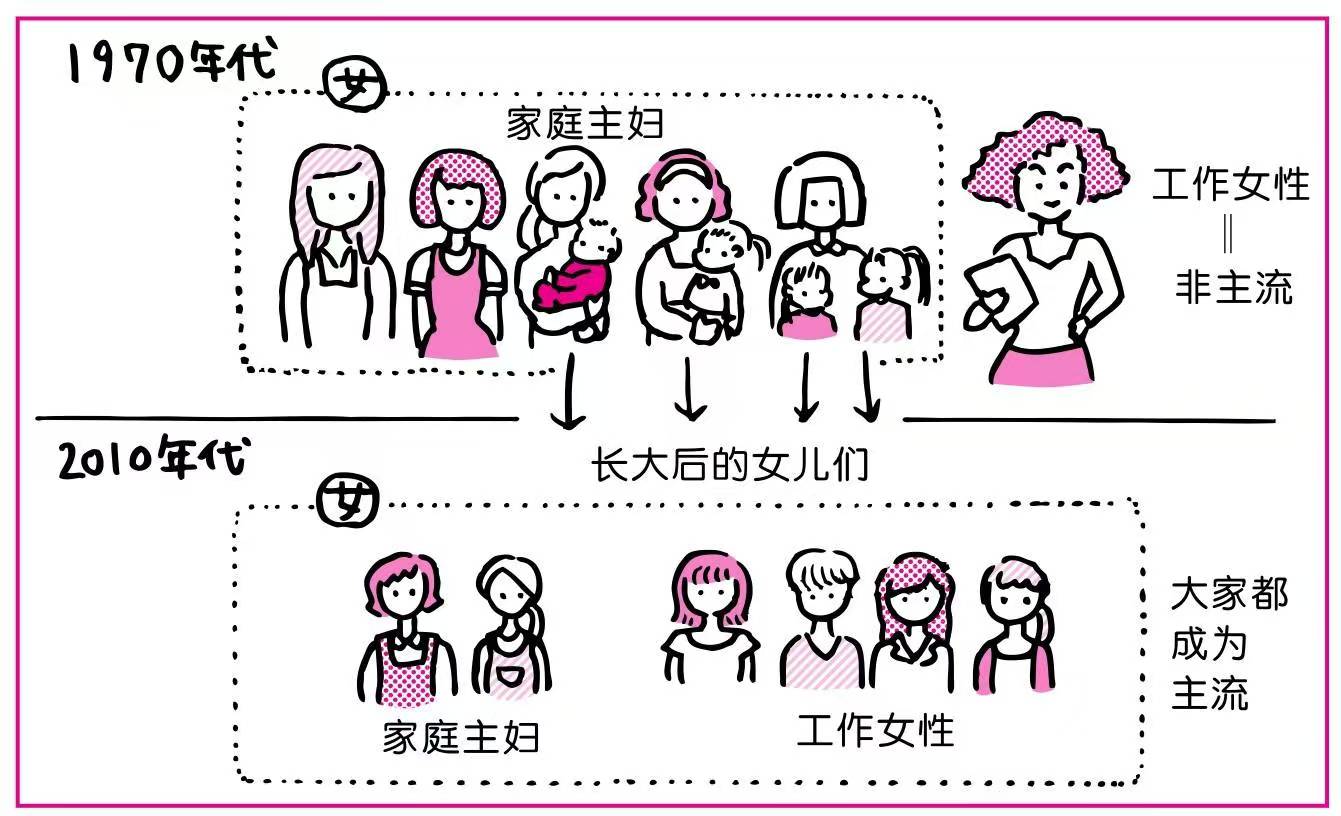
In Ueno’s mother’s era, “not marrying” was absolutely not an option. The prevailing attitude was that “it is shameful for a woman to work.” When Ueno was young, women working still went against their mothers’ wishes. Only 3% of women remained unmarried, and people like Ueno, who both worked and did not marry, were a tiny minority. By Tabusa’s generation, daughters going out to work had become something their mothers approved of—indeed, something mothers could be said to demand.
In The Origin of the Family, Private Property and Humanity, Engels writes:
It is already clear here that as long as women remain excluded from social productive labor and confined to private domestic labor, women’s emancipation and equality with men are impossible, now and in the future. Women’s emancipation becomes possible only when women can participate in production on a large, social scale, while domestic labor takes up very little of their time. —Collected Works of Marx and Engels (Chinese edition), Vol. 4, p. 181
We can say that the more women participate in socialized labor, the higher their social status becomes, and the more they can achieve emancipation.
For this reason, I believe employment is the key problem women face; all the other problems derive from it.
2. Housework
In traditional societies, men worked outside the home to earn money, while women’s labor was confined to the family and received no recognition from the market. Women now work in the market too, but historical inertia means they still bear more of the housework. This is another difficulty women face.
For example, many women still have to clean, look after children, and care for older family members after finishing their paid work, while their husbands lie back and enjoy themselves. Naturally, this creates conflict.
In such circumstances, women can achieve equality only through determined struggle. Ueno says:
The women of our generation really pressed men hard. We kept pushing and pushing until they had nowhere left to go. Even over something as small as collecting a child from nursery, we would demand, “Why does it have to be me?” “Why can’t you take time off?” Even for cooking a meal, we would ask, “Who’s going to do it?” “Do you take me for your cook?” “Who do you think you are?”
Baby-boom men were brought up by the older generation. Even if their heads were full of revolution, their bodies were still stuck in the past. They believed wholeheartedly that housework and childcare were women’s jobs. Several women I know confronted such men fiercely, pushing them hard and not letting them off at all.
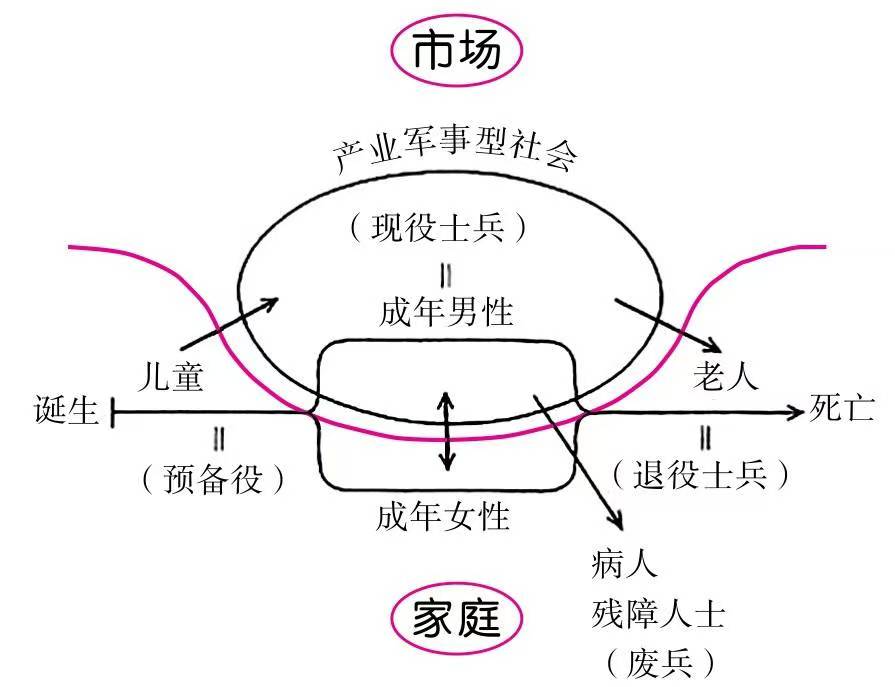
To address this issue, Ueno proposes a model called the “separation of public and private” or the “market–family dual model.” Tabusa summarizes it as the “Side A–Side B” model.
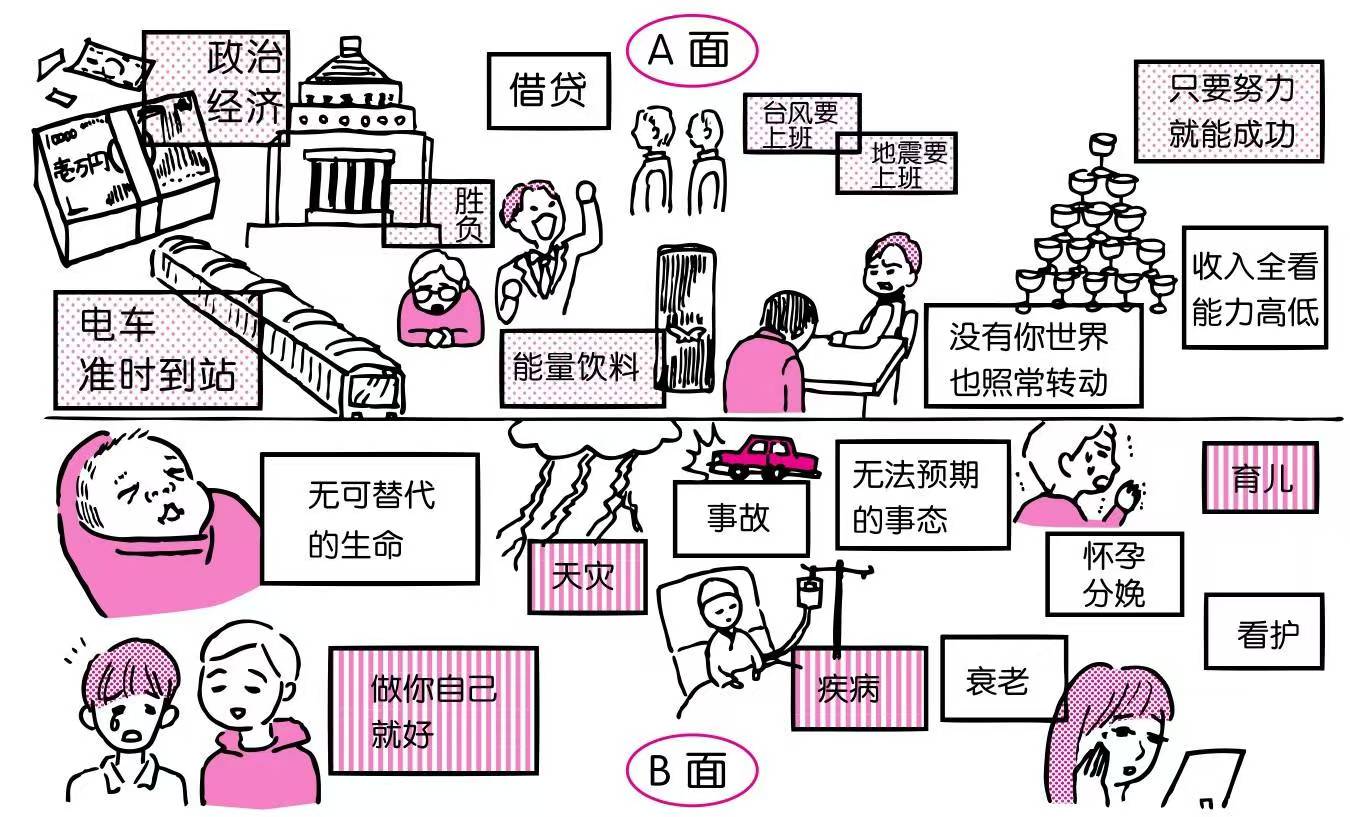
Ueno praises Tabusa’s formulation, recognizing that she has identified the same problem Ueno did. Yet she also feels regret that the theory she developed was not passed down to later generations.
In fact, Marxists pointed out this problem long ago. In The Origin of the Family, Private Property and Humanity, Engels says:
Women’s emancipation becomes possible only when women can participate in production on a large, social scale, while domestic labor takes up very little of their time. This can be achieved only through modern large-scale industry, which not only permits large numbers of women to work but actually demands their labor, while also striving gradually to absorb private domestic labor into public services. —Collected Works of Marx and Engels (Chinese edition), Vol. 4, p. 181
Engels truly deserves his place among the greatest social science researchers in human history. His account is entirely accurate and identifies the causes, conditions, and consequences of this phenomenon with great precision. As modern large-scale industry develops, society increasingly needs women’s labor, while absorbing many household tasks into “public services.” This further emancipation of women is expressed in socialist countries as “women hold up half the sky,” and in capitalist societies as “marketization.”
Nurseries have appeared in Japan and other countries, freeing women from childcare to some extent. The development of outsourced housework, canteens, and the care industry has also greatly reduced domestic labor and further promoted women’s emancipation.
Social attitudes change along with this. In Japan today, men participate much more in housework and childcare than they did before.
Ueno and Tabusa’s prescription, however, is “one person, one kill.” In other words, they see men’s exemption from housework as a vested interest. Nobody gives up a vested interest voluntarily, so women must struggle, each beginning by changing her own husband.
Tabusa says:
Among the men I know who have children, every one who willingly takes care of housework and childcare has been strictly pushed by his wife. Far more men now participate in housework and childcare than before, but I feel that almost none of them do it spontaneously.
Tabusa says:
A dreamlike man [laughs]. As Professor Ueno just said, vested interests must be part of the reason men do not voluntarily do housework or childcare. These are the “male privileges” society gives them, and nobody willingly lets go. That is precisely the focus of the struggle. To make them relinquish their “male privileges,” we have to put our lives on the line.
I think this makes a mountain out of a molehill, forcibly turning contradictions among the people into contradictions between ourselves and the enemy. Why can we not talk things through properly? If it is all “struggle” and “putting our lives on the line,” why marry him in the first place?
Of course, we can also understand these remarks as venting and need not take them too seriously.
3. Education
This too is really a conflict between social development and prevailing ideas.
For a long time, women received less education than men, although this has improved considerably in recent decades. The following shows the university progression rates for Japanese men and women:
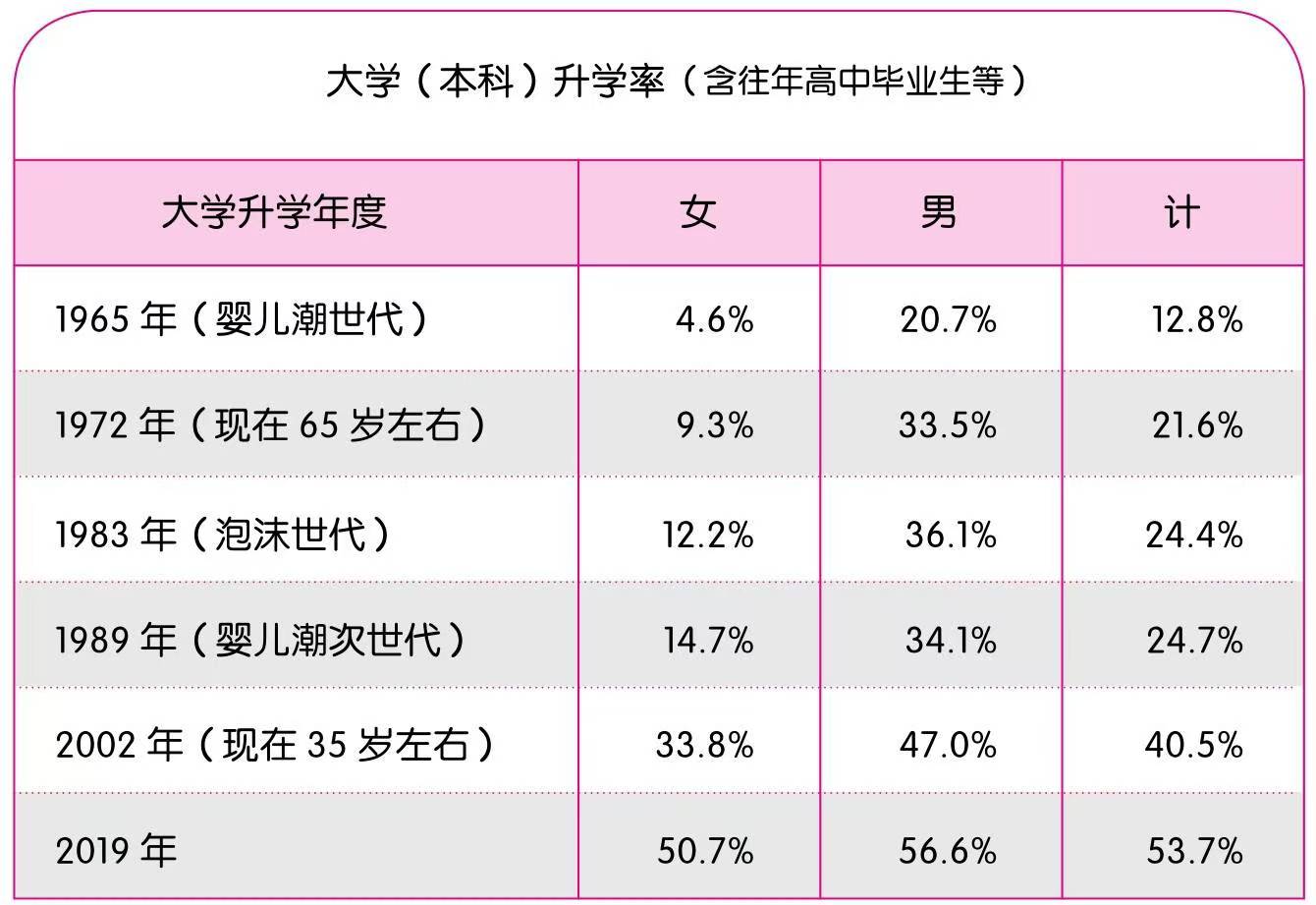
As we can see, by 2019 the rates for men and women were already very close, representing enormous progress.
It is said that women’s share of undergraduate entrants in China surpassed men’s long ago. We can say that gender discrimination in education has essentially been eliminated.
4. Sexual Harassment
I have no standing to speak on this subject, because it concerns personal feelings, and I am neither a woman nor someone who has been harassed by men. I will simply quote the two women.
Tabusa says:
Women make up 89% of stalking victims, while men make up 84% of perpetrators. And it is not just stalking: the victims of sexual violence such as groping, rape, and sexual harassment are almost all women. In today’s society, not only women themselves but even their daughters may become victims of sexual violence. Yet pornography produced specifically for men is visible everywhere, and even pornographic products appealing to a sexual interest in little girls can be found throughout everyday life. I think this situation is abnormal, but some people defend it as “freedom of expression.” We cannot tell something that already exists, “You must not exist,” can we? Must we really just accept it?
Tabusa also says:
In the past, having your bottom touched by your boss in the office seemed quite normal.
It appears that sexual harassment was indeed serious in Japan at the time.
Their definition of sexual harassment may, however, be broader than we imagine.
Ueno says:
What we feminists have always done is define things: “This is sexual harassment,” “This is domestic violence.” Once people have the concepts, they can recognize, “This is sexual harassment.” Even if they learn those concepts much later, they can redefine past experiences: “That uncomfortable feeling I had then was actually because I was being sexually harassed.” Unless feelings are put into words, they cannot become experience.
Moreover, sometimes a man’s desire for a woman is itself sexual harassment.
Tabusa: Come to think of it, why can women feel angry at a patriarchal society while also wanting men to desire them?
Ueno: That is simple. It depends on whom a woman wants to be desired by, and under what circumstances. Do you want to be the object of desire for one man after another? Wouldn’t that be an environment of sexual harassment? Anyone can understand if they think about it this way. I want to arouse this person’s desire here, but I do not want that person to desire me. I do not want to be anyone’s object of desire at this time or in this place. That is perfectly natural. That is all there is to it. How could that be a problem?
5. Sex
I know nothing about this subject and am not interested in it either, so I will again quote their own words.
Tabusa: It is very sad. Our generation has a particularly weak understanding of sex, relations between men and women, romance, and marriage, and the same applies to how we handle marital relationships. Our understanding of sex is especially lacking—not nearly sufficient.
Ueno: It has become easier to have sex, but sexuality is still not free.
Tabusa: Because this generation has had the idea implanted in it that sex is an activity led by men. They think it is unnatural for a woman to take the initiative in sex and that she will inevitably be labeled as “throwing herself at a man.” Or “promiscuous.” When I was in high school, Japan was in the middle of its high-school-girl craze. But it was clearly the boys who took the lead in sex and relationships then. Perhaps it was because we were still high-school students, but the girls never considered what kind of sex they wanted or how to choose a partner. All they thought about was how to discover whether the other person was sincere and how to avoid being used.
Ueno: In other words, they could make choices only from a passive position.
Tabusa: Yes. Meanwhile, the media were actively creating an image of powerful high-school girls.
Ueno: High-school girls as a group were being commodified.
Tabusa: For example, selling worn underwear, or compensated dating. We were exposed to those values in our teens. Thinking carefully about it now, I feel that it was sexual violence, but at the time we could only accept it. I once discussed sex with women of the bubble generation and was shocked. I think my generation is the oral-sex generation.
Ueno: You mean serving men sexually?
Tabusa: Yes. It has become part of a package, like a hamburger with fries. Sex is expected to include it.
Ueno: Isn’t mutual sexual service between men and women part of that package?
Tabusa: No, it isn’t! I think that in the bubble generation, men served women. When I discussed this with someone from that generation, she asked in surprise, “Why would you serve a man?”
Tabusa also says:
What I say may not be representative, but I still want to say it: the men of our generation also have a very inadequate set of values about sex. When I talk with women, the conversation quickly turns to sex, but I have never heard anyone praise her boyfriend or husband for exceptional skill or for regularly giving her satisfying sexual experiences. Every woman who is satisfied with sex has, without exception, a partner who is simply a sexual partner. So I cannot help thinking: no wonder sexless marriages are becoming more common. These men seem not to care about women’s feelings at all. Instead, they prioritize men’s desire and sexual pleasure and believe that is what sex is. Could they really think women do not have orgasms?
6. Gender Discrimination in Culture
Tabusa is a manga artist, and she and Ueno also discuss gender discrimination in culture, particularly in manga.
Tabusa says:
Roughly speaking, the female characters in those anime and manga fall into two types. One is curvaceous, gives the male protagonist a nosebleed, plays coy while welcoming his advances, and affirms male sexual desire. The other picks up a paper fan and whacks the male protagonist when he gets a nosebleed. I think these works have already divided women into different functions.
Ueno believes that more independent, proactive female characters should be created.
She says:
In our generation, the person who devoted herself most actively to this was Ms. Kei Ishizaka, although she was in the minority. Ms. Kyoko Okazaki, too, although a shojo manga artist, depicted many proactive female characters. Unless messages are sent through these opposing cultures, nothing will change. This does not mean completely destroying boys’ culture, but strengthening the culture that challenges it until the two are evenly matched. Whether we can communicate effectively with children determines whether we succeed. We cannot expect primary-school children to read my books [laughs].
She also says:
The shojo manga researcher Ms. Yukari Fujimoto has said that the characters appearing in shojo manga keep changing. Today’s female characters seem to be people who affirm their own sexual desire while also being independent in their careers. Hasn’t Disney animation been changing all along too? Popular culture and social change influence one another.
Ueno believes that the manga men read is unhealthy and that men should be encouraged to read shojo manga:
Tabusa: It is true that anime and manga for girls are changing. Yet works aimed at boys do not seem to have changed much.
Ueno: That will deepen the gap in understanding. The best outcome would be for these girls to stop choosing that kind of man when they grow up. In this way, we can gradually weed out men whose thinking is backward. But if they jump up and bite back, we have a problem.
…
Ueno: We should get more boys to read shojo manga.
Tabusa: Besides, most shonen manga is about shit, piss, and farts.
Ueno: Ahahaha!
Tabusa: Once I saw an animated program for primary-school boys on television that actually had a scene “mocking a ladyboy.” I was very surprised.
The quotations above show the two authors’ views on manga.

Those are the difficulties facing women that I have drawn from the book. The original is rather loosely organized, so I have rearranged them according to my own understanding. Of course, much has been left out. A large part of the book discusses conflicts between mothers and daughters, because both women have poor relationships with their mothers. It also mentions how Ueno was hurt during the student movement and has remained resentful ever since. We will return to these matters later. The book also contains a great many complaints about men: that they are “boring,” have “extremely fragile self-identities,” and have a strong “old-man vibe,” among other things. Being repelled by men is of course another difficulty women face, and these two women seem to be repelled by men all the time.
III. Feminism Is a Perspective, Not a Science
Having read this book, I certainly support the two authors’ complaints about their own circumstances, and I acknowledge that I have learned a great deal. But my stronger impression is this: feminism is only a perspective. It can become a current of thought, and at most develop into a social movement of limited size. But feminism is not a science and cannot bring women true emancipation.
There are three reasons.
1. Feminist Theory Lacks a Scientific Attitude and Method
Ueno says that what first led her to feminism was the mistreatment she experienced while taking part in the student movement in the 1970s. Why was she mistreated? Because the men in the student movement betrayed the women.
As Tomoko Yonezu puts it:
“During the university struggles, I stood inside the barricades, never wore makeup or dressed up, and fought alongside the men. But the girls who did wear makeup and dress up became those men’s girlfriends. That was what led me to join the women’s liberation movement.”
Ueno agrees. She says that the men participating in the student movement divided women into categories. One consisted of the women who participated alongside them, but those women could not find boyfriends:
At the time, a group of women at the University of Tokyo carried fighting sticks just like the men and were jokingly called “Militant Rosas.” Rosa refers to the woman revolutionary Rosa Luxemburg. The men did not become lovers with their female comrades; they chose women who were more willing to endure and wait. That was men’s double standard, much like today’s distinction between “career-track women and general-track women” [see p. 161].
Another group was called “comfort women” and used to satisfy men’s desires:
They categorized women according to their uses. There was another category of women at the university struggles: “comfort women.” Girls who were more sexually proactive were called “public toilets” by the men. Isn’t that deeply insulting? Many men took advantage of their female comrades while mocking them behind their backs.
A further group consisted of “wives behind the guns,” the women who handled logistics in the rear:
Everywhere you could hear stories of “wives supporting their families while enduring abuse from domineering husbands.” If the man was also flying the banner of revolution or class struggle, it was even harder to defy him. Their wives became steadfast, chaste women behind the guns. This gendered division of labor existed inside the barricades too. What were we doing there, you ask? Making rice balls. So we now have a full half-century of experience making rice balls!
The experience of making rice balls and the unequal treatment of women in the student movement eventually led Ueno to become a feminist:
The rice-ball makers were wives behind the guns, women in the kitchen, and those wives complemented the comfort women. The movement was supposedly for everyone, regardless of gender, but in the end I experienced for myself how enormous the gender divide was and how badly women lost out. I became a feminist out of personal resentment.
Later, Ueno protests: “What is wrong with fighting because of my private anger?!”
Of course there is nothing wrong with it. Nobody says you are wrong; everyone is free to resent other people.
But this attitude is certainly not a scientific one.
Let us set aside the character of Japan’s student movement in the 1970s and grant, for the moment, that it was a “progressive movement.” Even if it was a “progressive” social movement, it had serious problems. What progressive social movement would have a group of “comfort women”? What progressive movement would disrespect women in this way?
Student movements took place in many Western countries in the 1960s and 1970s, and they were largely influenced by China at the time. But in China, the aim was to overthrow those in power and attempt a new form of organization. From the head of state down to grassroots officials, nobody was exempt from being put on trial. Although the eventual result was a failure, it was still a great attempt to advance human society.
What about the West at the time? Their student movements consisted only of protests, marches, sit-ins, and promiscuous sex. They dared neither to challenge the powerful nor to mobilize workers and peasants, merely chanting “revolution.” Once they had enjoyed their turn at playing “revolutionaries,” they went back to becoming officials, capitalists, and university professors.
In such an immature movement, Ueno was insulted by so-called “male revolutionaries,” became resentful, and turned to feminism. She sees herself as standing righteously for a cause, while I see this as another form of entertainment for Japan’s petty-bourgeois women.
Marx also opposed capitalism and denounced social injustice, but he did not resent capitalists as individuals. Still less would he resent an entire gender or associate a movement involving comfort women with revolution. He even accepted financial support from the capitalist Engels. He says:
I certainly do not paint the capitalist and the landowner in rosy colors. But here individuals are considered only insofar as they personify economic categories and embody particular class relations and interests. My standpoint regards the development of the economic formation of society as a process of natural history. However much an individual may subjectively rise above these relations, socially that individual remains their product. My standpoint, less than any other, can hold individuals responsible for those relations.
Engels says:
For this very reason, Marx was the most hated and most slandered man of his time. Governments, whether absolutist or republican, expelled him; bourgeois, whether conservative or extreme democrats, competed in slandering and cursing him. He brushed all this aside like cobwebs, taking no notice and responding only when compelled by necessity. Now he has died, honored, loved, and mourned by millions of revolutionary comrades throughout Europe and America, from the Siberian mines to California. And I can boldly say: he may have had many opponents, but hardly a single personal enemy. —Collected Works of Marx and Engels (Chinese edition), Vol. 3, pp. 602–603
The difference in the breadth of their outlook is immediately clear. Frankly, Ueno is simply an ordinary person. Neither in personal character nor in theory does she qualify to be mentioned in the same breath as Marx. It is only because she now has such great influence—like Dühring in his day—that we have to use an ox-cleaver to kill a chicken, or a cannon to shoot a fly.
Marx “may have had many opponents, but hardly a single personal enemy,” whereas Ueno “became a feminist out of personal resentment.”
That is the difference between a scientist and an ordinary person.
When Ueno writes with resentment, it is difficult not to question the scientific validity of her theory.
In fact, looking at the book as a whole, I saw little scientific spirit; instead, I saw the shadow of religion. Consider the following:
Ueno says:
“Feminist” is a self-declared identity. As long as a person says she is a feminist, she is one. Even if I do not want to see someone call herself a feminist, I cannot stop her.
We could say:
“Islamist” is a self-declared identity. As long as a person says she is a Muslim, she is one. Even if I do not want to see someone call herself a Muslim, I cannot stop her.
Ueno says:
Feminism is diverse; one could say there is one school per person, or even more. Different ideas clash, but there is never a division between orthodoxy and heresy.
We could say:
Islam is diverse; one could say there is one school per person, or even more. Different ideas clash, but there is never a division between orthodoxy and heresy.
Ueno says:
What we feminists have always done is define things: “This is sexual harassment,” “This is domestic violence.” Once people have the concepts, they can recognize, “This is sexual harassment.” Even if they learn those concepts much later, they can redefine past experiences: “That uncomfortable feeling I had then was actually because I was being sexually harassed.” Unless feelings are put into words, they cannot become experience.
We could say:
What we Muslims have always done is define things: “This is religious persecution,” “This is an infringement on our faith.” Once people have the concepts, they can recognize, “This is religious persecution.” Even if they learn those concepts much later, they can redefine past experiences: “That uncomfortable feeling I had then was actually because I was being religiously persecuted.” Unless feelings are put into words, they cannot become experience.
I have no wish to offend Muslims. As everyone knows, I respect everyone’s religious beliefs. I also enjoy reading religious classics myself. I believe religion contains endless wisdom, can bring people comfort and happiness, can promote social progress, and is an enduring treasure of all humanity. Nor do I wish to offend feminists, just as I do not wish to offend Muslims.
I simply want to show that Ueno’s attitude and methods are not scientific attitudes and methods, but religious and political ones. Ueno is not a scientist; she is a political activist and a religious leader.
2. Feminist Theory Lacks Sufficient Material
A scientific research method should begin with a thorough command of the material, then identify the essential connections between things and discover their laws. A necessary condition for making one’s conclusions conform to objective laws is to “have a thorough command of the material.”
Sufficient material must, of course, be large in quantity, but comprehensiveness matters even more. In writing Capital, Marx studied earlier thinkers extensively, regardless of their fields or how different their views were from his own. He also read vast quantities of raw data and even taught himself foreign languages to consult primary sources. The three volumes of Capital left behind dozens of notebooks and consumed his life’s energy.
Ueno, however, has not done this.
First, Ueno gathers material only about women, not about men.
Feminists are strange in this respect. When women suffer injustice or feel uncomfortable, they call it the oppression of women by a patriarchal society. When men suffer injustice or feel uncomfortable, their first response is ridicule. Sometimes, when they feel obliged to be serious, they say that men are “beneficiaries of vested interests” and that this little suffering is nothing compared with their privileges. At other times, when they feel that some men really are rather unfortunate, they say, “Actually, many men are victims of patriarchy too.”
Whatever the situation, in feminists’ eyes, being male means having “vested interests” and oppressing women throughout the world. If you do nothing, you are an accomplice of patriarchal society.
Then perhaps you should do something. But whatever you do, they will not accept you. They will say, “Your head is full of revolution, but your body is an accomplice of patriarchy.”
In any case, if you are male, you are born with original sin.
What can you do? Many Japanese men therefore cannot help sighing, “I am sorry for being born a man.”
Tabusa says:
They know perfectly well, don’t they? Knowing but not saying so openly is itself a kind of power. Some probably pretend not to notice anything. Whenever feminism comes up, some men say, “On behalf of all men, I apologize. I’m sorry,” or “I’m sorry for being born a man.” Every time I hear that, I feel uncomfortable all over.
Those men probably mean no harm and actually want to stand on our side. So it is hard for me to say anything bad about them. Discrimination against women is a far-reaching and enormous issue; one individual apologizing to another cannot possibly resolve it. Whenever I hear “I apologize on behalf of all men,” I get particularly angry.
In short, apologizing will not do either. Feminists will not appreciate it.
What, then, can you do? If you are fortunate enough, you may have a chance to undergo their “one person, one kill” approach. They may be willing to spend extra time changing you until you gradually come around to their beliefs. Of course, most men do not get through their initial screening.
What I want to say is that society is a whole. If you consider only women’s personal feelings while ignoring men’s personal feelings and showing them no respect, then however much material you collect, it will still be insufficient, and your conclusions will amount only to prejudice.
Second, Ueno’s theory is confined to one time, one place, and one class.
Marxism considers Western economics vulgar economics because Western economics treats the capitalist system as eternal. Its theories all assume that the present system will remain unchanged. It regards only the current social system as reasonable, earlier systems as unreasonable, and no new social system as possible in the future.
In The Poverty of Philosophy, Marx says:
Economists have a singular way of proceeding. They recognize only two kinds of institutions: artificial and natural. Feudal institutions are artificial; bourgeois institutions are natural. In this, economists resemble theologians, who likewise divide religions into two kinds. Every religion other than their own is a human invention, while their own is a revelation from God. When economists say that existing relations—bourgeois relations of production—are natural, they mean that these are the relations through which wealth is created and productive forces developed in accordance with natural laws. These relations are therefore themselves natural laws, independent of time. They are eternal laws that must always govern society. Thus there used to be history, but there is no longer any. —Collected Works of Marx and Engels (Chinese edition), Vol. 1, pp. 612–613
Ueno is the same. She believes patriarchal society is evil and feminism is good. She never considers why human society developed into a patriarchal society, what conditions gave rise to its emergence and development, or under what conditions it will disappear.
As a Japanese petty-bourgeois woman, she begins with her own personal feelings, learns a smattering of other theories, studies some feminist history, summarizes a few models, and then regards them as eternal truths. She does not focus on studying a society’s mode of production, still less treat social development as a process of natural history. All she tells you is that whenever women feel uncomfortable, they are being oppressed and persecuted by patriarchy. All she encourages women to do is march in the streets and practice “one person, one kill.” But does she truly care about the real emancipation of women throughout the world?
In fact, Ueno’s theory cannot even encompass one gender within one class, in one place, at one time.
As mentioned earlier, Ueno has a very poor relationship with her mother. The book says:
Ueno: Didn’t you just say, “Perhaps I could love my mother a little more once she became a patient”? I was the same. Once she was bedridden, my mother became completely vulnerable. Only then could I feel compassion for her.
Tabusa: Compassion?
Ueno: Compassion—that is, pity. In her book Shizuko, Ms. Yoko Sano says that only after her mother developed Alzheimer’s disease could she truly touch her mother and accept her for the first time. In the end, she reconciled with her mother. She even writes that she was glad her mother developed Alzheimer’s before she died.
Tabusa: Mothers always seem to provoke both physical and psychological resistance.
Ueno: If there is physical resistance, you cannot provide care. In Ms. Sano’s case, she had wanted to hold her mother’s hand as a child, but her mother shook her off. That became a decisive shadow over her life. Although Ms. Sano was more capable, her mother still loved her eldest son more and placed great hopes in him, just like your grandmother. After her brother died, Ms. Sano thought it would be her turn, but she never managed to take his place. That feeling continually obstructed her relationship with her mother. She also wrote, “Would my mother rather I had died instead of my brother?” If we happened to meet a pitiful old person, we would all want to be kind. But between parent and child there is a long history, so even when the other person becomes vulnerable, it is hard to “put aside old grievances.” Even when she is bedridden and barely breathing, you still cannot help asking, “Why did you do that back then?” [laughs]. However much you endure, it is impossible to suppress those feelings completely.
Ueno: Once I said to my bedridden mother, “Mum, after I left this home, I raised myself all over again.” It took every ounce of strength I had to say those words for the first time in my life. Her answer shocked me. She said, “That’s because I taught you so well.”
Tabusa: Aaaaaah…
Ueno: Impressive, isn’t it?
Tabusa: Impressive! Hahahaha! Mothers really can reclaim credit for anything!
Ueno: Nobody can defeat the woman called “Mother.”
Tabusa: Just thinking about it drains me [laughs].
Ueno: It really is draining. I had no answer. This is simply a different culture; we cannot communicate [laughs].
Your mother certainly made mistakes. But according to your own theory, don’t you understand her difficulties perfectly well? If you understand them, why can you still not reconcile with her? Must you wait until she is on her sickbed?
You say this is “a different culture,” making communication impossible. But nobody is a fool. Everyone forms values based on their experiences and what they have seen and heard. On what grounds do you assume that your ideas are right and your mother’s are wrong? Even if her ideas are wrong, if your theory is so powerful, why must you wait until she is bedridden before you can feel a little pity for her? Even then, you think only of your own grievances and refuse to yield an inch. If you cannot persuade even your own mother, how can you persuade other women? If you have so little patience even with your own mother, what qualifies you to make grand promises to other women? Your theory is therefore destined to be only an extremely narrow summary of experience. It cannot explain the circumstances of all women, let alone constitute a law of society.
By contrast, Chairman Mao felt profound gratitude toward his mother. When she died, he was overwhelmed with grief and wrote “A Memorial to My Mother,” every word steeped in sorrow. Yet Chairman Mao was a committed Marxist, while his mother was a Buddhist. Their beliefs could hardly have been more different—certainly far more of “a different culture” than the example above. Still, Chairman Mao respected her, thanked her, praised her, and remembered her with affection.
Whether they were Buddhist women working in the fields or wealthy Christian women in the Kuomintang; women of the Red Army fighting on the front lines or unfortunate women reduced to prostitution in the old society; women workers sweating in factories or girls still full of childhood innocence at school, Chairman Mao respected and accepted them all. He encouraged them to demonstrate their worth through the fruits of their labor and to win men’s respect through their own strength. When men and women participated together in socialized labor and women’s contributions to society were evident to everyone, even those with the most stubborn feudal ideas had to acknowledge, “Women… really can hold up half the sky.”
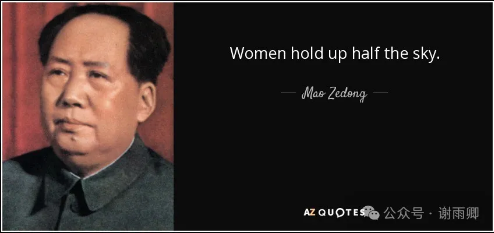
One is a Japanese bourgeois woman professor who cannot accept even her own mother; the other is a proletarian leader with compassion for all women. Whose ideas can lead the Chinese people toward women’s emancipation? The answer is self-evident.
3. Marxist Theory Has Already Pointed the Way to Women’s Emancipation
Ueno constructed a feminist theory from her own feelings and even had the audacity to call herself a “Marxist feminist” in Patriarchy and Capitalism. I truly do not know what sort of “Marxism” someone with her outlook and religious fervor could create.
In fact, Marxism pointed the way to women’s emancipation long ago. Unfortunately, Ueno clearly has no interest in it.
Ancient China, too, was a deeply patriarchal society, with a firmly rooted preference for sons over daughters. Since its founding, however, the Communist Party of China has placed great importance on women’s emancipation and has achieved quite good results.
In just a few decades, Chinese women’s social status and treatment changed dramatically in every respect. This was not merely superficial or formal equality, nor just a handful of cold statistical indicators, but a change that reached into people’s souls. Through shared social labor and socialist education, men developed a heartfelt respect for women. Although this change of heart could not immediately achieve complete gender equality, it planted the seeds of women’s full emancipation.
And what has feminism brought Chinese women? All I see is growing antagonism between men and women and increasing gender discrimination online. Feminism has always had a poor reputation on the Chinese internet because many of its adherents, like Ueno, consider only their own feelings, never those of others. They show no respect for other people and do not understand how to earn others’ respect. Many people recoil at the mention of feminism and cannot get away from it fast enough. Some have even revived patriarchal ideas to oppose feminism, directing the abuse they receive from feminists toward all women. These are all things that are happening now.
In fact, both Marxism and feminism can enable a woman to gain others’ respect, but the two kinds of respect are different. The respect Marxists gain is expressed in the recognition that “women hold up half the sky.” It is heartfelt respect for your character, your labor, and the real feelings between the two of you. The “respect” feminists gain, by contrast, comes from the pressure of “political correctness” and a fear of “if I cannot afford to cross you, at least I can avoid you.” Such respect is false, flattering, and sometimes even ill-intentioned.
Is this how things really are? I believe readers can judge from their own experience.
IV. Final Thoughts
Overall, this is indeed a very well-written book. From the perspectives of its two authors, it provides a great deal of information that can help readers better understand Japan and feminism.
It also shows us that feminism is only a perspective and a current of thought. It brings many problems to light and has promoted social progress, but we should not expect too much of it.
Of course, I am not criticizing Ueno or feminism. I have great respect for Ueno. I simply want to remind everyone that she is an ordinary person and feminism is a quite ordinary theory. That is all.
In The Communist Manifesto, Marx and Engels write:
In place of the old bourgeois society, with its classes and class antagonisms, there will be an association in which the free development of each is the condition for the free development of all. —Collected Works of Marx and Engels (Chinese edition), Vol. 2, p. 53
As long as relations of exploitation and oppression exist, neither men nor women, capitalists nor workers, oppressors nor oppressed will be emancipated.
I therefore believe that only under the guidance of Marxism and Mao Zedong Thought, through the joint struggle of people throughout the world, will everyone achieve emancipation, whether men or women, workers or capitalists.
I believe this road is difficult, but it is the only correct one.
Comments
No account needed. A nickname is required; email is optional. Successful submissions appear publicly without manual pre-moderation.
Comments and nicknames are public. Optional email addresses are not displayed. The selected Waline backend and its hosting provider process comments, nicknames, optional email, IP and browser information. Comments show IP region, without the full IP address or browser and operating system labels. Hosting: Vercel; database: Neon.