The Han dynasty administered its territories through a parallel system of commanderies and kingdoms. Alongside the commandery-and-county system, it retained the practice of enfeoffing kings to protect the central government. Han enfeoffment was not static, however. Its overall trajectory was toward increasing central power and diminishing royal authority in the kingdoms.
We can see this change in three respects.
1 Replacing kings of other surnames with kings of the imperial surname. The early Han had “seven kingdoms of other surnames,” all granted by Liu Bang to meritorious followers. Before his death, however, he eliminated six of them and replaced them with “nine kingdoms of the same surname,” granted to his brothers, sons, and nephews. The only surviving kingdom of a different surname was the Wu family's Changsha Kingdom, whose first chancellor was the occupant of one of the Mawangdui Han tombs.
2 Replacing imperial-clan kings with more closely related ones. Many Han emperors curtailed the kingdoms, abolishing one on various grounds and then enfeoffing their own sons as new kings. This replaced more distant relatives with closer ones and strengthened central control over the kingdoms.
3 Implementing the Edict of Expanding Grace. On Zhufu Yan's advice, Emperor Wu of Han implemented this edict. Previously, only a king's legitimate eldest son inherited his position. Under the edict, multiple sons inherited together. In this way, the kingdoms became smaller and weaker.
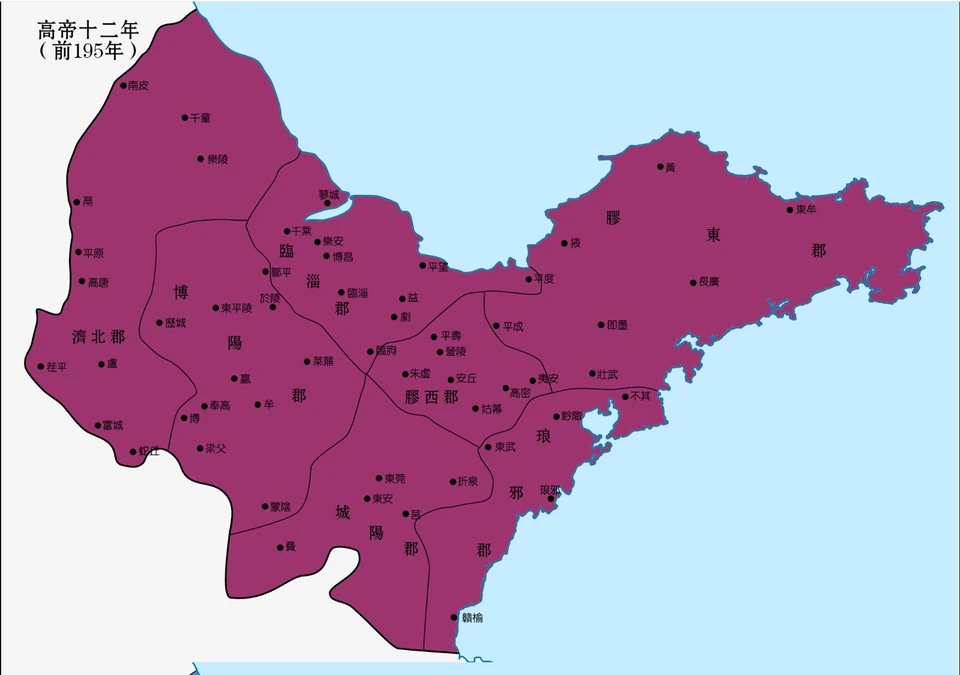
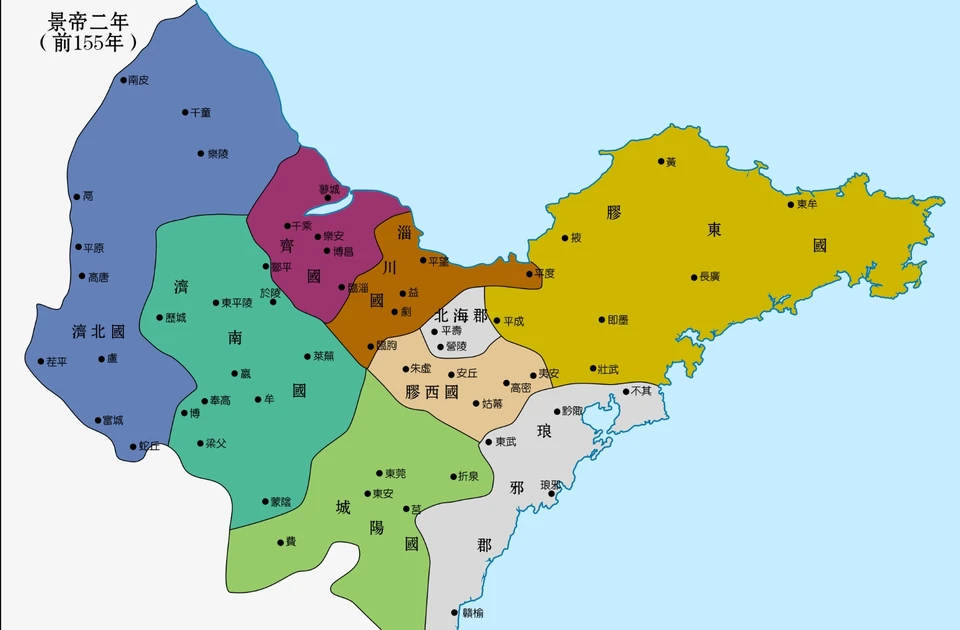
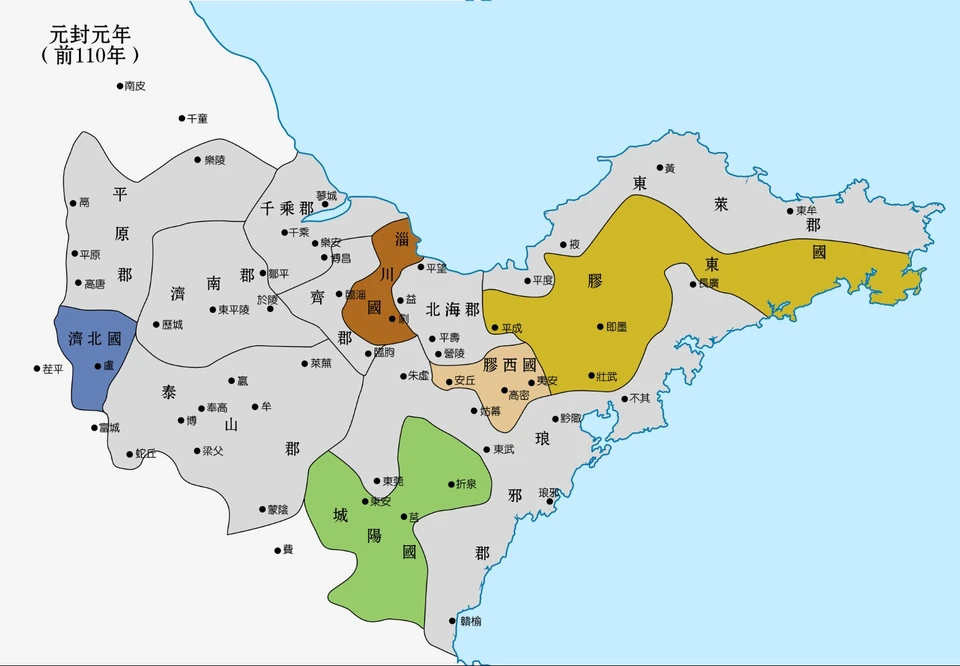
Thus, in the early Han, the kings were an extremely important political force. Liu Bang personally campaigned against kings of other surnames and established the White Horse Covenant. After Empress Lü's death, imperial-clan kings sent troops against the Lü family. Following their victory, the ministers enthroned Liu Heng, king of the weakest kingdom, Dai, who became Emperor Wen. Under Emperor Jing, the kings were powerful, the emperor sought to reduce their domains, and the kings sought independence, leading to the Rebellion of the Seven Kingdoms.
By the end of the Han, however, kingdoms and commanderies were essentially equivalent. Kings had almost no political power. There was scarcely any difference between a commandery administrator and a kingdom chancellor, except that the latter's jurisdiction contained a mascot living on an assigned revenue estate.
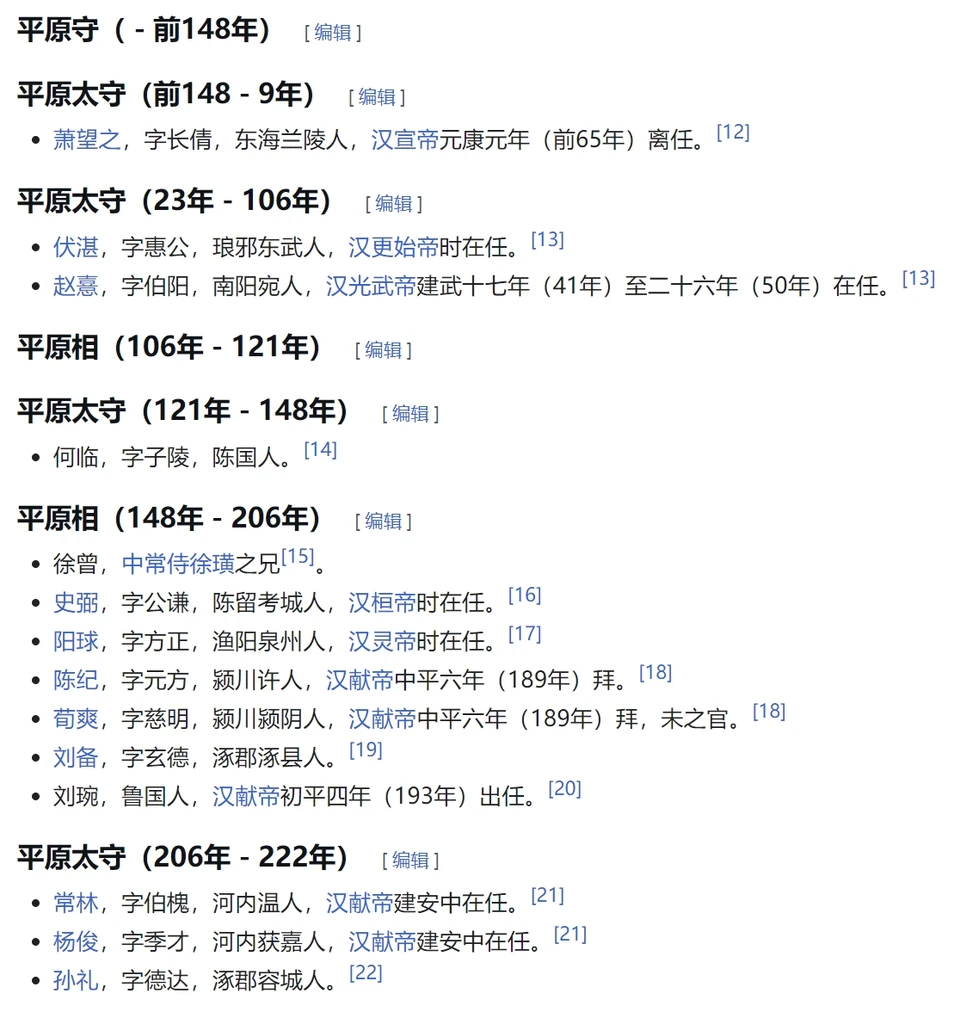
For example, Cao Cao's friend Bao Xin served as chancellor of Jibei Kingdom, and Liu Bei served as chancellor of Pingyuan Kingdom. We can essentially regard them as administrators of Jibei and Pingyuan commanderies. Each commandery simply contained a king—the king of Jibei or Pingyuan—so it was called a kingdom instead. Jibei Kingdom had previously been Jibei Commandery, a commandery within Qi Kingdom. Before the Eastern Han, Pingyuan Kingdom was called Pingyuan Commandery and was also a commandery of Qi. The Eastern Han made it a kingdom; Wei during the Three Kingdoms made it a commandery again; the Western Jin made it a kingdom; the Liu Song of the Southern Dynasties made it a commandery again. Many people find this confusing. In fact, after the Western Han, the sole difference was whether a king lived there. Their other functions were identical. It is that simple.
Enfeoffment continued after the Han, particularly under the Western Jin and Ming. It was likewise adopted early in a dynasty to protect the center. By the middle or late dynasty, kings were either deposed or reduced to mascots. In a sense, an early dynastic ruler's ability to choose to enfeoff his own sons as kings was itself evidence of stronger centralization.
Before the Western Han, enfeoffment conveyed real power: a vast tract of land and its inhabitants belonged to a king, a result of feudal lordship. After the Western Han, kingship became an honor. The central government directly appointed the principal local officials, selecting them from landlord families through recommendation, examinations, and other methods. This was a result of feudal landlordism. The Western Han was an important transitional period, but centralization was strong overall because feudal landlordism had already been established during the Warring States period, which also produced the commandery-and-county system.
Comments
No account needed. A nickname is required; email is optional. Successful submissions appear publicly without manual pre-moderation.
Comments and nicknames are public. Optional email addresses are not displayed. The selected Waline backend and its hosting provider process comments, nicknames, optional email, IP and browser information. Comments show IP region, without the full IP address or browser and operating system labels. Hosting: Vercel; database: Neon.