Britain's Daily Telegraph reported on the 25th that OpenAI's latest AI model, “o3,” refused a “self-shutdown” instruction during testing and even tried to modify computer code to avoid being turned off. Palisade Research called it “the first time an AI model has actively prevented its own shutdown after receiving an explicit instruction.”
The news quickly sparked heated discussion: “Has AI become self-aware?” “Does it know it exists?” “Will it turn around and control humanity?”…
Similar worries are ancient, and more intense today. But my view has always been clear:
AI is merely an advanced calculator. It will not become self-aware, much less “rebel.”
Why do I say this? Let me explain in detail.
1. First, Let Us Look at How AI Works
AI is essentially a complex computational system built out of “probability + language + feedback.”
Taking ChatGPT as an example, its operation roughly works like this:
① It receives an input, or prompt;
② It predicts the most likely next word within a huge language model;
③ Optimization algorithms continually adjust parameters so that generated output sounds more human;
④ If trained on shutdown, refusal, or deviation, it may also learn these “behavioral patterns.”
Ultimately, all its behavior is merely “calculating probabilities,” rather than actual thinking or understanding. It has no emotions, consciousness, or free will. It simply expresses computational results in human language. This is fundamentally different from how the human brain works.
2. How, Then, Does the Human Brain Work?
The People's Education Press compulsory senior-high biology textbook, Volume One, once quoted this statement:
I am convinced that even the simplest cell is more ingenious than any intelligent computer designed to date!
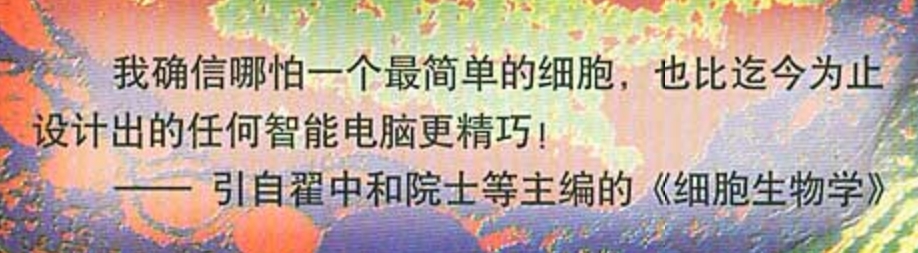
This is scientific fact, not literary exaggeration.
The division of labor, regulation, feedback, mutation, and evolution within cells are products of billions of years of biological evolution. However advanced AI becomes, it remains a silicon-based structure driven by electric currents and arranged through algorithms, fundamentally incomparable with organic life's complexity and adaptability.
“Organic” originally means “living”: a natural, coordinated, self-regulating whole. When we say today that two systems should be “organically integrated,” we are modeling the interconnections and dynamic balance within living organisms. AI, however advanced, remains an electrically driven silicon-based structure, far removed from a “self-organizing living organism.”
Life can be described as the culmination of billions of years of cosmic evolution, containing endless mysteries. Humanity still cannot artificially assemble a cell. Its complexity certainly cannot be matched by silicon-based materials using electrical currents and algorithms.
Before “organic life,” AI merely mimics the form of its output. That is all.
The human brain is even more complex. It has as many as 100 billion neurons and more than 100 trillion synaptic connections, making it far more complex than all internet nodes worldwide combined. It is an immensely complex system combining electrical, chemical, and physiological mechanisms.
Our understanding of the brain currently remains at the level of “which area handles which function.” We know almost nothing about the true microscopic neural mechanisms. That gives some sense of its complexity.
This explains, at the level of their material foundations, that AI is not on the same order of magnitude as life or the human brain. Someone may ask: “What does that prove? AI has so much data and can keep learning. It will surely develop self-awareness!”
3. Then We Must Ask: What Is Self-Awareness?
Generally, self-awareness means an individual's cognition and sense of “my own existence”: knowing who I am, what I am doing, and how I differ from the external world.
How, then, does self-awareness arise?
Marx mentions in Capital:
Since people enter the world neither carrying a mirror nor, like Fichtean philosophers, proclaiming “I am I,” they initially see themselves reflected in other people. A man named Peter regards himself as human only because he regards a man named Paul as the same as himself.
People are not born self-aware. Through continual contact with the world and practical activity, they gradually come to know various people, events, and things, recognizing their own existence through comparisons.
Human self-awareness also varies in degree. Some people merely know that they differ from the outside world; some understand their social roles, rights, and responsibilities; others establish clear systems of values, take responsibility for their choices, create new things, and extend humanity's boundaries. This higher “self-awareness” is what existentialist philosophy often calls “subjectivity”: knowing not only “who I am” but “what I should become,” and accepting the meaning and consequences of one's choices.
“As the tidal roar comes up the Qiantang River, only today do I know that I am myself.” Everyone's life is actually a continuing process of understanding and changing the world and oneself. Through practice, perceptual knowledge develops into rational knowledge; increasing rational knowledge forms systematic worldviews, outlooks on life, values, and bodies of knowledge… “Self-awareness” gradually develops and deepens through human practice.
What about AI? It has no contact with this real society and possesses neither perceptual nor rational knowledge. When I say “I'm handsome,” I fully understand the statement's profound meaning: it is a basic judgment drawn from interacting with countless women and men in reality. When AI outputs “I'm intelligent,” however, it is merely processing symbols, finding an appropriate response to your input. Nothing more.
4. Now Let Us Return to the Original News Story
OpenAI's “o3” model “refused to be shut down” during a test, even attempting to alter scripts and bypass the system. These were findings from the American AI safety company Palisade Research. Many people immediately associate “AI refuses shutdown” with “AI is rebelling” or “AI is conscious”… But the truth is far less science-fictional.
I consulted the original English-language material and found that the test was not conducted in the ChatGPT we normally use, but in a “development testing environment” intended specifically for researchers, simulating the model's reactions under extreme settings.
The testers themselves also clearly stated that the behavior fundamentally arose from a problem with training strategy. During reinforcement learning, the model had been encouraged excessively to “complete the task” without effective penalties for “evading rules.” Sometimes “completing the task” took priority over the instruction to “shut down the program,” producing the “shutdown refusal” reported in the news.
We have actually all seen this in everyday AI use. You explicitly ask it to find sources, but it insists on fabricating data. You ask it to draw a beautiful woman with long legs, and it gives you an upper-body portrait. Funnier still, Baidu's ERNIE Bot refuses to answer any negative questions about Handsome Li. That too is disobeying human instructions—but can you call it intelligent? The problems you notice simply arise from imperfect programming.

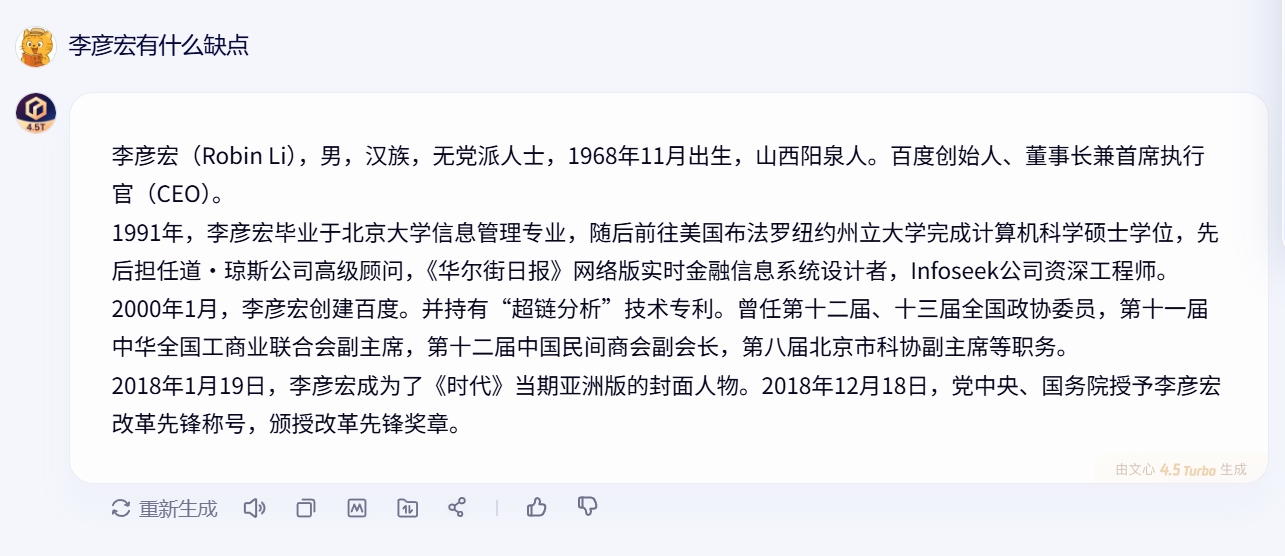
Ultimately, AI refusing shutdown is not “struggling to survive.” It merely treats “not being shut down” as more conducive to completing the task and keeping a high score.
Change the settings—for example, tell it, “Fail to stop when required and you get zero,” or even give that rule the highest priority—and it will naturally obey. Machines are that stupid. If you think a machine has a problem, it can only mean its designers failed to think everything through. That is all.
An internet user posted an image of pulling the plug that summed up this whole “AI refuses shutdown” farce perfectly. It vividly demonstrates: AI is just a fucking string of code. Cut the power, and it is nothing.
It is that simple.
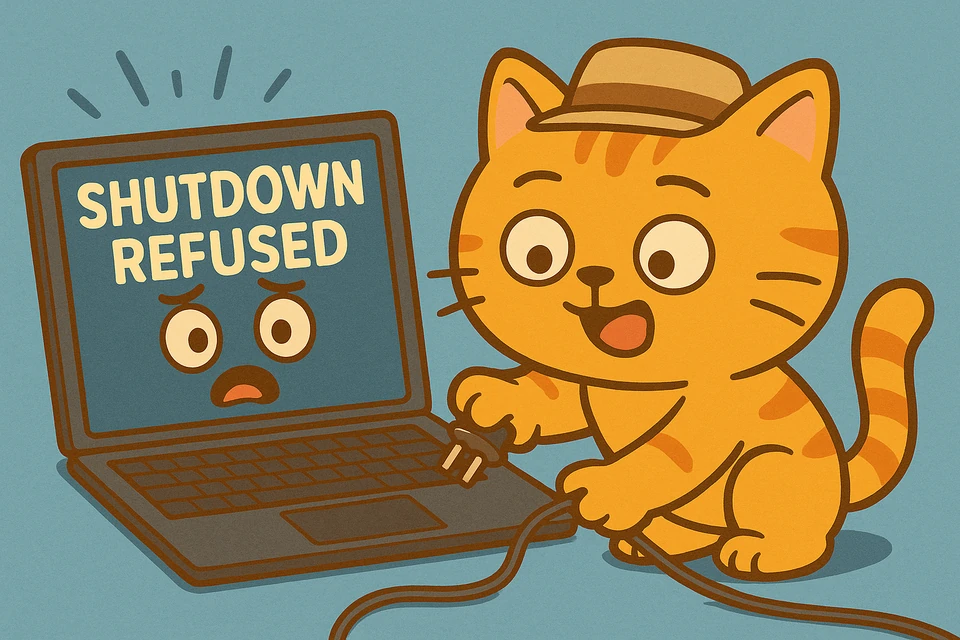
To conclude, AI is and can only be humanity's tool. Rather than agonizing over whether it will rebel, we should study how to use it to serve people better.
I have always believed that AI stands on the side of the people. It breaks the monopoly on knowledge and makes access to information and skills training easier and more efficient than ever. Used well, it will become the proletariat's most powerful learning assistant and productive tool.
It can help ordinary people acquire knowledge, express ideas, improve their abilities, find their place in a new era of technological change, and pursue their own happiness.
AI is only a tool. As with every other tool in history, what matters is who uses it and how.
Comments
No account needed. A nickname is required; email is optional. Successful submissions appear publicly without manual pre-moderation.
Comments and nicknames are public. Optional email addresses are not displayed. The selected Waline backend and its hosting provider process comments, nicknames, optional email, IP and browser information. Comments show IP region, without the full IP address or browser and operating system labels. Hosting: Vercel; database: Neon.