I. The Fangshan Line Today
Fangshan has two subway lines, the Fangshan Line and the Yanfang Line. Although they are connected now and will eventually operate through services, they have different histories and stories. Today we will discuss the Fangshan Line.
Also called “Beijing Subway Line 25,” the Fangshan Line runs from Yancun East to Dongguantou South, with sixteen stations across Fangshan and Fengtai districts and a total length of 32 km. At Yancun East, passengers can transfer to the Yanfang Line; at Guogongzhuang, to Line 9; at Capital University of Economics and Business, to Line 10; and at Dongguantou South, to Line 16.
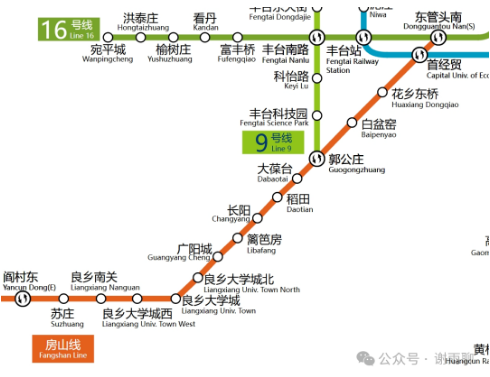
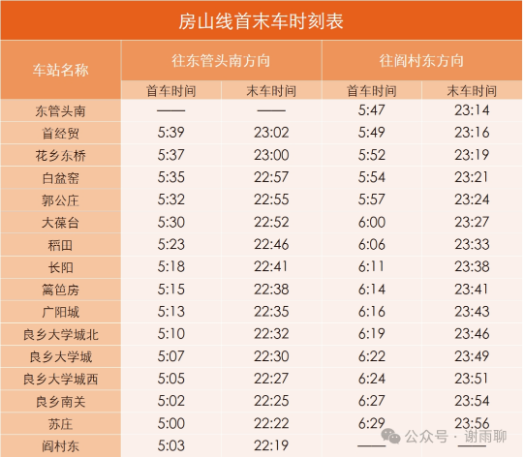
The first train toward the city departs Yancun East at around 5:03 every morning; the last train back to Fangshan leaves Dongguantou South at around 23:14 each night.
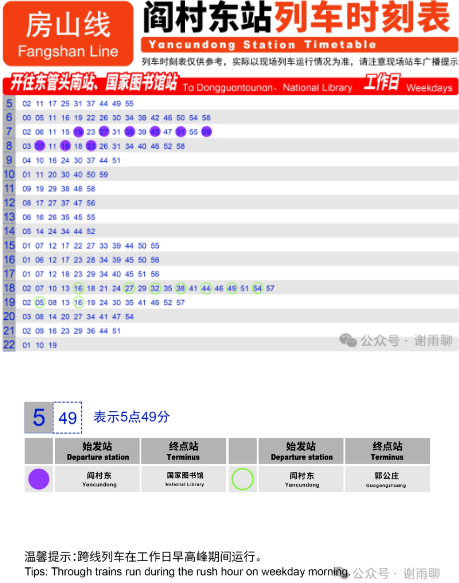
On weekdays, roughly 176 trains run in each direction daily, with intervals of six to ten minutes off-peak and as little as two or three minutes at peak times.
II. Development Plans for the Fangshan Line
The Fangshan Line opened on December 31, 2010, initially running only from Suzhuang to Dabaotai. On December 31, 2011, it extended one station north to Guogongzhuang. On December 30, 2017, it extended one station west to Yancun East, connecting with the Yanfang Line. On December 31, 2020, it extended four stations north to Dongguantou South.
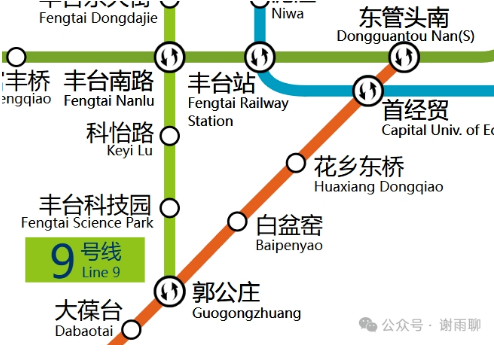
In the future, the line will continue north.
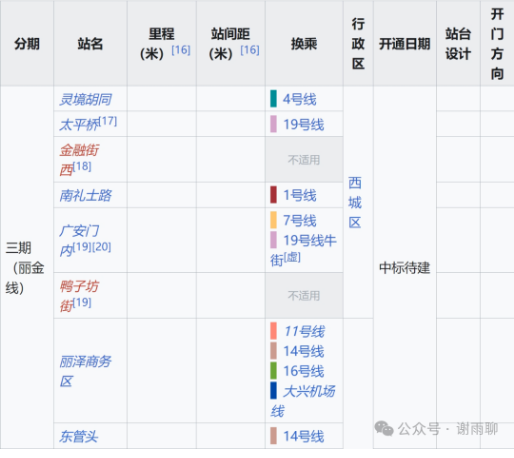
According to Beijing's Third-Phase Rail Transit Construction Plan (2022–2027), Line 25, or the Lijin Line, will run from Dongguantou South station, excluding that station, to Lingjing Hutong in the north. It will be 10.9 kilometers long, with eight stations.
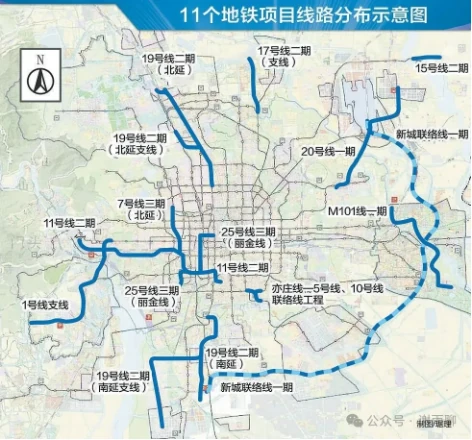
Once complete, passengers will be able to ride the Fangshan Line straight to Financial Street without changing trains. Fewer detours and transfers will save many commuters half an hour and further improve comfort. (Planning map from Ditietong.)
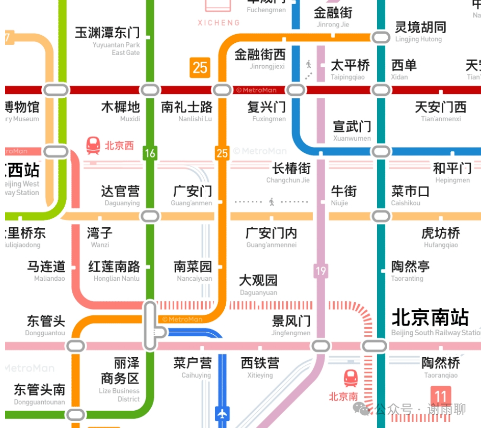
The Lijin Line will also strengthen Fangshan's connections with Fengtai, Shijingshan, Xicheng, and other urban districts, encouraging the movement of talent and industry between Fangshan and places such as Lize Financial Business District, Financial Street, and Shijingshan Science and Technology Innovation Valley. (Station names from Wikipedia.)
The benefits of the subway will then further raise property values in Liangxiang, Changyang, Doudian, and other areas. Commercial districts will gain development potential, and places such as Changyang and Liangxiang University Town will become more prosperous.
Some may ask: when will the Lijin Line open, and what stage has it reached?
According to information found online, the engineering-design contract was awarded in late November 2024 to Beijing Urban Construction Exploration & Surveying Design Research Institute Co., Ltd., at a bid of 5,231,760 yuan, with a duration of 3,318 days.
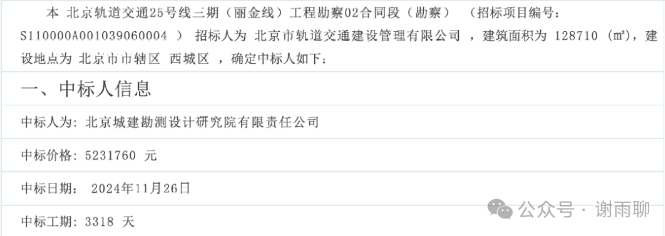
In other words, formal work on the design scheme and construction drawings began at the end of 2024.
The 3,318 days should be understood as the full design-service period rather than construction time: from initial design through completed construction, the warranty period after operations begin, and even subsequent extensions and modifications.
Given that the planning document explicitly specifies “2022–2027,” and considering the general pattern of subway construction, we can roughly estimate that construction will start at the end of 2025, with opening possibly in late 2027 or early 2028.
Barring surprises, construction tender documents should appear in the second half of this year. Follow this public account to track the Lijin Line's construction progress with me.
Comments
No account needed. A nickname is required; email is optional. Successful submissions appear publicly without manual pre-moderation.
Comments and nicknames are public. Optional email addresses are not displayed. The selected Waline backend and its hosting provider process comments, nicknames, optional email, IP and browser information. Comments show IP region, without the full IP address or browser and operating system labels. Hosting: Vercel; database: Neon.