Converting numbers between languages can be troublesome. If a foreigner suddenly asks about the population or area of a country or province, for example, we are often caught off guard. The first numbers that come to mind are in Chinese: 13 yi, 960 wan, or 3,000 wan. But when we have to turn them into English, we suddenly panic, think for ages, and sometimes get stuck altogether, hurriedly taking out our phones to search.
This is not a major problem, though. Practice makes perfect. Once we know the conversions for wan (ten thousand), shi wan (hundred thousand), bai wan (million), qian wan (ten million), yi (hundred million), and shi yi (billion), we can comfortably handle most situations in daily life. In a university English listening and speaking course, this amounts to no more than one lesson of focused practice.
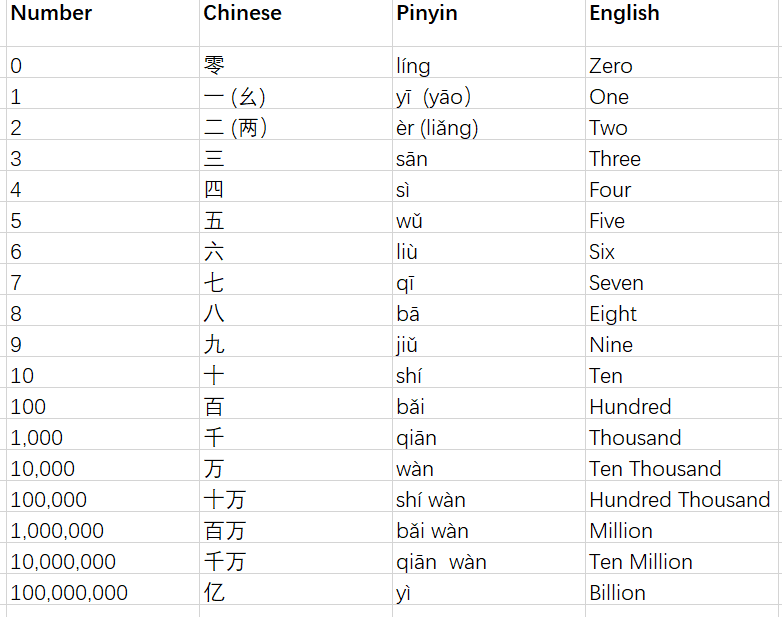
Intuitively, expressing numbers in English seems a little more troublesome. A rational analysis shows that this is indeed the case. There are two main reasons: Chinese has the advantage of monosyllables, and Chinese groups digits in fours—wan, yi, zhao—while English groups them in threes: thousand, million, billion. Monosyllables are the main advantage, with four-digit grouping a secondary one.
First, the monosyllabic advantage. Each Chinese digit from 0 to 9 is one syllable, as are the common counting units shi, bai, qian, and wan. Research shows that because Chinese numbers can be pronounced more quickly, Chinese speakers have a larger digit span than English speakers (Hoosain & Salili, 1987). Chinese people are therefore better at counting and calculation than people in Britain and the United States.
A French author wrote a popular science book titled The Brain and Mathematics. In its introduction, he writes:
When I first sat down to write this book, I encountered a somewhat ridiculous arithmetic problem: if the book was expected to have 250 pages and nine chapters, how many pages would each chapter have? After some serious thought, I concluded that each would have a little under 30 pages. It took me about five seconds. For a human, that is not a slow calculation, but it is still far slower than any electronic calculator. The calculator not only responds quickly but also gives the result to ten decimal places: 27.7777777778!
The author, Dehaene, graduated in mathematics from the École normale supérieure in Paris and is a recognized expert in mathematical cognition. He spent five seconds thinking about 250 ÷ 9 and arrived only at an approximation. Yet I, an ordinary Chinese person, could obtain the precise result in at most five seconds, even to one hundred million decimal places: 27.77...............778! This is clearly not because I am more intelligent than he is, but simply because I calculate mentally in Chinese while he does so in French or English.
Immediately afterward, the author asks:
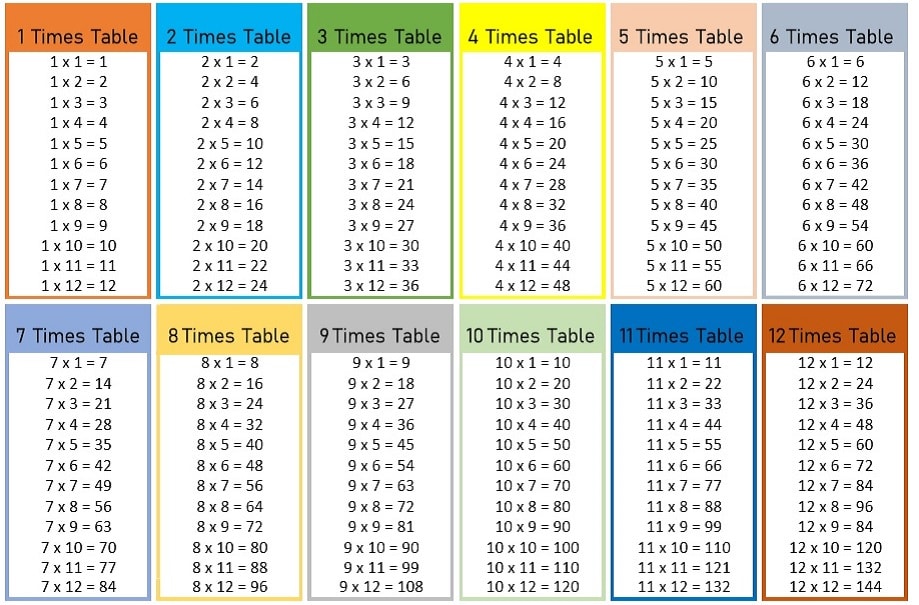
Why, even after years of training, are many people still unsure whether 7 times 8 is 54, 64, or 56?
I believe Chinese children could correctly answer what 7 × 8 equals after a single day of training. It is simply a matter of memorizing the multiplication table, which makes use of precisely this monosyllabic advantage of Chinese.
Next, the advantage of grouping digits in fours. I believe this difference in grouping arose from different social needs for counting. Every human language began with only “one,” “two,” “three,” and “many.” Number words increased only as the need to count grew. Even today, the language of the Warlpiris, an Aboriginal Australian people, has only the quantitative concepts of one, two, some, and many. People in early gathering, fishing, and hunting societies had few surplus products and did not need much surplus, so they had little need for extensive counting. Only after agricultural societies emerged and surplus increased did precise counting become necessary.
Similarly, unified dynasties and large markets in ancient China created greater counting needs. In ancient Europe, political entities were mostly small states, and transactions mostly small-scale trade, so very large numbers were of little use.
The largest number in Shang-dynasty oracle-bone inscriptions is thirty thousand: sending thirty thousand troops, taking thirty thousand enemy prisoners, or catching thirty thousand fish. This was probably the largest number within people’s understanding at the time. But neither “three” nor “ten thousand” necessarily refers to an exact quantity; both could mean a great many, too many to count. Even so, such records show that people in China frequently encountered quantities on the scale of ten thousand in practical life.
By the Zhou dynasty, units such as yi, zhao, jing, and gai had appeared. During the Spring and Autumn and Warring States periods, commodity exchange developed and states annexed one another, making the need for counting larger and more frequent. By the Warring States period, states counted their troops in the hundreds of thousands and money in the millions. We can imagine the scale of other things too: quantities in the thousands and tens of thousands were normal.
In the Western Zhou, yi usually meant one hundred thousand (10⁵), and occasionally ten thousand times ten thousand (10⁸). Perhaps because quantities on the scale of wan were used so frequently, four-digit grouping became predominant. By the Warring States period, a system had formed in which ten thousand wan made one yi (10⁸), and ten thousand yi made one zhao (10¹²). Because demand was limited, quantities beyond the tens of millions were rarely used. This scale of demand determined Chinese counting habits.
Expressions such as “ten thousand” formed literally as “ten qian,” and “a hundred thousand” as “a hundred qian,” did exist, but seem concentrated in literature and usually indicate no precise quantity. For example: “Clear wine in golden cups costs ten thousand a measure; / Delicacies on jade platters are worth ten thousand coins,” and “Her merit was ranked through twelve grades; / Her reward exceeded a hundred thousand.” It seems that, for counting large quantities, qian really is less convenient than wan.
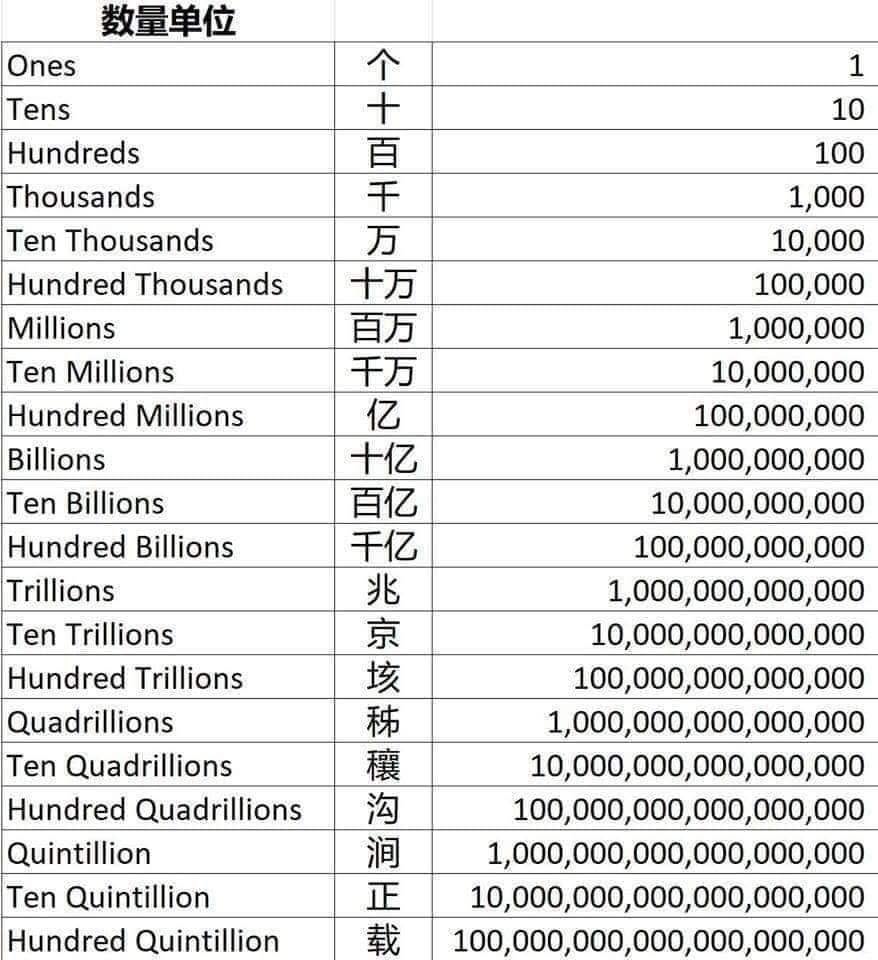
(I found this image online and do not know whether it is correct, but that does not matter much now.)
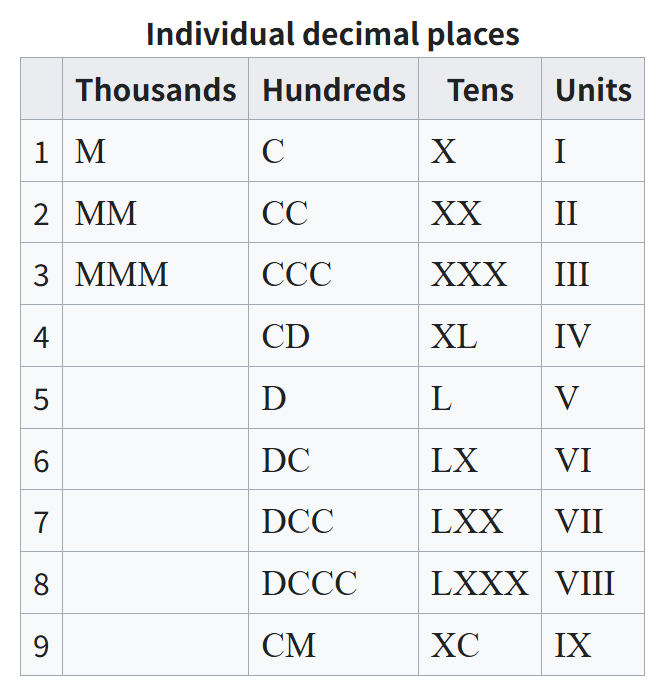
Europeans, however, became accustomed to using thousands for large numbers. Although the ancient Greek mathematician Archimedes discussed very large numbers in The Sand Reckoner, this had no practical significance: people in ancient Europe did not need such large numbers in real life. Even the Roman Empire’s numerical symbols were only I (1), V (5), X (10), L (50), C (100), D (500), and M (1000). A thousand was already the largest. Three thousand was MMM, while nine thousand required nine Ms or some other complicated variation. Complexity did not matter; most of the time, the system was sufficient. Europeans thus grew accustomed to thinking of large numbers in units of a thousand.
Commerce flourished in 13th-century Italy, and the thousand was no longer an adequate unit. Counting in millions—or a thousand thousands—became increasingly common. Italians therefore invented a word meaning “big thousand.” The Italian word for a thousand is “mille”; adding the augmentative suffix “-one” produced “milione,” the source of the modern English “million,” meaning a thousand thousands.
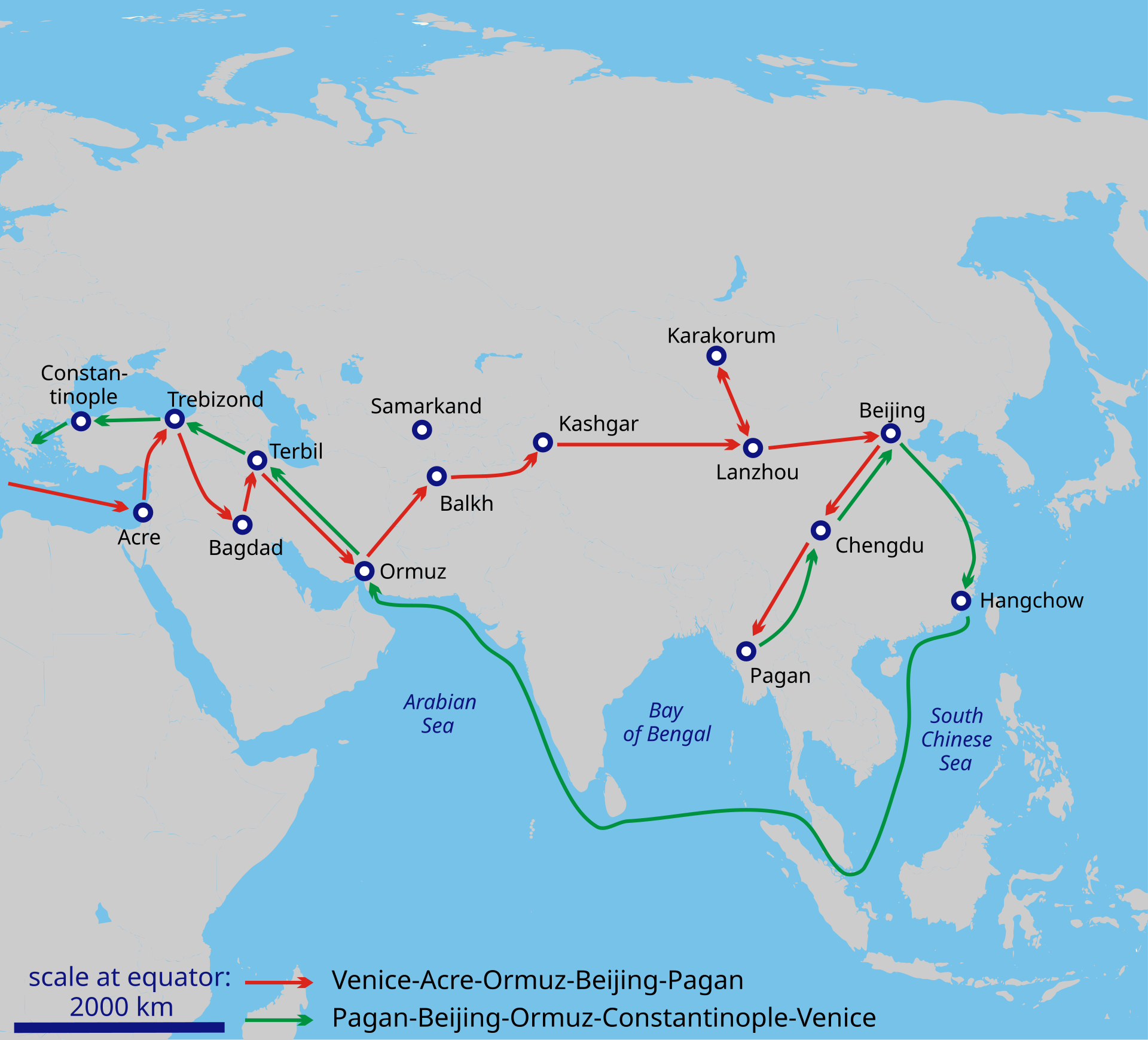
The Italian title of The Travels of Marco Polo is Il Milione, or The Million. This was originally the nickname Italians gave Marco Polo: “Mr. Million.” Why that nickname? After returning from China, Marco Polo repeatedly used numbers of several million to describe China’s wealth, population, and land. People thought he was boasting and gave him the nickname to mock him.
In conclusion, English uses thousands while Chinese uses ten thousands because of the scale of their civilizations during their periods of cultural flourishing, which determined their counting needs. Ancient China frequently counted in wan and thus became accustomed to using wan times wan for large numbers. Ancient Europe frequently counted in thousands and therefore became accustomed to a thousand thousands—a million.
This difference also gives Chinese people an advantage when dealing with large numbers. Take several common figures: China’s population is about 14 yi, and its area about 960 wan square kilometers; Sichuan’s resident population is about 8,300 wan, and its area 48.6 wan square kilometers. In English, these are 1.4 billion, 9.6 million, 83 million, and 486 thousand. The Chinese expressions are clearly more efficient and concise, because Chinese uses only wan and yi, whereas English uses three counting units: thousand, million, and billion. That takes more mental resources and naturally slows the response.
European and American countries carry historical baggage and are very concerned with political correctness, so they rarely say that one thing is superior to another. In mathematics learning, however, even they have to acknowledge that native Chinese speakers do have an advantage over native English speakers. I also think this advantage may still be underestimated.
Hoosain, R., & Salili, F. (1987). Language differences in pronunciation speed for numbers, digit span, and mathematical ability. Psychologia, 30(1), 34–38.
[France] Stanislas Dehaene. The Brain and Mathematics [M]. Translated by Zhou Jiaxian et al. Hangzhou: Zhejiang Education Publishing House, 2022.
Miura, I. T., Kim, C. C., Chang, C. M., & Okamoto, Y. (1988). First graders' cognitive representation of number and understanding of place value: Cross-national comparisons. Journal of Educational Psychology, 80(3), 325–330.
[Britain] Joseph Needham. Science and Civilisation in China: Volume 3, Mathematics [M]. Translated by the Science and Civilisation in China Translation Group. Beijing: Science Press, 1978.
Wikipedia. Chinese Numerals [EB/OL]. [September 24, 2026]. https://zh.wikipedia.org/wiki/汉语数字.
Comments
No account needed. A nickname is required; email is optional. Successful submissions appear publicly without manual pre-moderation.
Comments and nicknames are public. Optional email addresses are not displayed. The selected Waline backend and its hosting provider process comments, nicknames, optional email, IP and browser information. Comments show IP region, without the full IP address or browser and operating system labels. Hosting: Vercel; database: Neon.