I had long heard that primary and secondary school students in Malaysia finish school early, but never thought much of it. Subconsciously, I assumed it could not be that early. I attended primary school in an urban village in Zhejiang, finishing at five on ordinary days and at 3:30 on Fridays, which already seemed early to me. At Xichong Middle School, we finished around six in the first two junior secondary years. Later, the whole class voluntarily attended evening study until after eight or nine, with supplementary classes on Saturdays too. Senior secondary school hardly needs mentioning: there was only study, with no personal life.
A while ago, a young Malaysian Chinese student added me on WeChat. She was in her second year at an independent Chinese secondary school, equivalent to China's second junior secondary year. I often chatted with her to learn about local conditions. One day I suddenly noticed something: she could reply to my messages at almost any time. When I asked, I learned that they started school at 7 a.m. and finished at 1 p.m. They could even use their phones between classes.
I refused to accept this. Finishing at 1 p.m. was simply outrageous. Our junior secondary classes ended at five or six at the earliest, usually followed by evening study. We worked late into the night every day, while they went home at midday. What was that about? Even worse, learning English had been extremely painful for us and yielded little, while they learned it without pressure, alongside Malay, Hokkien, and Cantonese.
A driver later told me that 1 p.m. finishes were real, though most schools ended at two or three in the afternoon. Even supplementary lessons generally followed students' own wishes and lasted only an hour or two.
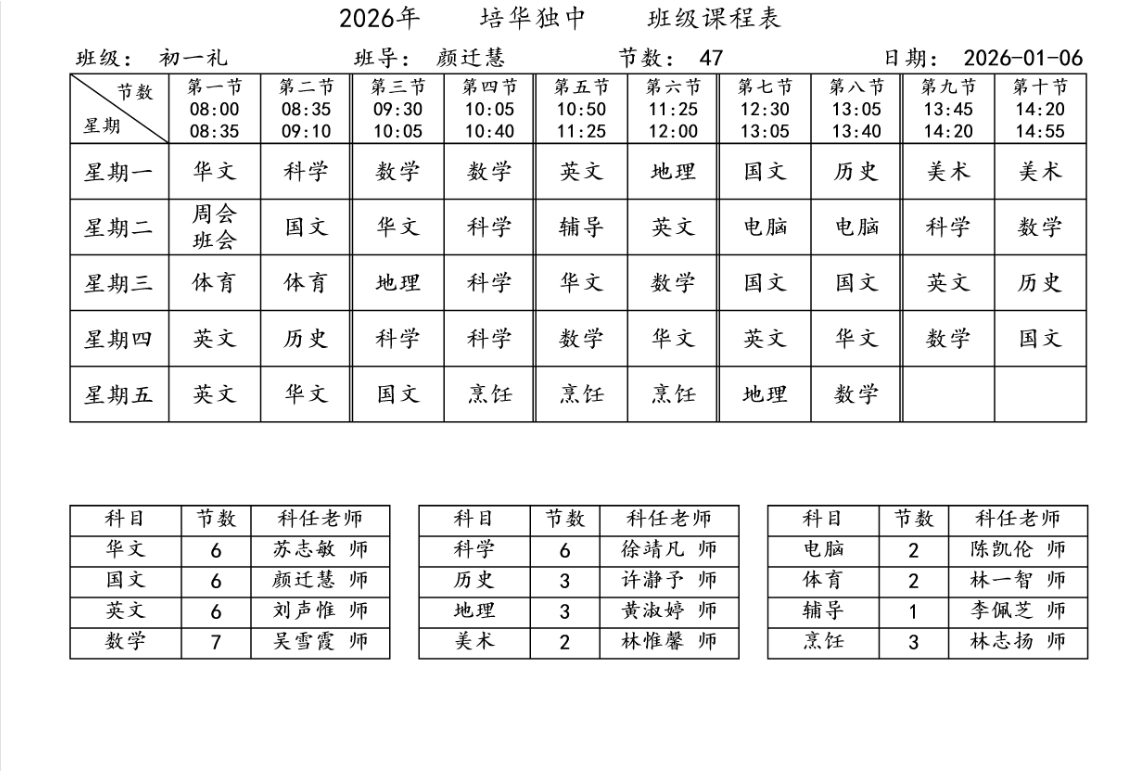
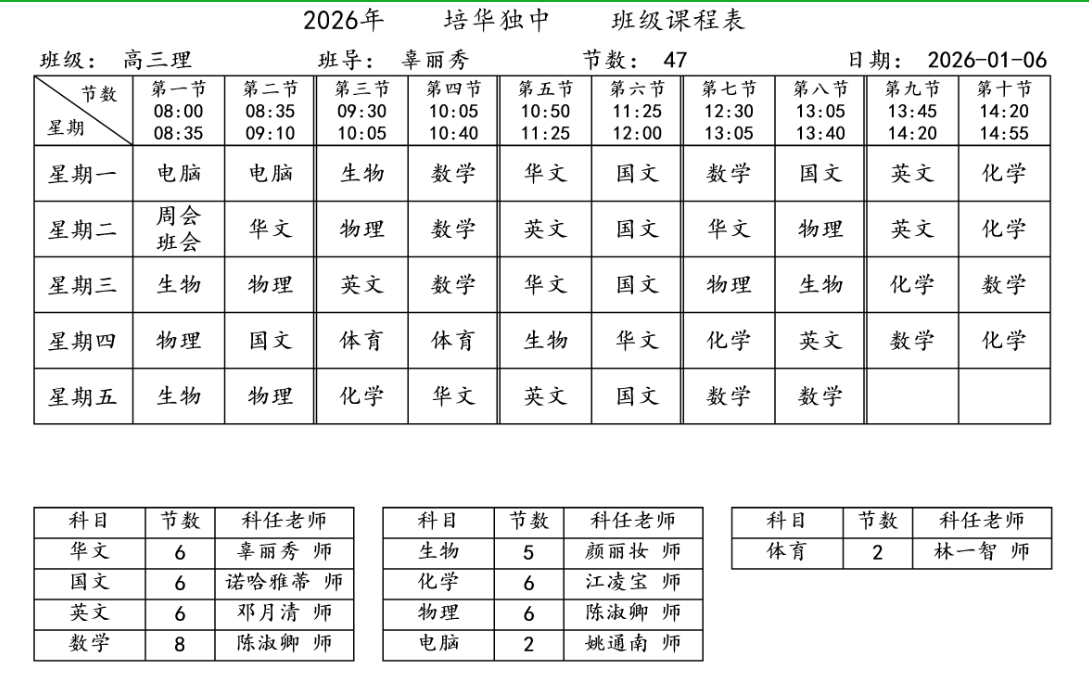
I found some independent school timetables online. Most finished between 14:30 and 15:00. One o'clock really was extreme; perhaps the girl was teasing me. Even so, finishing at three is very early, especially when students can bring phones to class.
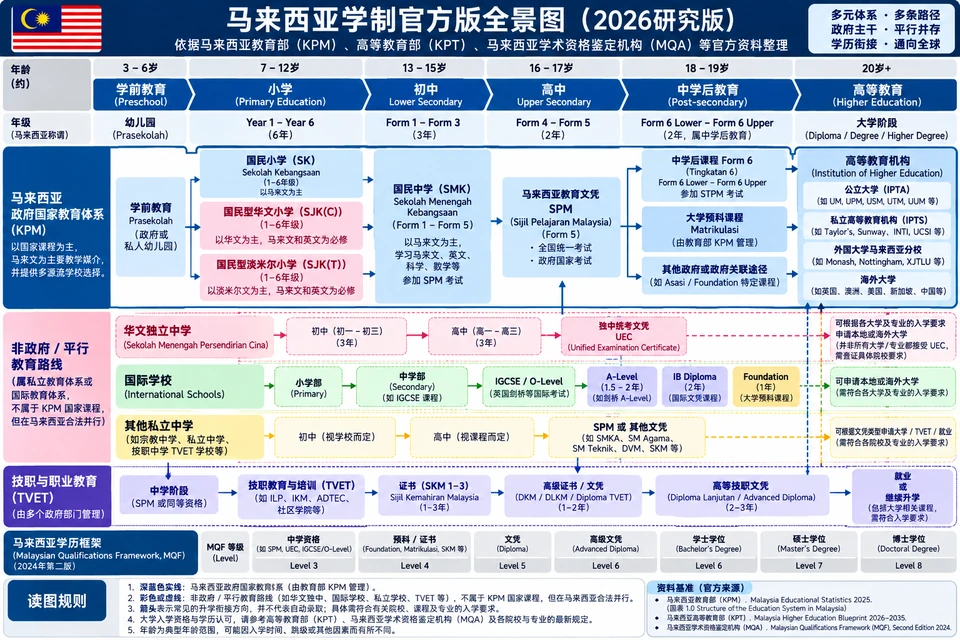
Their rate of progression to higher education is also higher than ours. Malaysia's education system is complicated, but broadly there are two main routes to university: matriculation programs and the STPM examination. Around 40,000 students enter matriculation programs each year and another 40,000 take STPM, whose results can be used to apply to universities at home and abroad. About 80% of applicants can enter public universities, with competition mainly for prestigious institutions and popular subjects.
Although I lack a systematic analysis, my impression is that attending secondary school in Malaysia should be happier than doing so in China. If Hengshui High School students saw the timetable below from a Malaysian independent Chinese secondary school and imagined Malaysian students' happy lives, I suspect they would cry their eyes out in the bathroom.
Comments
No account needed. A nickname is required; email is optional. Successful submissions appear publicly without manual pre-moderation.
Comments and nicknames are public. Optional email addresses are not displayed. The selected Waline backend and its hosting provider process comments, nicknames, optional email, IP and browser information. Comments show IP region, without the full IP address or browser and operating system labels. Hosting: Vercel; database: Neon.