I. When Did Cockfighting Begin?
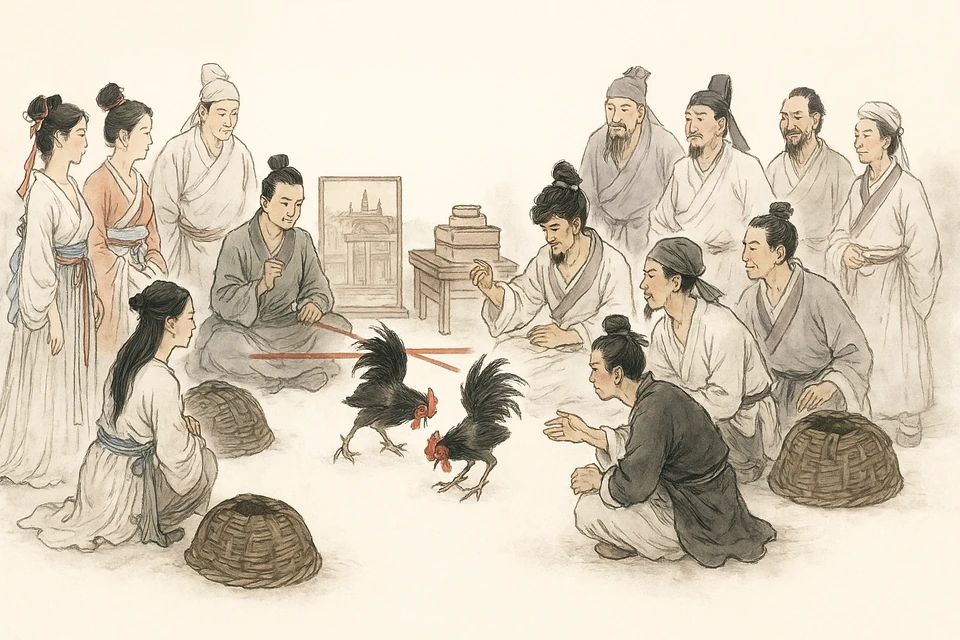
In 517 BCE, Ji Pingzi and Hou Zhaobo, two grandees of the state of Lu, held a cockfight.
Ji Pingzi smeared mustard on his rooster's feathers, hoping to win through irritation;
Hou Zhaobo fitted metal artificial spurs to his rooster's feet, concealing a lethal weapon.
Both resorted to tricks, but Hou Zhaobo ultimately proved the better player and won the match.
Ji Pingzi was so angry at losing that he seized Hou Zhaobo's house.
Unwilling to accept this, Hou Zhaobo advised Duke Zhao of Lu that the Jisun clan had become too powerful and now threatened the state.
Duke Zhao therefore joined several aristocrats in attacking the Jisun clan, attempting to weaken its power.
The coup failed, however. Hou Zhaobo died, and Duke Zhao was forced to flee to Qi.
This chain of events profoundly changed Lu's political landscape.
Consequently, the coup is recorded in detail in several works, including the Zuo Commentary, Records of the Grand Historian, and Huainanzi.
Perhaps the historians at the time did not realize
that while recording changes in the political situation,
they were also leaving posterity the earliest account of cockfighting in Chinese literature.
Of course, Duke Zhao's attack on the Jisun clan was by no means caused by a cockfight alone.
More complex struggles for power and conflicts of economic interest lay behind it.
Yet as the immediate trigger, the cockfight carries striking symbolic significance.
As Huainanzi laments:
“The calamity began at a chicken's foot; when it grew great, it brought ruin to the state.”
From then on, cockfighting formally entered the historical stage,
appearing frequently in histories, poetry, prose, and folk legends.
II. Cockfighting in Chinese History
From the Spring and Autumn and Warring States periods to the late Qing,
almost every era has records of cockfighting, and related poetry and prose never ceased to appear.
Here are a few small examples to offer a glimpse of its popularity.
1. Still as a Wooden Rooster: A Philosophical Lesson from Cockfighting
The idiom “still as a wooden rooster” is now mostly used to describe someone frozen in bewilderment.
Originally, however, it was complimentary and came from a story about cockfighting.
Zhuangzi, in “Mastering Life,” records:
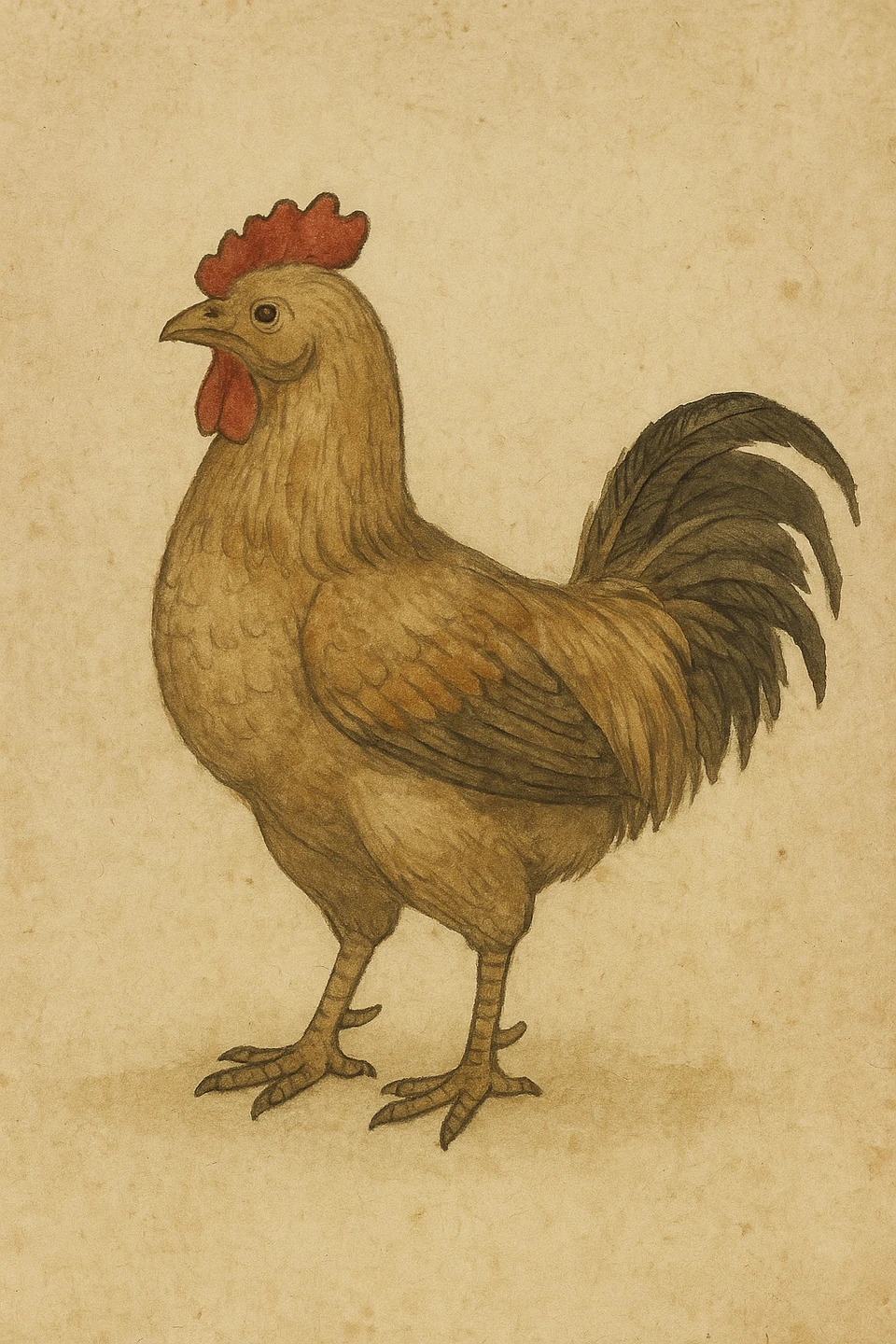
Ji Shengzi trained fighting roosters for the king of Qi.
After ten days, the king asked, “Can it fight yet?”
Ji Shengzi replied, “Not yet. It is still vain and arrogant, relying on its fierceness.”
Ten days later the king asked again, and he replied, “Not yet. It still responds excitedly to outside stimuli.”
This continued until, after forty days, Ji Shengzi finally said:
“Nearly ready. Even when other roosters crow, it no longer changes. It looks like a wooden rooster; its inner power is complete. Other roosters dare not challenge it, but turn and run.”
This fighting rooster looked as steady as wood.
No provocation from crowing rivals could move it.
When it actually entered the arena, its presence was so powerful that opponents feared it on sight.
Zhuangzi used the story to suggest that a true master should be restrained and composed, keeping their edge concealed.
Those who ostentatiously display their prowess are instead restless and easily defeated.
2. Han Emperors Who Loved Cockfighting
From the Western and Eastern Han through the Wei, Jin, and Northern and Southern Dynasties, cockfighting was popular not only among ordinary people,
but also as an important pastime among aristocrats and royalty.
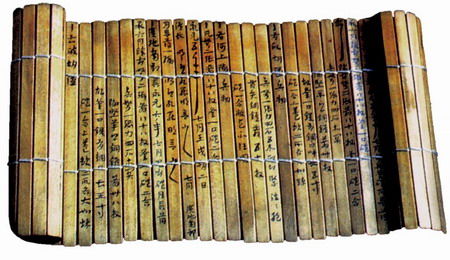
For example, Miscellaneous Records of the Western Capital records:
After moving to Chang'an, Liu Bang's father, the retired emperor Liu Taigong, remained unhappy for years.
Liu Bang discreetly asked why and learned that his father missed life back in the countryside:
buying wine, selling cakes, cockfighting, and cuju—playing ball.
That was his idea of a happy life.
Liu Bang therefore had a “New Feng” specially built near Chang'an,
and invited his father's old friends to move there.
Only when the retired emperor could relive the feeling of home did he finally smile.
Several other Han emperors are explicitly recorded as enjoying cockfighting:
Emperor Jing, Liu Qi: fond of cockfights, duck fights, and goose fights;
Emperor Wu, Liu Che: watched cockfights, dog fights, and horse fights with his favorite Dong Yan, indulging in entertainment;
Emperor Xuan, Liu Xun: also enjoyed cockfighting and horse racing, using these activities to learn about ordinary people's lives;
Emperor Cheng, Liu Ao: passionately fond of cockfighting, even importing “long-crowing chickens” from Jiaozhi and Yuexi for performances.
We can say that by the Han dynasty, cockfighting had become an important leisure activity for royalty and the upper strata of society.
3. Wang Bo's Proclamation Against the Prince of Ying's Rooster
As a young man in the Tang dynasty, Wang Bo served in the household of the Prince of Pei.
Cockfighting was then all the rage. The princes held matches against one another, winning and losing in turn.
On one occasion, Li Xian, Prince of Pei, held a cockfight against Li Xian, Prince of Ying.
Carried away by enthusiasm, Wang Bo wrote a Proclamation Against the Prince of Ying's Rooster on behalf of the Prince of Pei,
using sharp language to “denounce” the other prince's rooster and cheer on his own patron.
Emperor Gaozong, Li Zhi, was greatly displeased when he read it.
He thought such writing could sow discord among the imperial princes,
so he dismissed Wang Bo and expelled him from the Prince of Pei's household.
A piece about cockfighting thus dealt a setback to the brilliant Wang Bo's official career.
Clearly, cockfighting in that society was more than entertainment:
it also touched the delicate interplay of power and reputation.
4. The Qing Dynasty: Cockfighting Through Foreign Eyes
In the Qing dynasty, cockfighting remained popular,
even attracting the attention and criticism of Western visitors to China.
In 1806, the Englishman John Barrow wrote in his travel account:
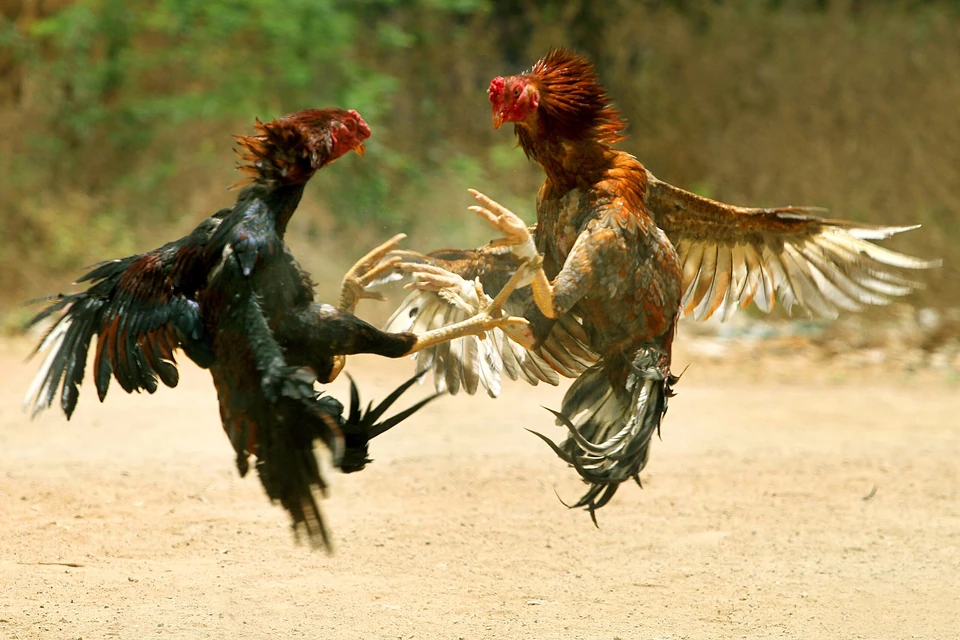
Yet some missionaries solemnly inform us that “the Chinese are entirely ignorant of all games of chance,” and that “they have no amusements, this being forbidden by law.” These gentlemen surely cannot have been unaware of one of the Chinese people's favorite games: cockfighting. This cruel and inhuman sport, which they shamelessly call an amusement, captivates the upper ranks of society in China just as it does in parts of Europe. Training quails for the same cruel purpose of making them destroy one another provides considerable employment for the idle.
Decades later, G. N. Wright also wrote:
Other sports and games long familiar in civilized countries should be added to those we have already noted. They include cockfighting, a favorite of the rich and powerful and perhaps introduced from Malaysia, as well as quail fighting and cricket fighting—all equally cruel and inhuman. Training provides an occupation involving many tasks. The profits from these worthless games are so widespread and exciting that only gamblers themselves can appreciate such a thing. Like the birds in our own cockpits, these fighting cocks are fitted with steel spurs, so that one or both can always be made to die a violent death. The winner is sold by auction or lottery, and anyone eager to own it must stake or pay a large sum.
These Western accounts
contain prejudices in their criticism of Chinese amusements,
but also indirectly confirm
that in the Qing dynasty, cockfighting was not only popular but often connected with gambling, and provided society
with some employment opportunities. Many idle people made their living from it.
We can see that although cockfighting was merely a form of entertainment, it actually played an important role in Chinese life. Noticing this when reading history gives us another perspective from which to uncover more information.
Comments
No account needed. A nickname is required; email is optional. Successful submissions appear publicly without manual pre-moderation.
Comments and nicknames are public. Optional email addresses are not displayed. The selected Waline backend and its hosting provider process comments, nicknames, optional email, IP and browser information. Comments show IP region, without the full IP address or browser and operating system labels. Hosting: Vercel; database: Neon.